Interior spaces often rely on a combination of color, lighting, furniture, and materials to create character. While paint and smooth wall finishes can provide a clean foundation, they do not always add much physical depth to a room. Stone veneer offers another option by introducing variation in shape, surface, tone, and shadow.
It can also help create a stronger visual connection between indoor and outdoor areas. For example, in spaces that open onto patios, terraces, courtyards, or landscaped areas, stylish stone veneer for a seamless indoor-outdoor look can carry similar colors, textures, and material character from the interior to the exterior. This can make the transition between the two areas feel more coordinated rather than treating them as completely separate spaces.
Used carefully, stone veneer can help define important areas of an interior without making the space feel overly heavy. It can work in homes, restaurants, hotels, offices, retail environments, reception areas, and other spaces where designers want to introduce the appearance and texture of natural stone.
Why Does Texture Matter in Interior Design?
Texture affects how a space looks and feels, even when the overall color palette is relatively simple.
Smooth walls, glass, polished floors, and flat cabinetry can create a clean appearance, but an interior made entirely of smooth surfaces may sometimes feel visually flat. Textured materials provide contrast and give light more surfaces to interact with.
Stone veneer can introduce the following:
- Natural-looking surface variation
- Changes in depth
- Irregular shapes
- Subtle differences in color
- Visible joints
- Shadows between individual stones
These details can make a wall feel more substantial and give the room a stronger visual focal point.
Texture can be particularly useful in neutral interiors. A room does not necessarily need bold colors if the materials themselves create enough variation.
Using Stone Veneer on Feature Walls
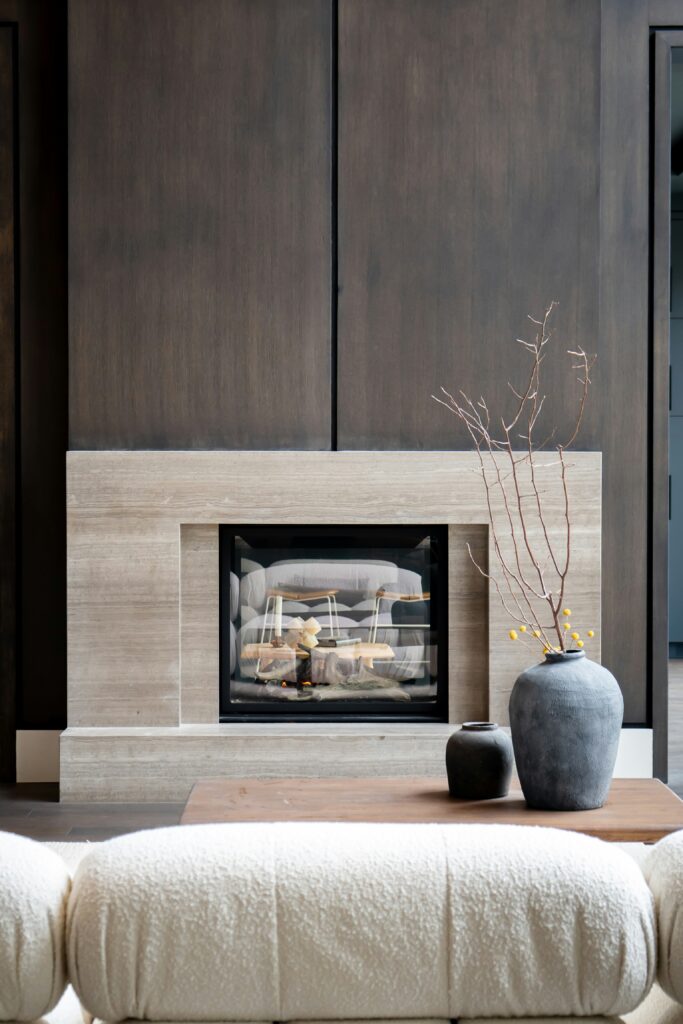
Stone feature walls are one of the most practical places to introduce stone veneer.
Rather than applying stone throughout an entire room, designers can use it on one carefully selected wall to create contrast with smoother surrounding surfaces.
Suitable locations may include:
- Living room walls
- Fireplace surrounds
- Hotel lobby walls
- Restaurant dining areas
- Office reception spaces
- Retail display areas
- Conference rooms
- Entry walls
The position of the feature wall matters. Ideally, it should reinforce an area that already has a clear purpose rather than create a focal point in an unrelated part of the room.
For example, placing stone behind a reception desk can strengthen the visual importance of the arrival area. In a restaurant, it may help define a main dining wall or bar area. In a living room, it can provide a strong background for a fireplace or seating arrangement.
Can Stone Veneer Work in Modern Interiors?
Stone is often associated with rustic or traditional design, but the finished appearance depends heavily on the type of stone and the materials around it.
Contemporary interiors often use stone in a more controlled way. Rather than covering several walls, designers may select one architectural surface and combine it with simpler finishes.
Modern combinations can include stone and:
- Large glass panels
- Black or dark metal
- Smooth plaster
- Concrete
- Minimal cabinetry
- Timber
- Large-format flooring
- Simple lighting fixtures
The stone profile also influences the result.
Irregular stones with strong color variation can create a more rustic appearance, while linear profiles and restrained colors can feel more contemporary. Grey, cream, beige, charcoal, and muted earth tones can work well in interiors where the overall palette is deliberately simple.
The goal is not to make the stone look modern by itself. It is to choose a profile that works with the wider design.
Adding Warmth to Large Commercial Interiors
Large commercial interiors can sometimes feel cold when they rely heavily on glass, metal, polished concrete, or other hard surfaces.
Stone can provide visual contrast and make these environments feel more grounded.
This can be useful in spaces such as the following:
- Hotel lobbies
- Office reception areas
- Restaurants
- Retail stores
- Clubhouses
- Apartment common areas
- Waiting areas
- Entertainment venues
A stone wall can create a more substantial background behind seating areas, reception desks, signage, artwork, or architectural features.
It can also help large interiors feel less uniform by dividing different functional areas without requiring a physical partition.
For example, a restaurant might use stone to distinguish a bar or dining area from the rest of the space. An office could use it around reception while keeping work areas simpler and lighter.
Combining Stone With Wood
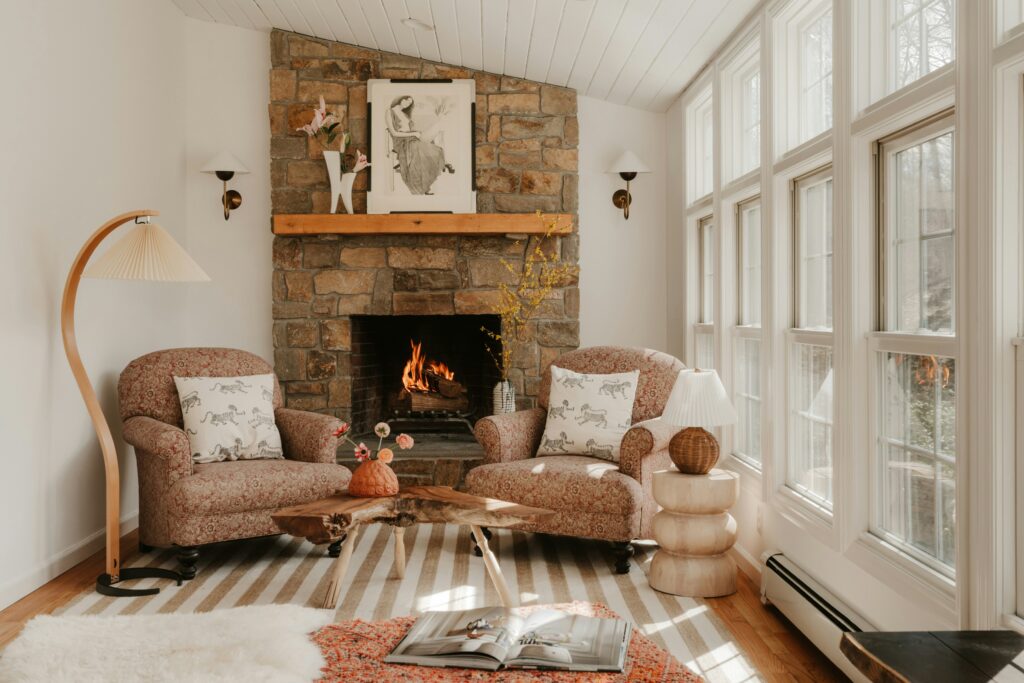
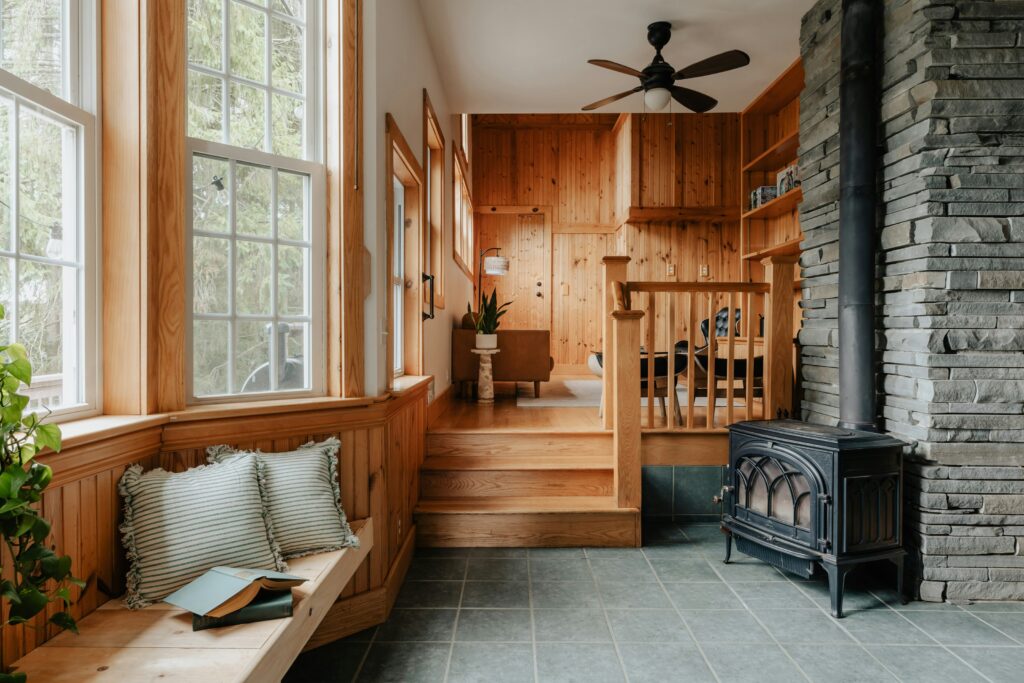
Stone and wood are frequently used together because their textures are different, while their natural appearance can complement one another.
Wood can soften the harder visual character of masonry, while stone can provide contrast against smoother timber surfaces.
The combination may work particularly well around the following:
- Reception desks
- Fireplace surrounds
- Built-in shelving
- Ceiling features
- Seating areas
- Restaurant interiors
- Hotel lobbies
- Entry spaces
The colors do not need to match exactly.
Warm-toned stone can work with oak and similar woods, while cooler grey stone may pair well with darker timber or more contemporary finishes.
It is generally more important that the undertones feel coordinated than that every material shares the same color.
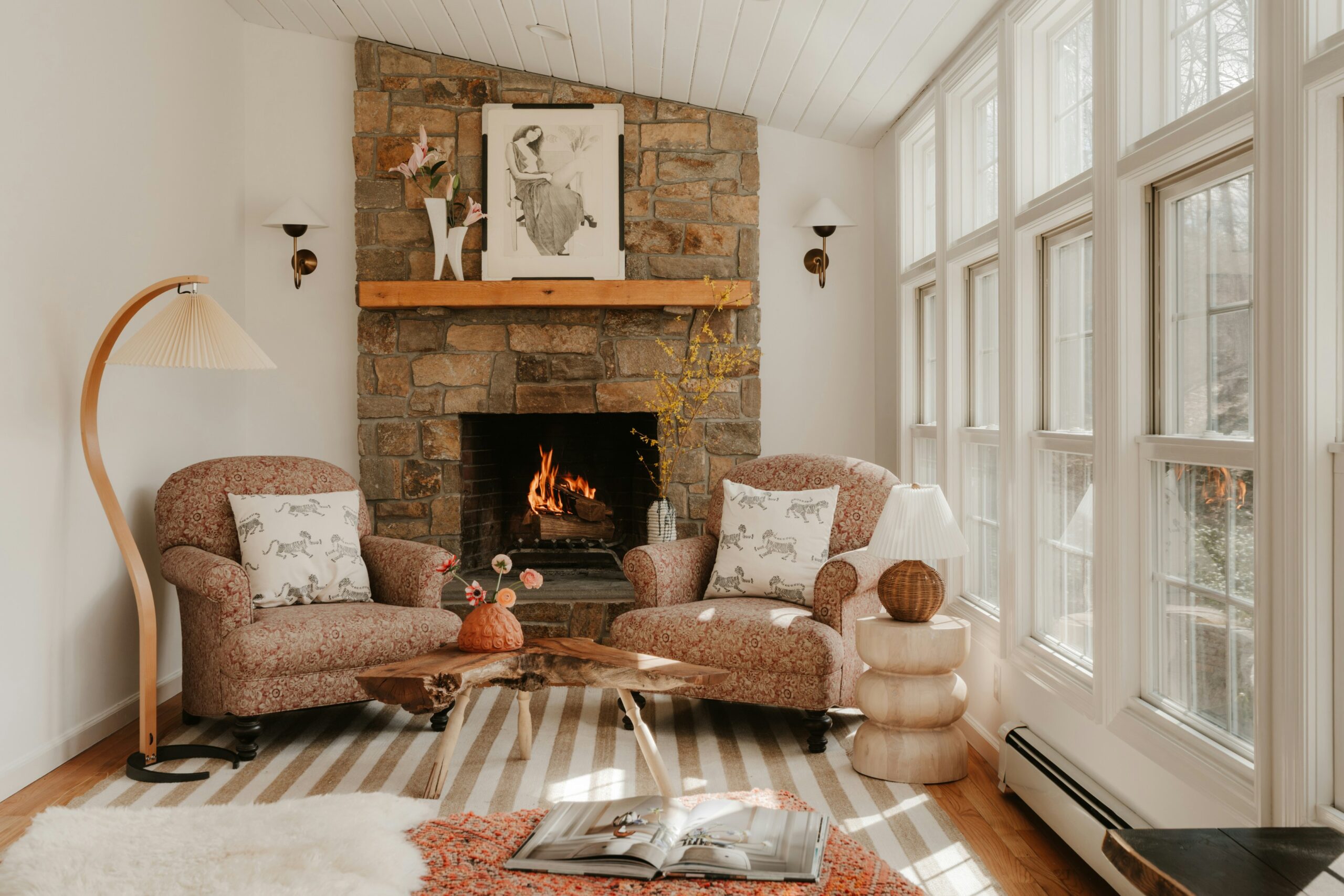
Stone Veneer Around Fireplaces
Fireplaces naturally create a focal point, making them a logical area for textured materials.
Stone can frame the fireplace opening, cover the full wall behind it, or be combined with wood, plaster, metal, or other finishes.
The appropriate amount depends on the proportions of the room.
In a large space, extending the stone vertically can emphasize ceiling height. In a smaller room, limiting the stone to the fireplace surround may create enough texture without overwhelming the interior.
Material suitability is especially important around heat-producing appliances. The veneer, substrate, installation system, clearances, and surrounding materials should be appropriate for the specific fireplace and installed according to relevant product and building requirements.
Creating More Distinctive Entry and Reception Areas
Entry spaces influence the first impression of a building.
In commercial interiors, reception areas often need to communicate some level of identity while remaining practical and easy to navigate.
Stone can help create a clear background for the following:
- Reception desks
- Company signage
- Seating areas
- Lighting
- Artwork
- Wayfinding elements
Because stone already has significant texture, the surrounding design often benefits from being relatively restrained.
A highly textured wall combined with complicated signage, several strong colors, patterned flooring, and numerous decorative elements can quickly become visually crowded.
Using stone as the main material feature allows other elements to remain simpler.
How Lighting Changes the Appearance of Stone
Lighting can have a major effect on textured surfaces.
A flat wall appears relatively similar under different lighting directions, but stone includes raised and recessed areas that create shadows.
Lighting placed above, below, or close to the surface can emphasize these differences.
Wall washing or directional lighting can reveal:
- Stone edges
- Surface irregularities
- Mortar joints
- Changes in depth
- Natural-looking color variation
The desired effect should be considered before installation.
Strong directional lighting may highlight every surface variation, which can be attractive with some stone profiles but too dramatic with others.
Samples should ideally be evaluated under lighting conditions similar to those planned for the finished interior.
Choosing the Right Stone Color
Stone should be selected as part of the entire material palette rather than as an isolated finish.
Before making a final choice, compare the stone with nearby:
- Flooring
- Paint colors
- Cabinetry
- Furniture
- Wood finishes
- Metalwork
- Countertops
- Lighting
- Fabrics
A small sample may also look different from a completed wall.
Once repeated across a larger area, certain colors or patterns may become much more noticeable. Reviewing larger sample panels or completed installations can provide a better understanding of the finished appearance.
For commercial projects, this can be especially important because feature walls may cover substantial areas and be visible from several viewing distances.
How Much Stone Should Be Used?
More stone does not automatically create a stronger interior.
Because stone has significant texture, relatively small areas can have a noticeable visual effect.
The amount should depend on the size of the room, the surrounding materials, and the architectural feature being emphasized.
A smaller space may only need one fireplace wall or entry feature. A large hotel lobby or restaurant may be able to accommodate several stone surfaces while still maintaining visual balance.
The most successful applications usually have a clear reason for where the material begins and ends.
Natural stopping points may include the following:
- Inside corners
- Columns
- Changes in wall depth
- Ceiling transitions
- Doorways
- Built-in elements
- Fireplace edges
Stopping the veneer randomly across an uninterrupted wall can make the installation look less intentional.
Practical Considerations Before Installation
Appearance is only one part of selecting stone veneer for an interior.
The existing wall and installation conditions should also be considered.
Important factors can include:
- Wall construction
- Substrate condition
- Product weight
- Installation method
- Surface preparation
- Corners and transitions
- Moisture conditions
- Heat exposure
- Maintenance
- Product suitability
The requirements can differ considerably between a fireplace surround, restaurant wall, hotel lobby, residential living room, or commercial reception area.
Corners deserve particular attention. Poorly planned edges can make veneer look like a thin surface covering rather than an integrated architectural material. Appropriate corner pieces or carefully planned transitions can create a more convincing result.
Manufacturer installation instructions and applicable building requirements should always be followed.
Balancing Stone With Other Textures
Stone is already visually active, so it usually works best when other materials are given enough space around it.
If a room includes textured stone, patterned tile, heavily grained wood, decorative wall panels, strong fabrics, and several bold colors at the same time, the materials may compete for attention.
A more controlled approach is to establish a hierarchy.
For example, stone might serve as the primary textured feature while nearby walls remain smooth. Wood can provide warmth, while metal or glass adds cleaner lines.
This creates contrast without making every surface equally dominant.
Using Stone to Connect Interior and Exterior Design
Stone can be especially effective in spaces where the interior has a direct relationship with an outdoor area.
Large doors, floor-to-ceiling windows, patios, terraces, courtyards, and covered outdoor spaces can make the transition between inside and outside an important part of the overall design.
Using related stone colors or profiles on both sides of that transition can make the spaces feel visually connected. The material does not necessarily need to be identical. Similar tones, textures, or stone shapes may be enough to create continuity while still allowing each area to have its own character.
This approach can work particularly well in the following:
- Hotels
- Restaurants
- Residential developments
- Clubhouses
- Offices
- Retail properties
It can also help the architecture feel more consistent as people move from indoor gathering areas to patios, courtyards, or other exterior spaces.
Final Thoughts
Stone veneer can add depth, texture, and stronger material contrast to an interior without requiring every wall to become a major design feature.
Its strongest applications usually focus on areas that already deserve attention, such as fireplaces, reception walls, entrances, dining spaces, and architectural focal points.
Color, stone profile, lighting, surrounding materials, scale, and installation quality all influence the finished result. When these elements are considered together, stone veneer can create a more layered interior while helping the overall design feel balanced, connected, and intentional.