
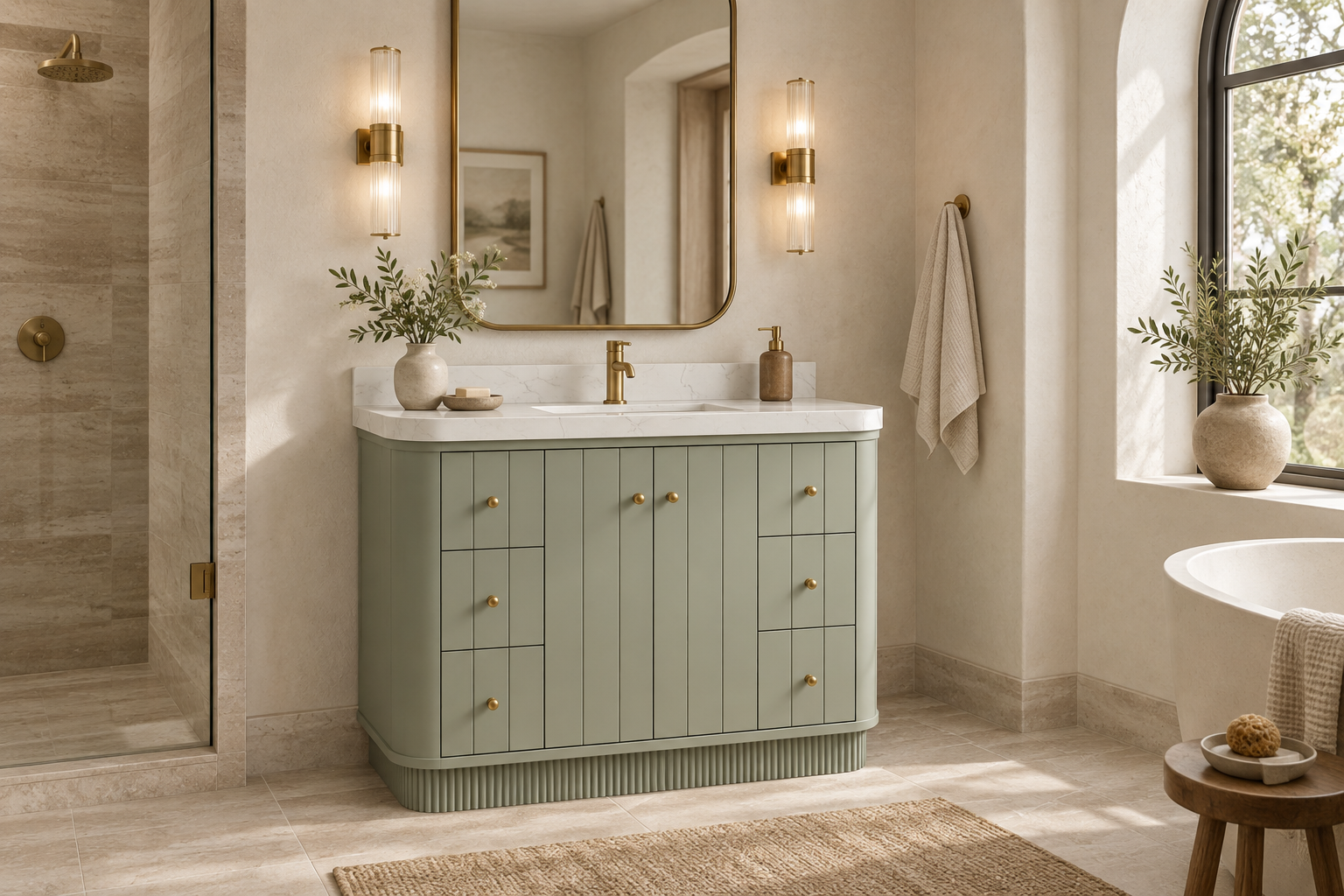
Sponsored content supplied by Willow Bath & Vanity
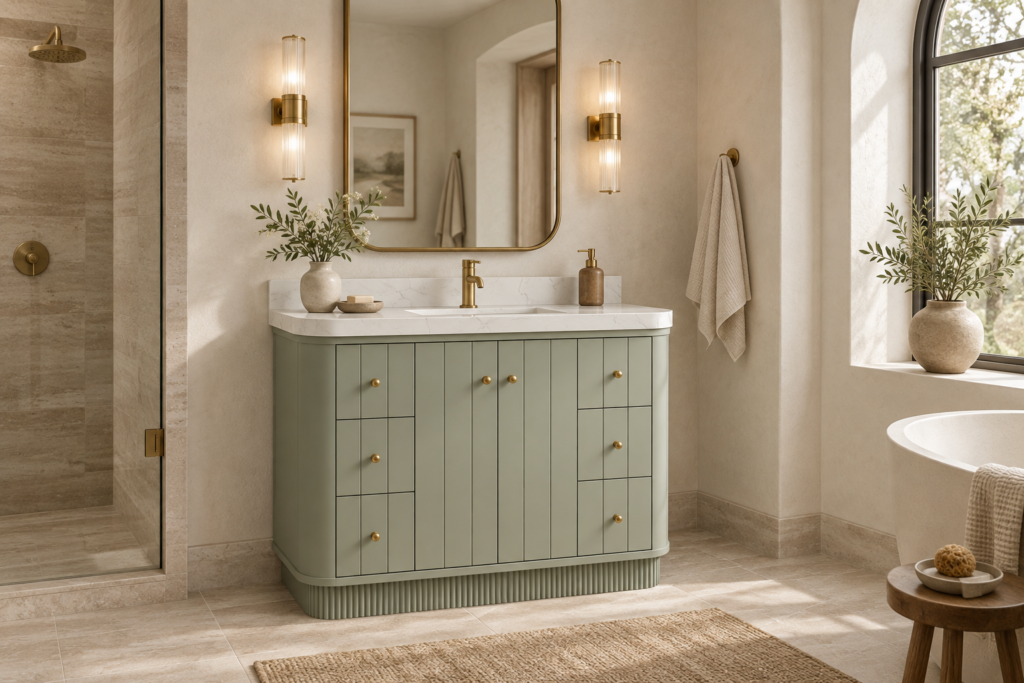
Sponsored content supplied by Willow Bath & Vanity.
A wood bathroom vanity has two jobs: make the room feel considered and hold up to the household’s daily routine. The second job deserves as much attention as the finish. A beautiful cabinet is frustrating if tall bottles cannot stand inside, a drawer meets the bathroom door, or the plumbing occupies the space intended for towels.
Start with the way the room works. Then compare construction, storage and finish within the sizes that fit. This turns a long list of attractive cabinets into a manageable decision.
Read the Construction Description by Component
Make five lines on your comparison sheet: frame, doors, side panels, drawer boxes and back. Record the material stated for each. A description that says only “wood vanity” leaves questions unanswered; even “solid wood” needs a clear explanation of which parts it covers.
Keep material and appearance in separate columns. An oak, walnut or teak finish name does not, by itself, identify the wood underneath. Painted finishes also conceal the surface material. This matters when comparing prices: two cabinets with a similar exterior may have different component specifications.
Look at interior photographs as well as the styled front view. Check where the cabinet is open for plumbing, how shelves are positioned and whether the listing shows the same drawer arrangement as the configuration you intend to order.
Decide Whether 72 or 84 Inches Earns Its Space
An 84-inch vanity adds 12 inches to the width of a 72-inch model. Decide what those inches should accomplish: another drawer bank, a larger landing area beside a basin, or more separation between two users. The benefit depends on the actual layout; a wider cabinet does not automatically deliver the particular storage you need.
Mark both footprints on the floor with painter’s tape. Include the countertop’s full depth and any overhang shown in the drawing. Open the bathroom door, then picture the vanity doors and drawers extended. Check the route to the shower and toilet, and have the installer assess the proposed clearances and plumbing connections.
Choose 72 inches if it accommodates the daily essentials while keeping movement comfortable. Consider 84 when the extra width solves a specific problem and fits the room. For either size, confirm basin positions before arranging mirrors and lighting. A single basin may suit someone who values counter space; two may suit people who regularly get ready together.
Give the Storage a Realistic Trial
Set out what will actually live in the vanity: the tallest cleaning bottle, hair tools, spare paper, daily toiletries and folded towels. Measure the awkward items first. Compare them with usable interior dimensions, rather than the cabinet’s outside measurements.
For a shared bathroom, decide which drawer belongs to each person and where shared supplies will go. For a single user, a shallow everyday drawer near the basin may be more useful than a large cupboard that requires crouching and searching.
Check how the sink bowls, drain traps and water lines intersect with storage. A drawer front is not proof of an uninterrupted drawer behind it. Ask for an interior view or drawing, and keep shutoff valves accessible. Avoid planning every inch around a basket before knowing where the plumbing will sit.
Select a Finish in the Room’s Actual Light
Place a sample beside the floor, countertop and wall color. Look at it in daylight and under the planned bathroom lighting. Compare sheen as well as color: two finishes that appear similar on a screen may read differently next to polished stone or matte tile.
Visible grain can introduce texture, while a painted cabinet can connect the vanity to a broader color scheme. Neither appearance tells you how to clean the finish. Before choosing, find out which cleaners are permitted and whether an approved touch-up product is available. Keep countertop-care instructions separate from cabinet-care instructions.
Plan for Moisture Before Installation
Wood exchanges moisture with its surroundings. The USDA Forest Products Laboratory’s guide to wood and moisture explains how that exchange affects wood’s properties and performance. A bathroom’s ventilation and water management therefore belong in the purchasing plan.
Resolve persistent condensation or leaks before installing the new cabinet. The EPA’s household moisture guidance recommends promptly fixing plumbing leaks and using a bathroom fan or opening a window while showering.
For everyday care, follow the instructions for the selected finish, wipe up spills promptly and keep damp towels off cabinet doors. Leave enough space beneath the plumbing to notice drips. If dampness keeps returning, investigate its source instead of simply covering the cabinet floor with a mat.
Compare the Complete Purchase
Price the same set of components for every finalist. Is the top included? What about basins, backsplash, handles and faucets? Check the faucet-hole arrangement and whether delivery includes the service you need. Measure the route through doorways and stairs before assuming a large cabinet can reach the bathroom.
When browsing the Houston 42-inch single-sink vanity from Willow Bath & Vanity, compare the selected finish, countertop and included components with your notes and the room measurements. The Evergreen rendering illustrates a compact option; the same practical checks apply to larger cabinets.
Shop Online or Visit Metro Atlanta
Willow Bath & Vanity offers online shopping and showrooms in metro Atlanta for comparing finishes in person. Confirm visit arrangements and the displays you want to see before traveling.
Norcross: 6510 Jimmy Carter Blvd, Suite C, Norcross, GA 30071. Alpharetta: 6520 Corporate Court, Suite 200, Alpharetta, GA 30005.

A useful shortlist should explain why each cabinet fits: the right footprint, accessible storage, an appropriate finish and a complete installation budget. Choose the one that answers those questions clearly, whether it is a compact single-sink model or a larger double vanity.