Most people picture a roof as one broad surface.
From the street, the eye naturally goes to the open field of shingles stretching from ridge to eave. That large area gets most of the attention because it covers the greatest visible space.
Yet many important roofing details live at the boundaries.
The roof meets gutters at the eaves. It meets fascia along the perimeter. Gable ends create exposed rake edges. Walls, chimneys, and other vertical surfaces interrupt the roof plane. Water leaves the roof at specific points rather than disappearing evenly from the entire surface.
These edges and transitions deserve close attention during a replacement because a new roofing field still has to connect correctly to everything around it.
A roof is not only defined by what covers the middle. It is also defined by how that covering begins, ends, and meets the rest of the house.
The Eave Is Where the Roof Hands Water to the House
The lower edge of a roof performs a simple-looking job: water travels down the slope and leaves the roof there.
What happens next depends on the surrounding details.
On many homes, gutters collect runoff at the eave. Fascia sits directly behind or near that gutter line. The roof edge, drip-edge components, gutter position, and adjacent trim all occupy a narrow strip of the building.
Because these parts sit so close together, a problem affecting one can sometimes influence how the others perform.
That makes the eave worth reviewing as a small assembly rather than viewing the roofing and gutters as completely unrelated features.
Fascia Can Hide Behind the Roofing Conversation
Fascia is easy to overlook until something around the roof edge is removed.
From the ground, painted or covered fascia may look acceptable even when closer inspection reveals local deterioration, old fastener holes, loose sections, or previous repairs.
Roof replacement can create a useful opportunity to look more carefully at these areas.
That does not mean fascia automatically needs replacement whenever roofing is changed.
It means the roof perimeter should not be ignored simply because the main project involves shingles or another roof covering.
If the edge has a visible problem, it is better to understand it while crews already have access than to discover it after new work has been completed.
Gutters and Roofing Share the Same Boundary
Gutters are often maintained on a separate schedule from roofing.
Physically, however, they meet at the same place.
Their position can affect access to the roof edge, while roof-edge work may affect how gutters are removed, protected, or reinstalled during construction.
A gutter that is pulling away, poorly aligned, or damaged should be noted before replacement begins.
The goal is not to turn every roofing project into a gutter project.
It is to prevent one component from being treated as invisible while work is happening directly beside it.
The roof edge should deliver water cleanly toward the drainage system that receives it.
Rake Edges Face Different Conditions From Eaves
A gable roof has another type of perimeter: the rake.
Unlike the eave, the rake usually runs up the sloped end of the roof rather than along the bottom.
Its exposure is different.
Wind can act strongly along gable ends, and the edge may be visually prominent from the yard or street. Trim, siding, and roofing materials all meet in a relatively narrow area.
If old work has been patched repeatedly along a rake, that history deserves attention.
A broad roof field may appear uniform while the perimeter tells a more complicated story.
Roof Edges Can Reveal Earlier Repairs
Edges are convenient places to notice clues left by previous roofing work.
Look for differences in trim, patched fascia, altered gutters, replaced edge components, or changes in the roofing pattern.
These details do not necessarily indicate current problems.
They may simply show that one part of the roof required work at a different time.
That history can help explain why one perimeter section looks different from another.
It can also guide closer inspection before new materials cover the area again.
The Middle of the Roof Is Not the Only Place That Needs Planning
A full replacement should account for all the places where roofing meets another component.
That includes open roof areas, but it also includes eaves, rakes, wall intersections, penetrations, valleys, and other transitions.
Homeowners considering Roof replacement services can use the planning stage to review these roof-edge conditions rather than focusing only on the broad shingle field.
The replacement is one project, but it contains several different kinds of boundaries.
Those boundaries deserve their own questions before work begins.
Roof-to-Wall Transitions Need Separate Attention
Not every roof ends in open air.
Sometimes the roof meets a taller wall, dormer, chimney, or another section of the house.
These junctions create a different type of edge.
Water has to move past the connection without finding an easy path into the structure. Flashing and surrounding materials become central to that job.
During replacement, these areas should be examined as transitions rather than treated as ordinary sections of the roof.
A new roofing surface cannot correct every issue if the surrounding wall detail is poorly integrated or damaged.
The condition of siding, trim, masonry, and existing flashing may all influence how that intersection is handled.
Chimneys Create Four Edges at Once
A chimney interrupts the roof in every direction.
Water approaches from above, passes along the sides, and continues toward the lower roof slope.
That makes the perimeter around a chimney more complicated than a straight eave or rake.
Old sealant, patched flashing, masonry wear, and previous roofing work may all be visible there.
The roofing material around the chimney is only one part of the condition.
If the masonry itself has problems, simply replacing the surrounding shingles does not address the entire transition.
This is another reason to separate roof-surface issues from adjacent-component issues during planning.
Valleys Are Boundaries Between Roof Planes
A valley may sit well inside the outline of the roof, yet it still behaves like an edge because two roof planes meet there.
Water from both slopes can be directed toward the same line.
That concentrates drainage differently from an open roof field.
Valleys also tend to involve more cutting and detailing than broad uninterrupted areas.
During replacement, their existing condition can reveal past repairs, wear patterns, or debris accumulation.
A valley should not be evaluated only by asking whether the shingles around it look old.
Its geometry and drainage role make it a distinct zone.
New Shingles Cannot Repair Every Adjacent Problem
A roof replacement can renew the roofing system, but it should not be expected to solve unrelated damage automatically.
Rotten fascia, deteriorated siding, failing masonry, damaged gutters, or another exterior issue may need separate work.
This distinction matters because homeowners can otherwise assume that replacing the roof means every problem near the roofline has been corrected.
A better approach is to identify which conditions belong to the roofing scope and which ones require another repair.
Clear boundaries in the work plan are as useful as clear boundaries on the roof itself.
Edge Conditions Can Affect the Finished Appearance
Roof edges are technical areas, but they also influence how the final project looks.
Uneven fascia can make a new roofline appear irregular. Damaged trim may stand out more once fresh roofing is installed. Gutters that sag or vary in alignment can become more noticeable against a newly finished edge.
That does not mean appearance should control technical decisions.
It simply means replacement creates a visual contrast between old and new materials.
Reviewing adjacent edges beforehand can reduce surprises after installation.
Photograph the Perimeter Before Work Starts
Wide roof photos are useful, but perimeter photos often preserve more detail.
Take pictures of:
- Eaves
- Rakes
- Gutter lines
- Fascia
- Roof-to-wall intersections
- Chimney edges
- Valleys
- Previous repairs
- Areas where trim or siding meets the roof
These images create a reference if something changes during construction.
They also help homeowners remember which conditions existed beforehand.
After the project, repeat a few of the same photographs from similar angles.
That creates a clear before-and-after record of the roof boundary rather than documenting only the broad surface.
Walk the Property Instead of Looking From One Spot
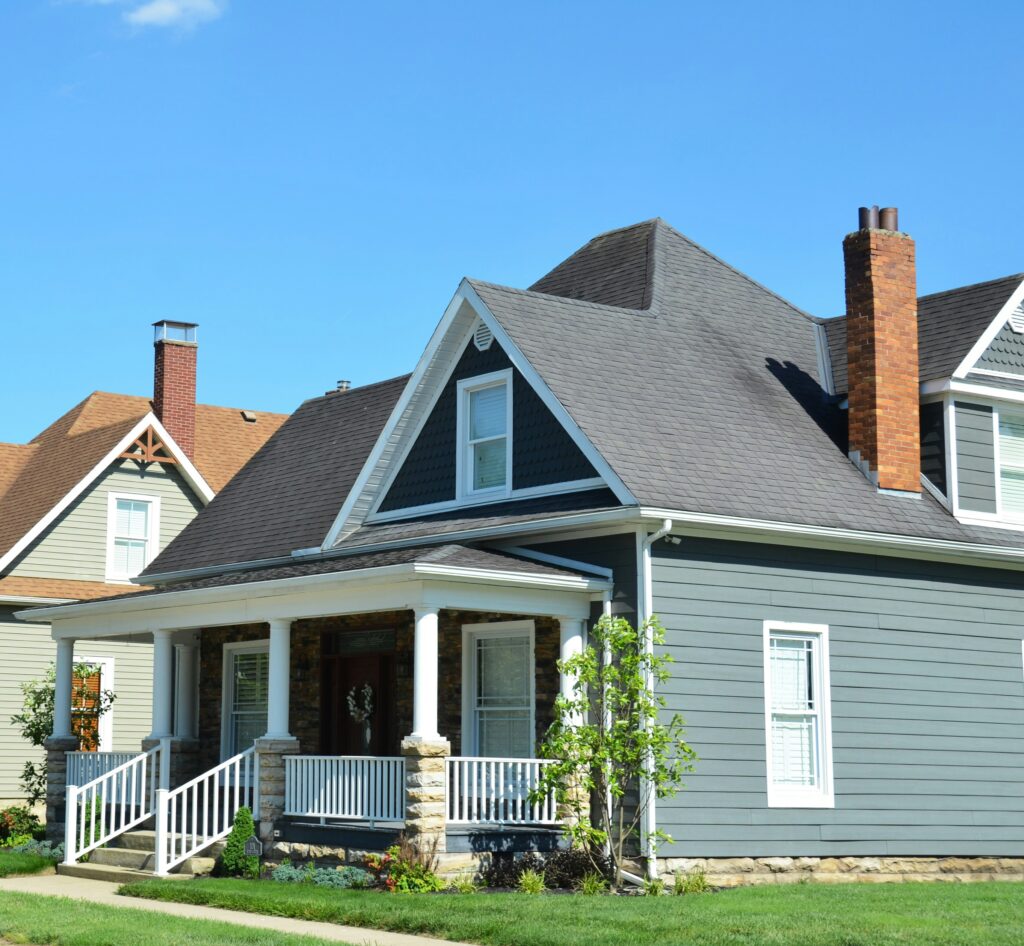
A roof can look very different from each side of the house.
The front may show large roof planes, while the rear contains additions, valleys, low-slope transitions, or more complicated edges.
Walk around the full property before replacement planning is complete.
Look up from several positions.
A detail hidden from the driveway may be obvious from the backyard.
This simple step prevents the most visible elevation from becoming the only one that receives attention.
A Roof Is Defined by Where It Meets Everything Else
The center of a roof is important, but it is not the whole story.
At the perimeter, roofing meets gutters, fascia, siding, walls, trim, and open air. Inside the roof shape, valleys and other transitions create their own boundaries.
These areas often carry more complexity than the uninterrupted middle.
A thoughtful replacement plan therefore looks outward as well as downward.
It asks what the new roofing will connect to, what adjacent components already need attention, and whether previous repairs have left clues at the edges.
The broad surface may be what people notice first.
The boundaries are where the roof becomes part of the rest of the house.