Sauna bathing has moved from spa luxury to backyard staple, and anyone shopping for one runs into the same fork in the road within about five minutes: infrared or traditional? Both leave you sweating, relaxed, and a little lighter on your feet. They get you there in completely different ways, though, and the difference matters more than most showroom brochures admit. The right pick depends on how hot you like it, how much space you have, what your electrical panel can handle, and what you actually want out of the session.
How each type heats you
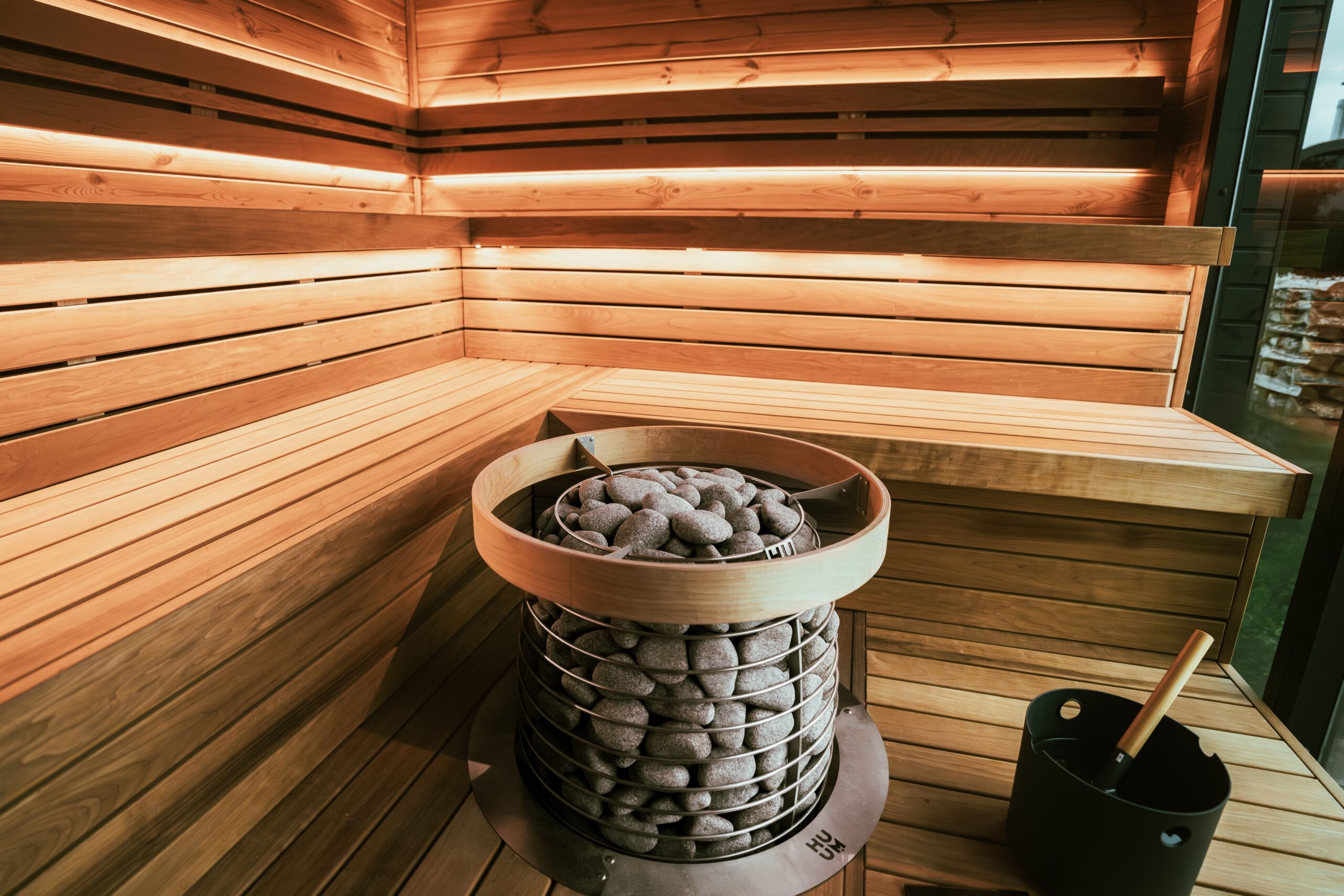
A traditional sauna heats the air. An electric or wood-burning stove warms a bed of rocks; the rocks warm the room, and the hot air warms your skin. Cabin temperatures typically range from 160°F to 200°F. Pour water over the rocks, and you get löyly—the burst of steam that spikes humidity and makes the heat feel sharper and more enveloping.
An infrared sauna skips the air. Carbon or ceramic emitters throw infrared wavelengths that your body absorbs directly, raising your core temperature while the cabin stays between 110°F and 150°F. You sweat heavily at a temperature that feels far more tolerable, which is why infrared appeals to people who find traditional heat suffocating.
Side-by-side comparison
| Factor | Traditional Sauna | Infrared Sauna |
| Operating temperature | 160–200°F | 110–150°F |
| Preheat time | 30–45 minutes | 10–15 minutes |
| Typical session | 10–20 minutes | 25–45 minutes |
| Humidity | Adjustable with water | Dry only |
| Power draw | 6–8 kW, often 240V | 1.6–3 kW, often 120V |
| Ambiance | Steam, aroma, ritual | Quiet, low-key, dry |
| Upfront cost | Higher, especially wood-fired | Generally lower |
Which one fits your goals?
Choose a traditional sauna if you want the full Finnish ritual, like intense heat, plan to do contrast therapy with a cold plunge, or want to host. Traditional cabins shine for steam and social use. The higher air temperature also makes them the better fit for anyone who wants that scalp-tingling, deeply cleansing heat that infrared simply doesn’t replicate.
Choose an infrared sauna if you’re heat-sensitive, want longer, gentler sessions, are working around a 120V outlet, or want something you can use daily without a 45-minute warm-up. Infrared cabins are lighter, easier to install indoors, and cheaper to run—usually a few cents per session.
If you’re weighing home saunas in Charleston, SC, climate deserves a vote. The Lowcountry’s humidity means a traditional sauna’s steam sits differently in July than in January, and an outdoor cabin needs ventilation and rot-resistant wood—thermally modified aspen, cedar, or hemlock— o survive coastal moisture and salt air. Infrared units, which run drier and cooler, are often placed indoors in a spare room, garage, or finished basement where humidity is already controlled.
Indoor, outdoor, or somewhere in between
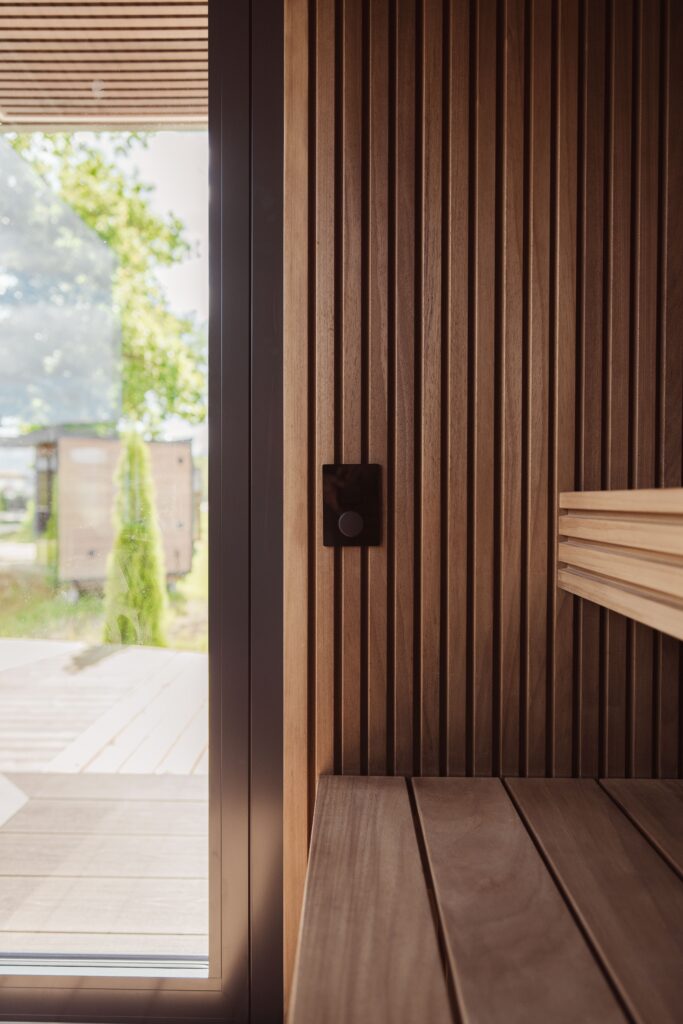
Placement decides more than people expect. Indoor installations need a dedicated circuit, a moisture-tolerant floor, and enough clearance for the door to swing. Outdoor installations need a level pad, weather-sealed cladding, and a plan for winter runoff.
Outdoor setups also create a storage problem most people don’t anticipate until the first session. Towels, robes, ladles and buckets, sauna-safe cleaning supplies, essential oils, spare heater rocks and—if you go wood-fired—split firewood all need a dry home that isn’t the cabin itself. Leaving them inside means they cycle through every heat-up and cool-down, which fades textiles fast and warps wooden accessories.
Durable small sheds solve this cleanly. A weather-sealed unit placed a few steps from the door keeps everything within arm’s reach while staying out of the heat and humidity swing. Look for a raised floor to fight ground moisture, a vented roofline, and a door that latches tight—firewood especially needs airflow to stay dry enough to burn clean. Add a shelf-and-hook layout inside and the shed doubles as a changing-room annex, which matters when the walk back to the house is fifty feet in January.
Common questions
Do infrared saunas make you sweat as much as traditional saunas? Roughly, yes— but it takes longer. A 40-minute infrared session produces sweat volume comparable to a 15-minute traditional session.
Which is better for sore muscles? Both help. Infrared penetrates more consistently at lower temperatures, which many athletes prefer for recovery. Traditional heat, paired with a cold plunge, drives a stronger circulatory response.
Are infrared saunas cheaper to run? Almost always. Lower wattage plus shorter preheat means lower monthly cost, though the gap narrows if you use it daily for long sessions.
Can one sauna do both? Hybrid units exist, combining a traditional stove with infrared panels. They cost more and compromise slightly on both experiences, but they’re a legitimate option if you can’t decide.
No option is universally superior—only the one that fits you best. Traditional saunas deliver ritual, steam, and social heat. Infrared saunas deliver accessibility, efficiency, and gentler daily use. Be honest about how hot you actually enjoy being, how much space and power you have, and whether the sauna is going to be a weekly event or a nightly habit. Answer those three questions, and the choice usually makes itself.