The dining table can change jobs several times in one day. It may hold a work call at noon, a school project at four, and plates by six. A room that supports those shifts needs clear surfaces, useful storage, and lighting you can adjust. As you compare luxury modern chandeliers, think about that full routine. Start with the tasks your family brings to the table, then plan a room that feels ready for each one.
Give the Table Room for Its Daily Jobs
When designing a dining room, look at what lands on your table over a normal week. A laptop needs room for its screen and mouse. Homework can spread into books, pens, and loose sheets. Set out those items, then check whether someone can still sit down with a snack. You may find that a small change to storage can free enough space for the tasks you already do.
Check the chairs with people seated and the table fully open. Leave a clear path to the kitchen and any doors nearby. If you use an extending table, try the larger layout before a gathering. Place a paper shape on the floor to mark its full size. Include room to pull out chairs and walk behind them.
Choose a Light That Suits the Table
Start with the table’s shape and where it will stay. A long fixture may suit a long table, while a round form can echo a round top. Check the width from the doorway and the seats. A broad shade that looks right in a photo could block a view in your room. Make a paper outline of the fixture and hold it at the planned spot to judge its size before you buy.
Share the table’s location and the fixture details with a qualified electrician. Ask them to assess the support, mounting, and suitable hanging height. Check the view across the table so that the light leaves faces clear to see. If your table moves for guests, think through that position, too. The fitting should suit the layout you use most.
Set Up Light for Work and Meals
Try the room with a page of homework on the table. Check for shadows where a hand rests and glare on a laptop screen. A ceiling light may need help from another source, depending on the room and task. A nearby lamp can add light where you need it if its position and cord stay clear of the work area. Test each source from the seats your family uses, since the view changes across the table.
For meals, you may enjoy a softer level of light. A dimmer can give you a way to change it if the fixture, light source, and control work together. Have the supplier or electrician confirm that match. Test the lowest level you want to use, too. Keep enough light for people to see their plates and move through the room.
Keep School and Work Supplies Close
Give the things you use each day a home within reach and well organized. A drawer can hold pencils and paper. A basket can keep a child’s current project together. A sideboard may offer space for both school supplies and serving pieces, with a shelf for each. Choose storage based on what you need to put away. Check the size of folders and craft boxes before you add dividers or buy new containers.
Make clearing the table a short task. A tray for work items can move to a nearby shelf when dinner starts. A washable mat can protect the surface during suitable craft tasks, following the table’s care guidance. Keep cables clear of chairs and walking routes. Where devices need power, plan a safe place to charge them. A table that clears in a few steps gives the family a useful starting point for the next part of the day.
Add Details That Feel Like Home
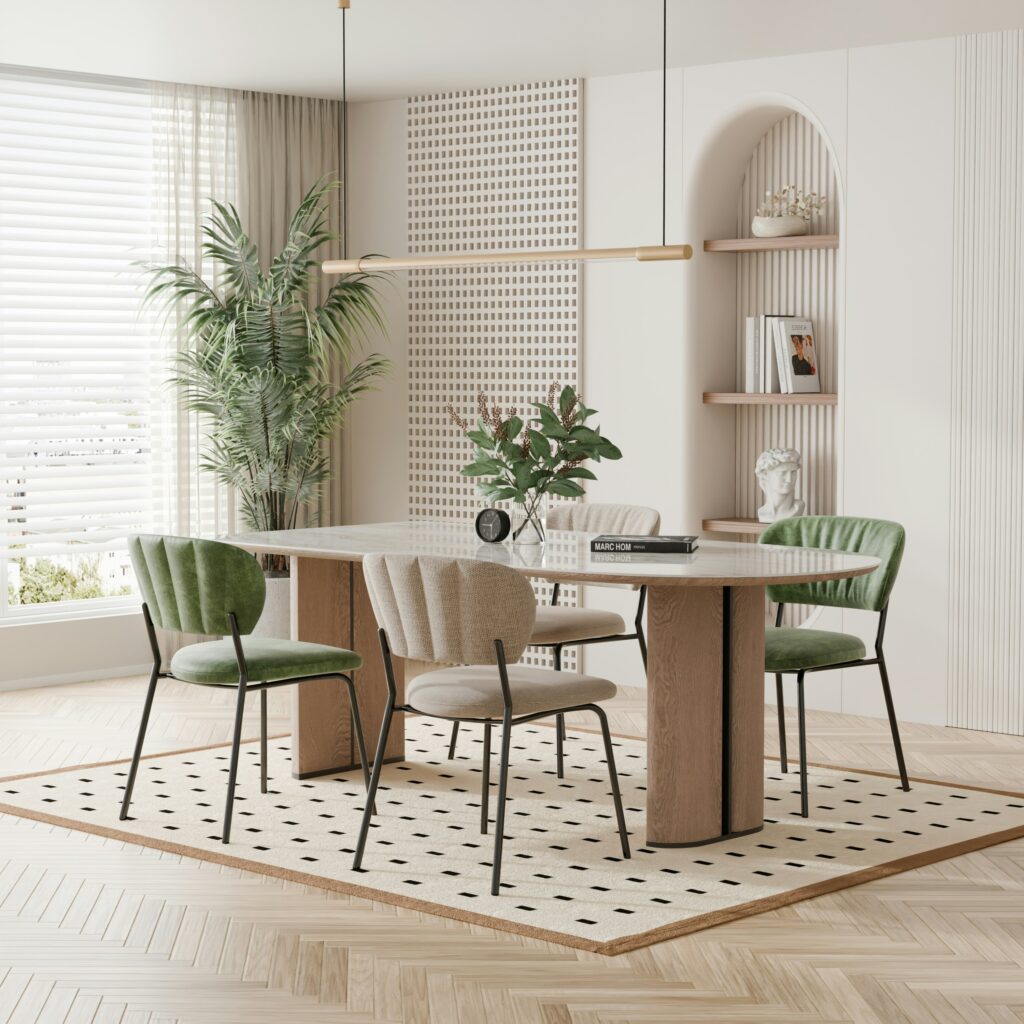
Choose a small group of colors or materials that you enjoy together. A light’s warm metal finish could connect with a picture frame. The curve of a shade could echo the chairs. You can also bring in a fabric at the window or a rug suited to the room’s use. View these pieces in daylight and with the lights on. That helps you see how the room will feel at the times you spend there.
Keep table decor easy to move. A low bowl or a small vase can sit on a shelf while you work. Tall branches may get in the way of a light or a conversation across the table. Check how the centerpiece feels from a seated position. You can bring it back for a meal without rebuilding the whole display.
Build an Easy Evening Reset
Try a short reset before the first meal in your refreshed room. Put work in its tray, return supplies to their shelf, and wipe the table as its maker advises. Change the light to the level you like for dinner. Ask each person to take care of their own items where possible. This routine helps the room move through its jobs with less sorting at the end of a long day.
Live with the layout for a week and notice what still gets in the way. A basket may need to move closer. A chair may need more space. A bulb choice may need review within the fixture’s limits. Make those small changes as you learn. With a useful table, a thoughtful light, and nearby storage, your dining room can welcome the busy parts of family life and still feel ready when everyone sits down to eat.