
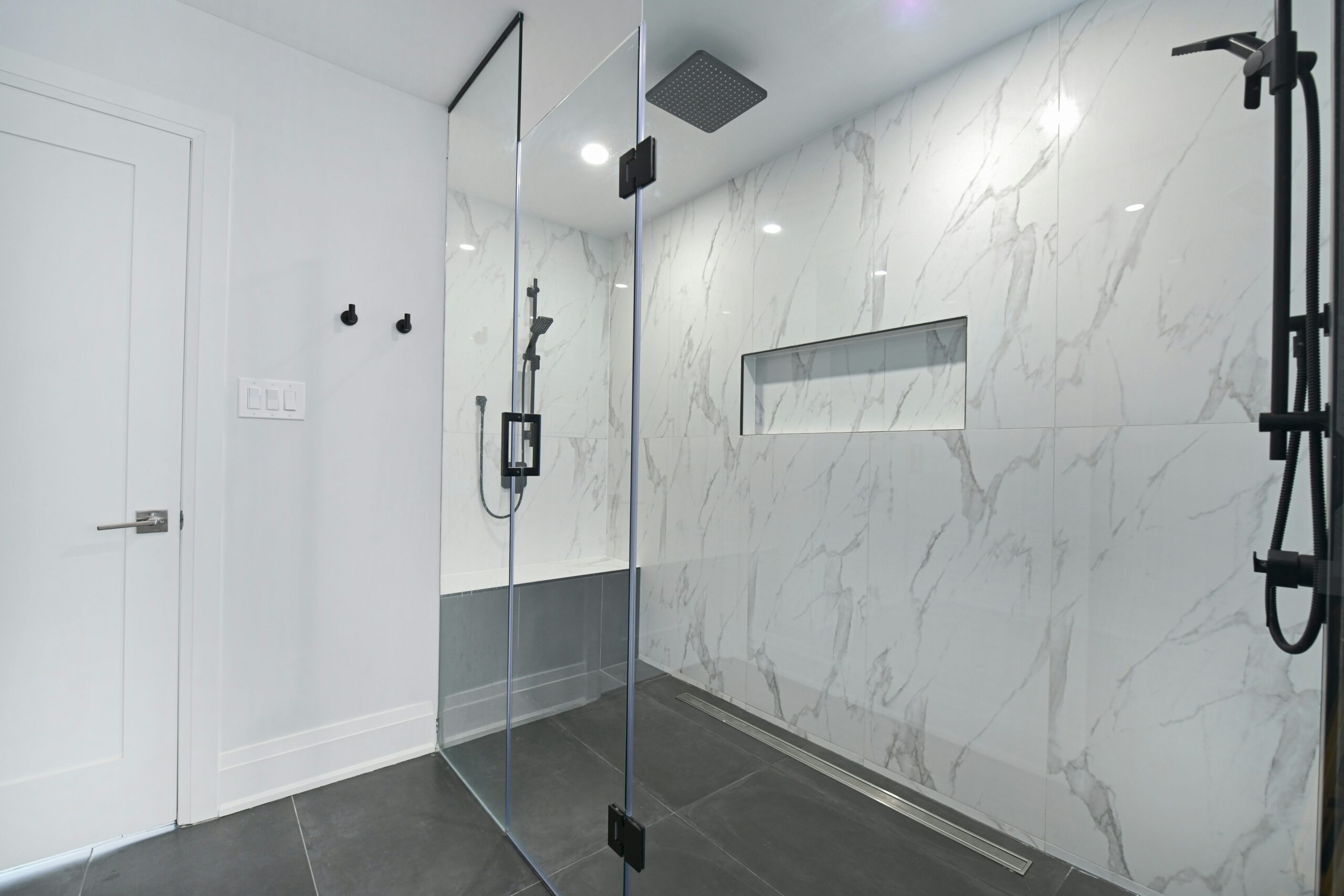
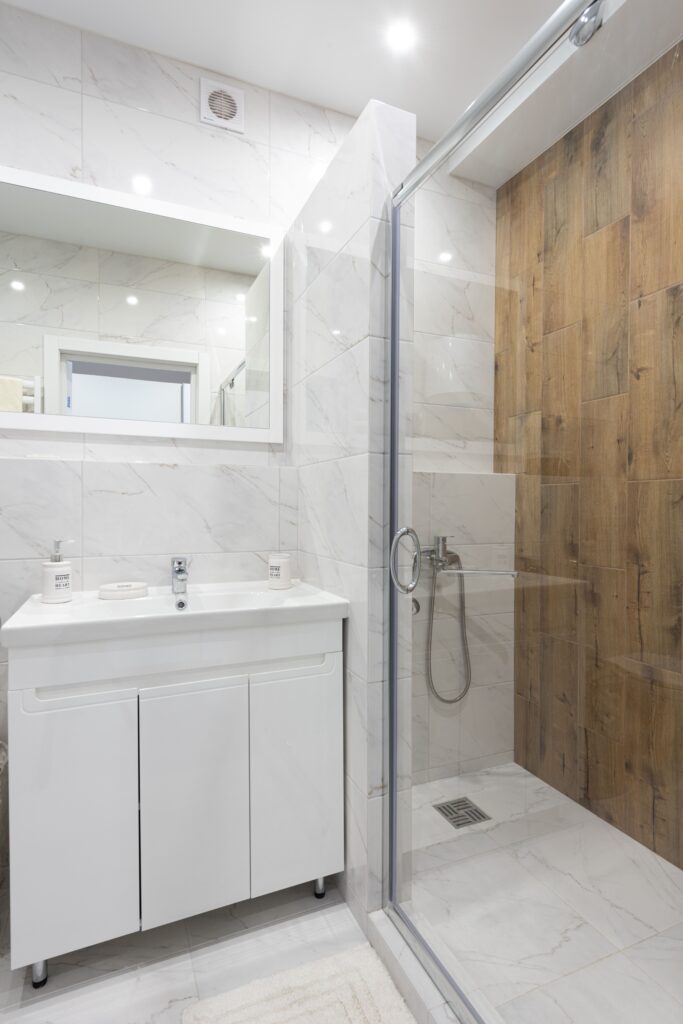
A standard glass shower enclosure and a steam shower enclosure might look similar at a glance, both feature glass panels and a door, but they’re built to entirely different specifications underneath.
Understanding what actually separates the two matters before assuming any frameless shower installation can simply be converted into a spa-like steam experience.
Why a Standard Enclosure Isn’t Built to Contain Steam
A regular shower enclosure is designed to control water spray, not vapor. Gaps at the top, bottom, and sides that are perfectly acceptable for a standard shower, since a small amount of water escaping isn’t a real problem, become a genuine issue for steam, which is far better at finding and escaping through small gaps than liquid water is.
A standard enclosure used for steam would simply let it escape into the rest of the bathroom rather than containing it for the intended spa effect.
What a Steam Shower Enclosure Actually Requires
A properly built steam enclosure needs full-height sealing, meaning the enclosure extends to the ceiling or has a sealed transom panel above the door, rather than the open-top design common on standard showers.
Every seam and panel junction needs steam-specific gaskets and sealing methods, considerably more thorough than the sealing on a standard enclosure, since steam will exploit any gap that liquid water simply wouldn’t.
Why Ceiling Height and Design Matter More for Steam
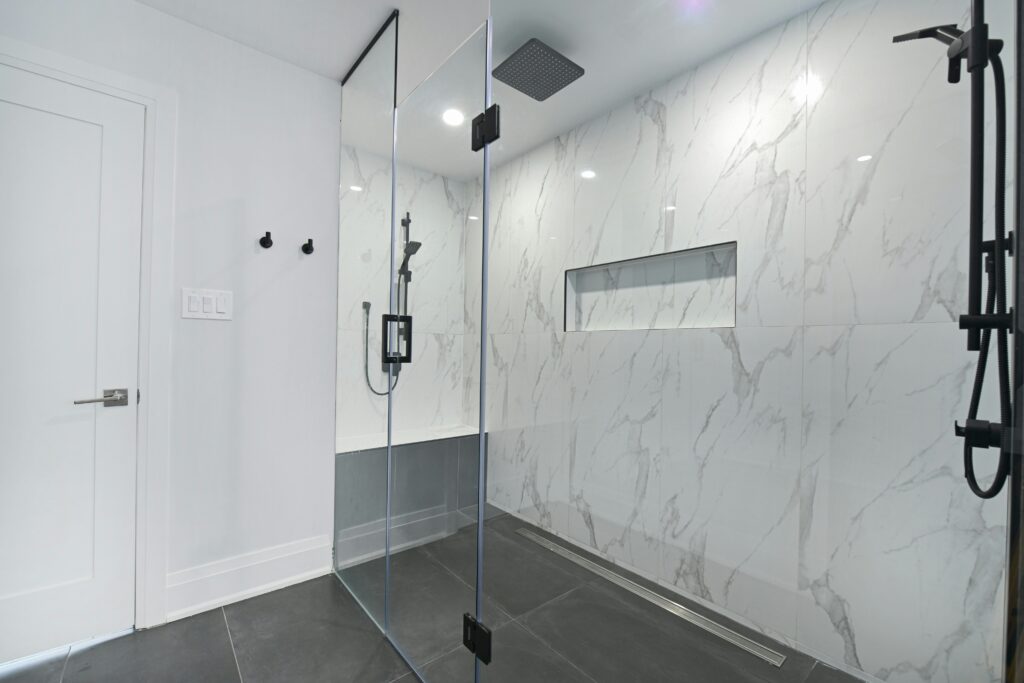
Standard showers can have an open top without any real downside. Steam showers need a ceiling, either the room’s actual ceiling if it’s low enough and properly sloped, or a dedicated shower ceiling built specifically to contain steam and allow condensation to run off appropriately rather than dripping uncomfortably.
This is a structural consideration that goes beyond the glass enclosure itself and affects the overall bathroom design.
Why Steam Generator Sizing and Placement Is a Separate Consideration
A steam shower requires a dedicated steam generator, sized appropriately for the enclosure’s actual volume. An undersized generator struggles to build adequate steam, while an oversized one wastes energy and can create excessive condensation.
This sizing calculation depends on the enclosure’s specific dimensions, which is why steam shower planning needs to happen as an integrated project between the glass enclosure design and the mechanical steam system, not as two separate, disconnected decisions.
Why Ventilation Planning Differs Too
Beyond containing steam during use, a steam shower needs a thoughtful ventilation plan for after use, allowing the space to dry out properly to prevent mold and mildew growth in a space that’s now regularly exposed to sustained high humidity in a way a standard shower isn’t.
This is worth discussing directly as part of the design process rather than assuming standard bathroom ventilation is automatically sufficient.
Why Materials Throughout the Bathroom Need Reconsideration
A steam shower’s sustained humidity exposure affects material choices beyond just the glass enclosure. Grout, tile sealants, and even certain cabinetry finishes in proximity may need upgrading to handle the more demanding moisture environment a steam shower creates compared to a standard shower’s more intermittent water exposure.
What This Means If You’re Considering the Upgrade
If you’re drawn to the idea of a home steam shower, it’s worth having an honest conversation about whether your specific bathroom’s layout, ceiling height, and ventilation can actually support it properly, rather than assuming any bathroom can accommodate a spa-quality steam experience with a simple enclosure swap.
Getting a Steam Shower Built to Actually Perform as Intended
Because a steam shower involves genuinely different sealing, structural, and mechanical requirements than a standard glass enclosure, it’s worth working with an installer who plans for these differences from the start.
GCS Long Island designs and installs custom steam shower enclosures specifically engineered for full containment and proper ventilation, rather than treating a steam upgrade as a simple glass swap on a standard shower design.