The shared outdoor spaces managed by HOAs and community organizations, such as the pool deck and the community park, rank among the most used amenities in any residential community. A handful of specific investments consistently determine whether these spaces are genuinely enjoyed or simply tolerated.
A park that residents walk past and one where neighbors choose to socialize are separated by deliberate infrastructure choices. The five HOA outdoor space improvements below form a prioritized sequence that boards and managers implement to raise resident satisfaction and increase participation.
Evaluating neighborhood outdoor amenities requires recognizing what makes an environment functional across different times of the day. A space must protect its users before it can entertain them.
Without proper overhead cover, residents will abandon sunny common areas halfway through the morning to avoid thermal exhaustion. Erecting a UV-resistant shade structure from WillyGoat prevents this harsh midday sun exposure, directly securing daytime usability.
As evening falls, sensory elements become equally critical for continued engagement. Installing a pond fountain with RGB lights from Everblue Pond aerates the water to support fish and plant health while also creating an eye-catching display after dark. The moving water prevents stagnation, discourages algae growth, and keeps mosquitoes from breeding on the surface.
1. Create Spaces That Invite People to Stay
Quality benches, picnic tables, and cluster-seating arrangements give residents a physical reason to stop walking and sit down. Material selection dictates survival against long-term weather constraints.
Powder-coated steel, recycled plastic lumber, and pressure-treated hardwood hold up to heavy rain without requiring constant replacement. Clear ground-level access, firm surfaces, and armrests placed at 27 to 29 inches guarantee the space remains fully accessible to aging populations.
Strategic placement decisions drive daily usage just as heavily as the specific furniture purchased. Positioning a seating arrangement near shade trees, pathway junctions, or playground edges makes the area feel integrated rather than isolated.
Functional common area layouts become vital when considering that roughly 227 million adults or their household members visited a local park in the last year. Adding comfortable benches naturally captures this high volume of daily neighborhood foot traffic.
2. Light Pathways for Evening Safety and Usability
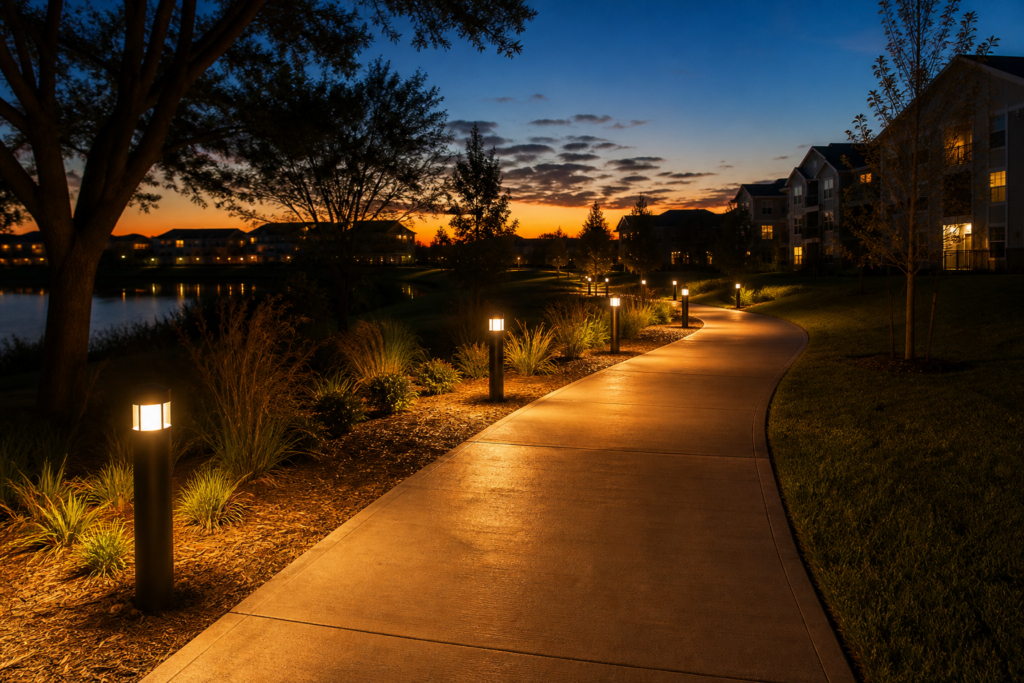
A brightly illuminated route connecting the community entrance directly to the pool deck extends effective usage hours by two to four hours on typical evenings. Consistent lighting removes the heavy hesitation that dark paths create for families navigating the grounds. Trip hazards become clearly visible from a distance.
The most strategic installation sequence prioritizes unbroken pathway continuity first before addressing specific gathering zones. Budget-conscious planners typically evaluate solar-powered stakes for low-traffic walking routes alongside low-voltage LED strip systems for main pedestrian arteries. Motion-activated area fixtures manage entry points and gate codes efficiently.
| Key Insight: Well-lit paths can extend usable outdoor hours by 2-4 each evening, directly boosting resident confidence and safety without any structural changes to the space itself. |
3. Invest in Green Spaces and Community Gardens
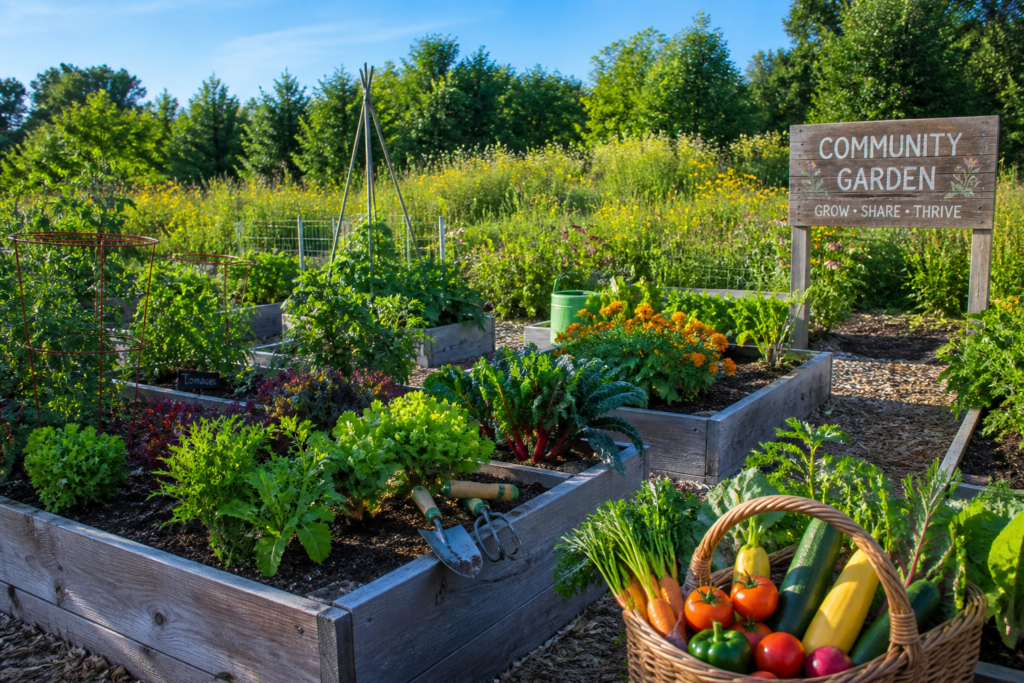
Regular access to landscaped green spaces links directly to lowered cortisol responses and increased physical activity blocks. These amenities provide outsized value to organized subdivisions, because less than half of people in the United States currently reside within half a mile of a municipal park.
A local shared garden project provides a structured, recurring reason for people to interact with neighbors they might otherwise never meet during their daily routines.
Organizations can scale this landscaping investment directly to their available seasonal budget. Native plantings alongside mulched meadow sections demand minimal ongoing landscaping attention to thrive.
Dedicated pollinator vegetation or heavily managed lawn areas represent a sensible mid-tier operational commitment. Raised-bed layouts featuring assigned seasonal planting plots generate deep community engagement across the entire summer growing calendar.
4. Install Shade Structures for Year-Round Comfort and Safety
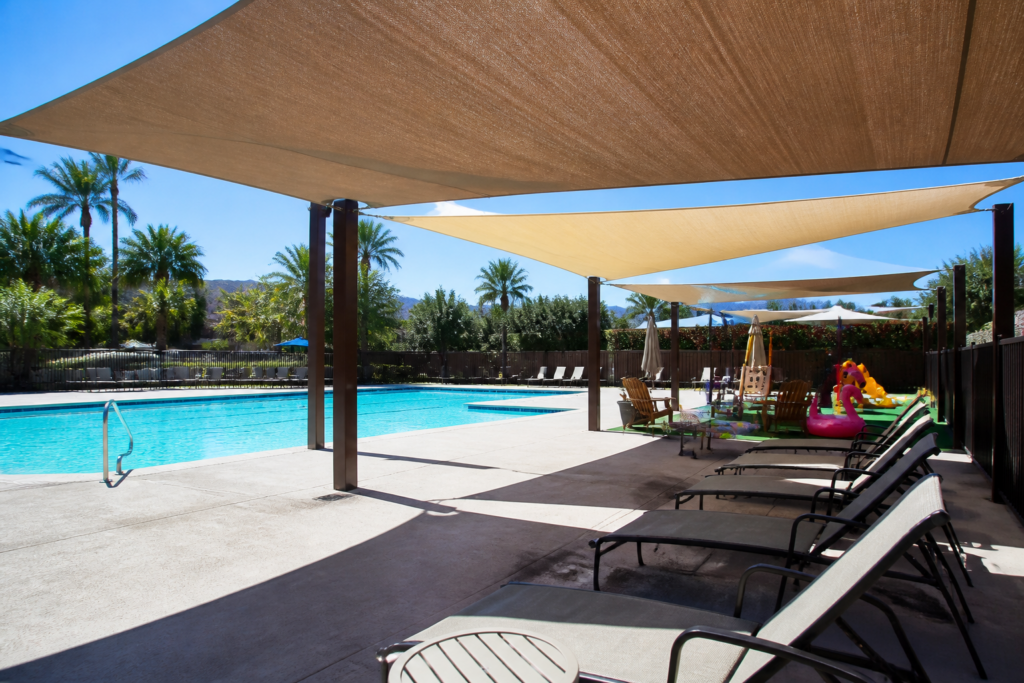
An exposed concrete pool deck or open playground becomes physically unusable during the peak heat of summer months. Unprotected ultraviolet exposure accumulates dangerously during short sessions.
Without overhead cover, solid steel decks and metallic play equipment surfaces easily reach temperatures high enough to cause serious contact burns within seconds. The threat of rapid heat exhaustion also rises sharply for vulnerable individuals facing continuous heat exposure against superheated structures.
Heavy-duty hip shades provide permanent cover engineered specifically for large neighborhood gathering sectors. Fabric sail designs offer flexible canopy angles for irregular land plots where a traditional rigid frame might obstruct necessary sightlines. Modular umbrella structures act as relocatable units, making them highly practical for minor seating clusters that require temporary seasonal protection.
| Important: Unprotected metal play equipment can exceed 140°F in direct sun, and cumulative UV exposure sharply increases heat exhaustion risk for children and elderly residents. |
5. Add a Lighted Water Feature to Anchor the Space
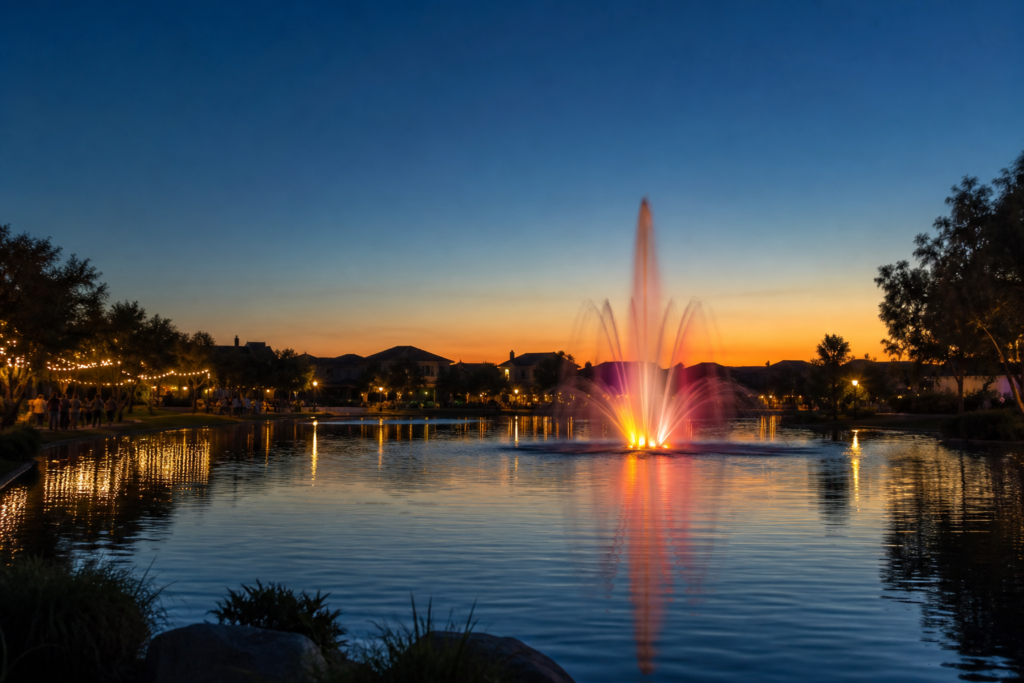
Focusing on aquatic installations physically draws residents out of their homes and into the common square. Moving currents create an organized visual center that naturally funnels pedestrian traffic toward the central gathering area.
The continuous ambient sound from spraying jets measurably reduces perceived vehicle noise from adjacent arterial streets, providing essential acoustic relief in dense residential developments.
Evening illumination components extend outdoor recreational time effectively long after the afternoon heat has dispersed. Smaller entry areas rely on simple decorative sprayers, while larger neighborhood retention ponds demand aerating pump systems that simultaneously circulate and oxygenate the lower depths.
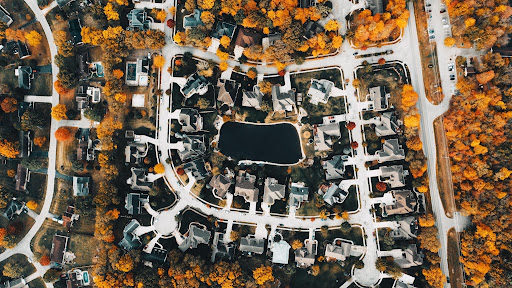
Upgrading current aquatic setups delivers the strongest immediate return in subdivisions that already possess an established retention basin.
The Path Forward
Most boards cannot fund all five large-scale improvements in a single operational cycle. Sequencing these projects by total visible impact gives leadership a highly defensible framework for organizing phased progress.
Practical seating installations deliver immediate localized value to daily walkers, while dedicated pathway illumination promotes a safety narrative that easily earns widespread support from residents. Erecting commercial-grade overhead protection requires a substantial initial outlay but directly answers critical daytime heat safety concerns.
Spreading outdoor improvements across a multi-year schedule prevents draining the annual reserve fund. Foundational landscape additions scale affordably over several consecutive seasons with minimal labor. Integrating heavy-duty overhead canopies and brightly illuminated aquatic sprayers builds the precise type of premium environment that modern buyers demand.