

The best eco-friendly home upgrades deliver a double return: they make daily life more comfortable for your household while measurably reducing your environmental footprint. Most homeowners assume these two goals are in tension, that going green means accepting some trade-off in performance or quality.
In practice, the right green home improvements do the opposite. Each upgrade below improves how your home feels to live in first, and reduces its environmental impact as a direct consequence. Here are six sustainable home upgrades worth starting with, from quick switches to more significant investments.
Focusing on high-impact zones makes transitioning to a greener home far more manageable. In the bathroom, swapping a standard fixture for a modern heated bidet toilet seat from Premier Bidets slashes paper waste while elevating daily personal hygiene.
Step outside the house, and running your garden equipment exclusively on an off-grid solar kit from Off-Grid Source bypasses grid utility fees entirely. These targeted hardware choices prove that building an eco-friendly property directly supports a luxurious, self-sufficient lifestyle.
1. Replace All Bulbs With Full-Home LED Lighting
LEDs use at least 75 percent less energy than incandescent bulbs, and they last up to 25 times longer. This full-home switch cuts your monthly electrical bill while significantly reducing how often you buy replacements, which means a complete transition usually pays for itself within two years.
Modern LEDs come in warm, cool white, and daylight spectrums, so adding dimmer compatibility lets you control the atmosphere without drawing excess power. Households often notice the color rendering looks far more consistent than the old incandescent bulbs they replaced. This lower electrical demand shrinks your carbon footprint while keeping burnt-out glass out of local landfills.
2. Install Water-Efficient Fixtures

Modern fixtures reduce household water consumption by up to 40 percent at each point of use. Low-flow showerheads rated at 1.5 to 2.0 gallons per minute replace older resource-heavy units, since current pressure-compensating technology maintains a dense spray force. As a result, the shower experience remains identical to higher-flow models.
Dual-flush mechanisms provide a full flush for solids and a slightly lighter option for liquids. Upgrading older models to WaterSense-certified options can reduce water used for toilets by 20 to 60 percent. Additionally, installing inexpensive faucet aerators offers an immediate drop in sink flow, saving thousands of gallons of clean water annually across the whole property.
| Quote: Water is the next frontier and modern fixtures make it possible to cut household consumption without noticing the change. |
3. Add Smart Home Energy Monitoring
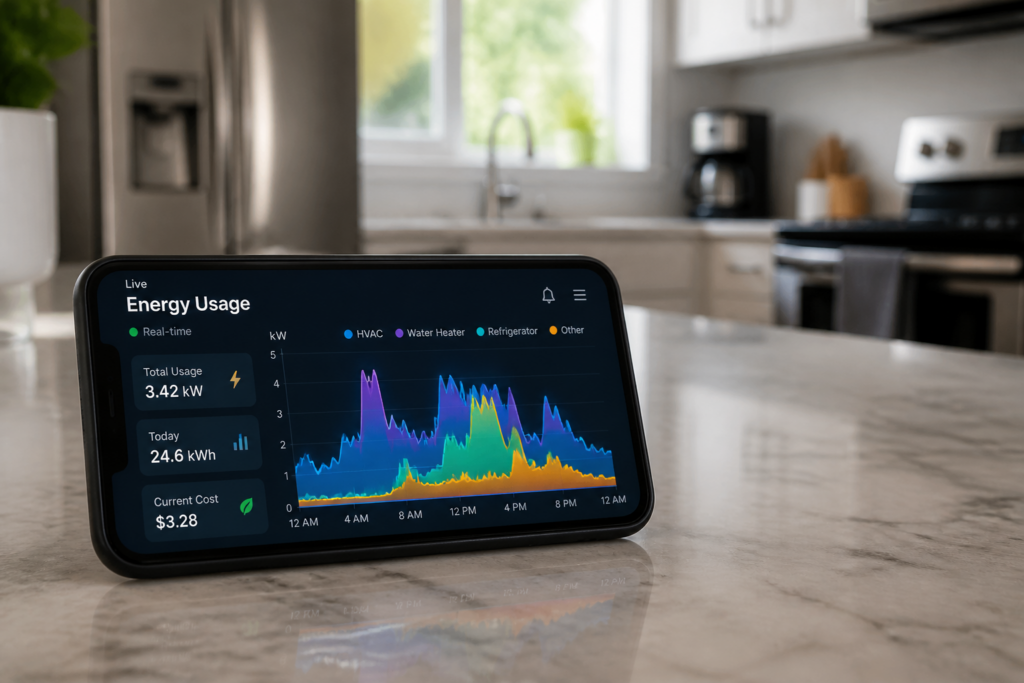
A smart monitor gives you exact real-time visibility into your household electrical patterns. Multiple external studies show that simply making consumption visible triggers immediate positive habit changes, prompting families to shut off unused units. This behavioral shift drops aggregate usage by roughly 10 percent long before you replace worn-out appliances or rewire any older circuits.
Whole-home monitors clip right to your main electrical panel to send live data straight to a smartphone. These small tracking devices flag peak usage times and identify hidden phantom loads pulling standby power. Realizing a secondary garage refrigerator costs hundreds of dollars annually provides the concrete data needed to unplug wasteful hardware forever.
4. Improve Insulation and Draught Proofing
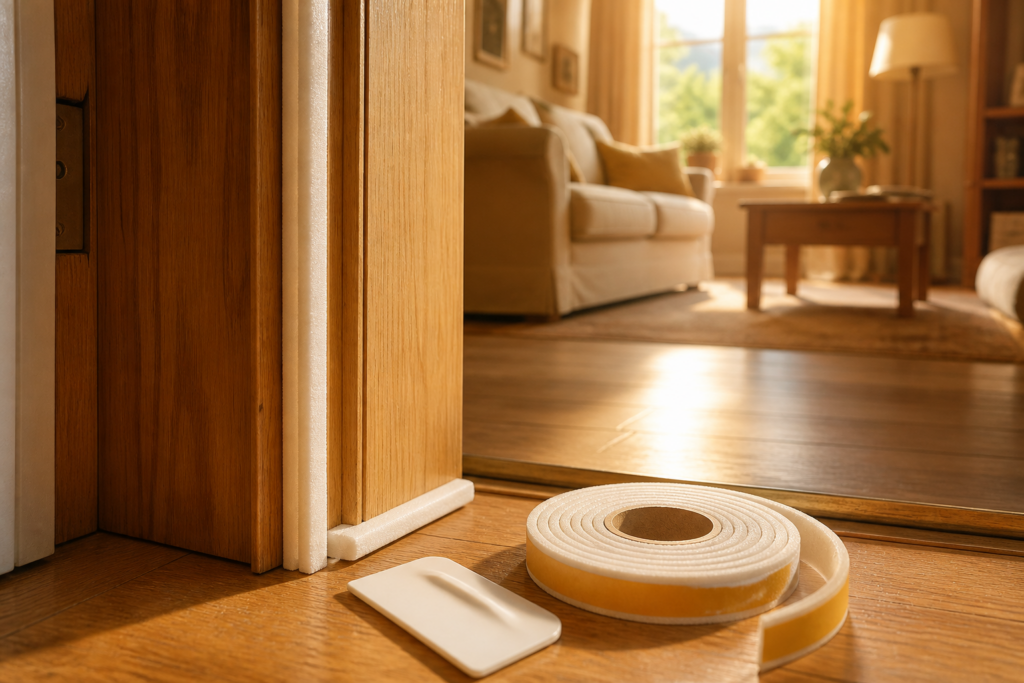
Sealing localized gaps around exterior doors and skirting boards offers an exceptionally fast return on investment. Basic weather-stripping materials cost very little and attach quickly without complex professional tools.
Homeowners typically recover this small initial expense within a single winter cycle due to decreased heating delays, resulting in warmer winter rooms and cooler summer spaces.
Targeting overhead loft spaces addresses massive thermal loss on a structural level. Because upgraded insulation prevents heat escape, it creates highly stable temperatures across every room in the property. The corresponding drop in fossil fuel consumption natively follows as a byproduct of this better-sealed envelope.
| Pro Tip: Start with door seals and window strips; they cost pennies, install in minutes, and pay back within a year. You’ll feel the difference immediately as cold drafts vanish and rooms stay warmer. |
5. Upgrade the Bathroom With a Heated Bidet Toilet Seat
An electric bidet seat delivers instant warm water washing and a gentle air dry upon contact. The structural hygiene upgrade convinces most families to permanently abandon standard dry toilet configurations. This switch also tackles a massive source of invisible household waste, since the average person flushes roughly 100 rolls of toilet paper down the drain every year.
Producing paper goods requires immense amounts of fresh water and harvested trees. Electric bidet seats utilize a precisely controlled liquid volume per wash, needing a fraction of the resources required by paper manufacturing. Premium models include customizable pressure settings, warm air fans, automatic deodorizers, and remote user presets.
6. Install an Off-Grid Solar Kit for Outdoor and Garden Power

Installing an independent solar setup for outdoor spaces isolates heavy loads from your main utility meter. Dedicated garden studios, detached workshops, and automated irrigation pumps operate remarkably well on isolated power arrays, which eliminates the massive expense of trenching new electrical lines across your lawn.
An isolated power circuit also builds concrete household resilience, ensuring vital exterior tools run normally during neighborhood blackouts.
For solar beginners, the primary challenge involves correctly matching component specifications like panels, charge controllers, and battery banks. Mismatched parts guarantee system failure, so these components must align exactly with your anticipated daily energy load.
Securing a complete, pre-matched power package safely ensures your remote outbuildings have reliable electricity from the moment the system switches on.
| Important: Mismatched solar components panels, charge controller, battery, inverter can underperform or fail if not properly matched. Always verify compatibility before buying. |
The Path Forward
These six distinct upgrades fit into straightforward categories based on installation complexity and upfront cost. Swapping out lightbulbs, applying dense weatherstripping, and clipping on an energy tracker take merely an afternoon. These foundational acts establish an immediate baseline of efficiency that pays quick financial dividends.
Medium investments like advanced showerheads and modern bidet seats offer immense daily luxury. Upgrading personal care routines slashes paper waste while bringing high-end comfort into master bathrooms. For exterior power demands, routing isolated solar hardware to backyard outbuildings provides reliable energy without monthly utility fees.