
Once you’ve decided on a frameless glass shower, the next real decision is how the door itself actually operates.
Barn door sliders and hinged doors are two of the most common glass shower door configurations, and they solve genuinely different problems depending on your bathroom’s layout and how you actually use the space.
How Each Configuration Actually Works
A hinged door swings open on hinges, similar to a standard interior door, requiring clearance space in front of the shower opening for the door to swing through its arc.
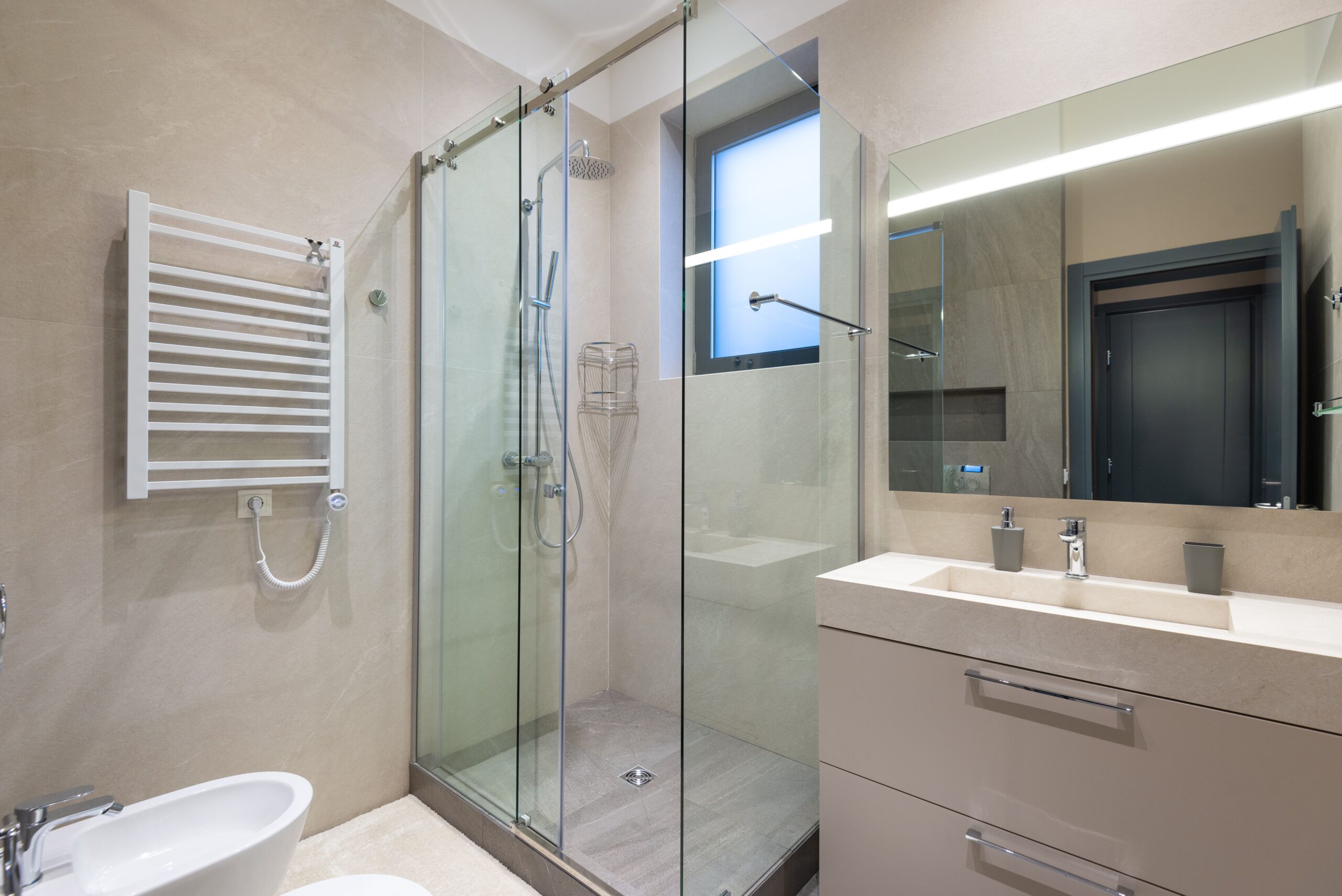
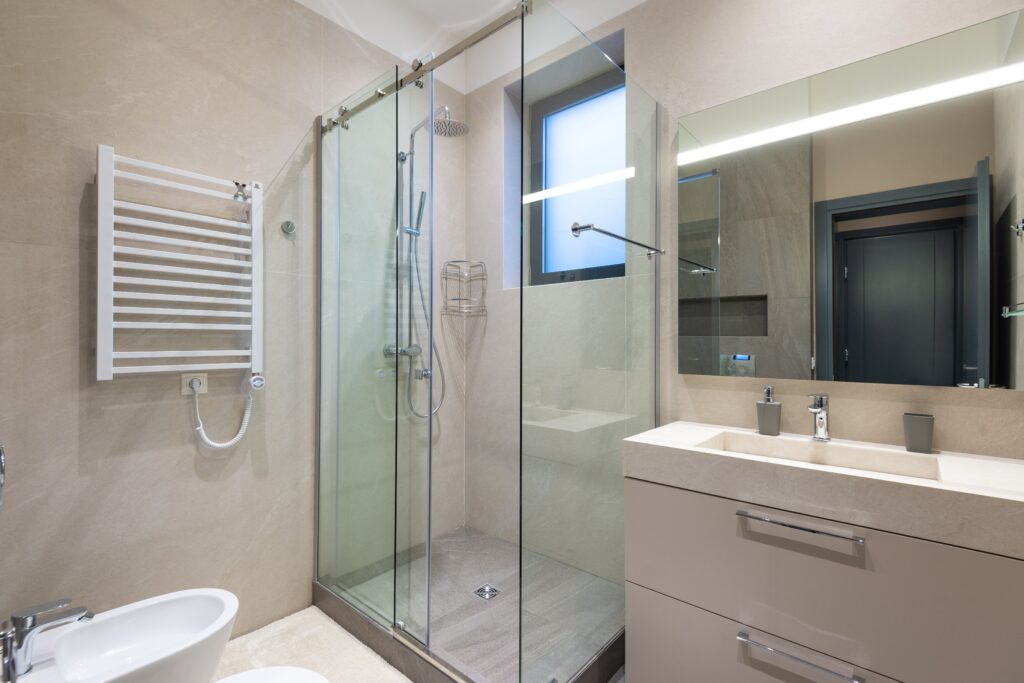
A barn door slider, by contrast, glides horizontally along a track mounted above the opening, requiring no swing clearance at all since the door moves parallel to the wall rather than out into the room.
Why Bathroom Layout Is the First Real Consideration
If your bathroom has generous floor space directly in front of the shower, a hinged door works fine and offers a clean, traditional look with fewer visible hardware components.
If floor space is tight, a nearby vanity, toilet, or narrow walkway limits how far a door can swing without hitting something, a barn door slider solves that problem directly, since it needs no swing clearance at all.
Why Barn Doors Have Become a Popular Design Statement
Beyond the practical clearance benefit, barn door sliders have become genuinely popular as a bathroom update and design feature, offering a distinctive, modern-industrial look that a traditional hinged door doesn’t replicate.
The visible track and rolling hardware read as an intentional design choice rather than purely functional necessity, which is part of why they’ve grown in popularity even in bathrooms that technically have room for a hinged swing.
What Hinged Doors Do Better
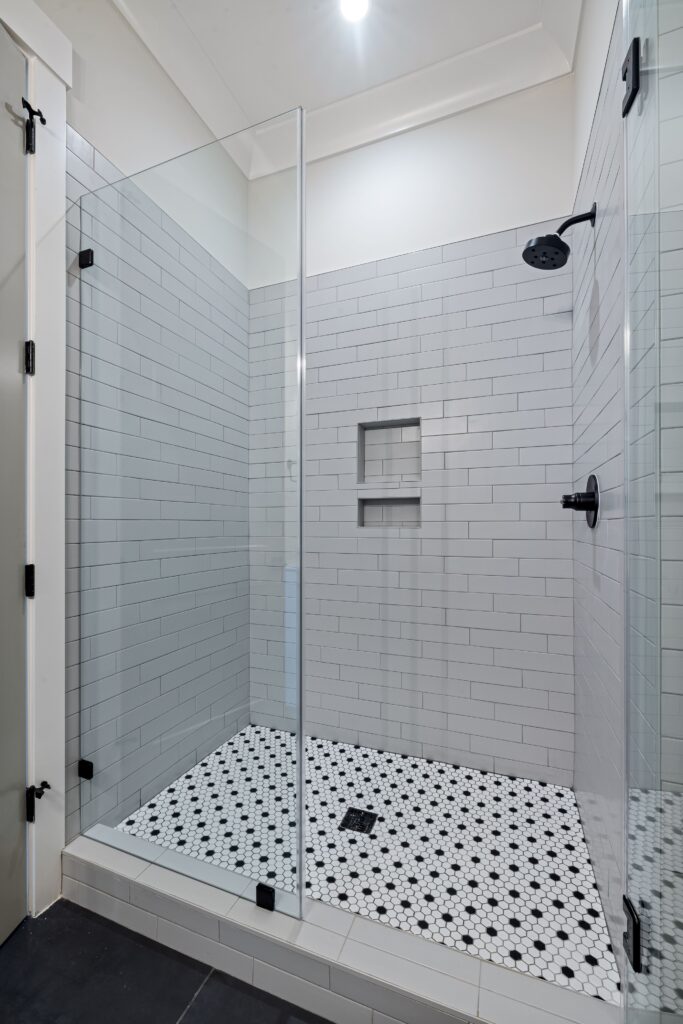
Hinged doors generally offer a tighter seal than sliding configurations, since a swinging door closes against a continuous seal around its full perimeter, while a sliding door relies on overlapping panels and a track system that, while effective, isn’t quite as inherently watertight as a properly sealed hinged door.
For showers where minimizing water escape is a top priority, this is a genuine, if modest, advantage worth factoring in.
Hinged doors also tend to be simpler to install and involve fewer moving hardware components overall, which can mean marginally less long-term maintenance, since there’s no track to keep clean and no rollers to potentially wear over time.
What Barn Doors Do Better Beyond Just Clearance
Beyond solving tight-clearance layouts, barn door sliders also tend to be easier for some users to operate, since a sliding motion can be more accessible than managing a swinging door’s arc, particularly relevant for bathrooms designed with aging-in-place or mobility considerations in mind.
Why Track Maintenance Is Worth Understanding Upfront
A sliding door’s track does require periodic cleaning to keep it rolling smoothly, since soap scum and mineral buildup can accumulate in the track channel over time and affect how easily the door glides.
This is a maintenance consideration worth factoring into your decision if you’re not someone who keeps up with regular bathroom deep-cleaning.
What to Actually Measure Before Deciding
Before committing to either configuration, it’s worth measuring the actual clear floor space in front of your shower opening and comparing it against a hinged door’s required swing radius for your specific door width.
This concrete measurement, rather than a general sense of whether the bathroom “feels tight,” is what actually determines whether a hinged door is a realistic option or whether a slider is genuinely the better fit.
Getting the Right Configuration for Your Specific Bathroom
Because the right choice depends on your bathroom’s actual floor plan and how you personally weigh sealing performance against clearance flexibility, IDEAL Shower Doors Wellesley can walk through both configurations directly in your space, helping you land on whichever door style actually solves your bathroom’s specific layout rather than defaulting to whichever style is currently most popular in design photos.