A home can feel well considered until a door sticks at the latch or a handle feels slight beside the woodwork. Those moments make a door-hardware upgrade worth exploring. The range of Rocky Mountain Door Hardware offers a way to bring handcrafted bronze into those daily points of contact. With a designer, homeowners can weigh more than the new finish. The grip and the task of each door help shape the choice. So does the place of each piece in the home.
Daily Use Helps Define What Should Change
When selecting door hardware, begin with the doors you use most often. A handle may feel awkward to turn, a privacy set may no longer suit the room, or the style may look out of scale beside new trim. Describe that concern before choosing a new set. Some faults come from the handle or latch; others arise from the fit of the door and frame. An installer can help find the cause. Replacing the visible metal will have limited effect if the door itself still needs adjustment.
The design brief can then include both use and appearance. A guest-room door may need privacy, while a hall closet may need a non-locking passage set. A fixed handle can serve a different purpose again on a door whose closing system is separate. These choices shape the parts ordered for each opening. Record the room and the required function together. A consistent style can run through the house while the locks and latches vary with the use of each space. Ask who will use each room, too. The owner should test the grip and turn piece before the set is ordered.
One Complete Door Is a Useful Place to Start
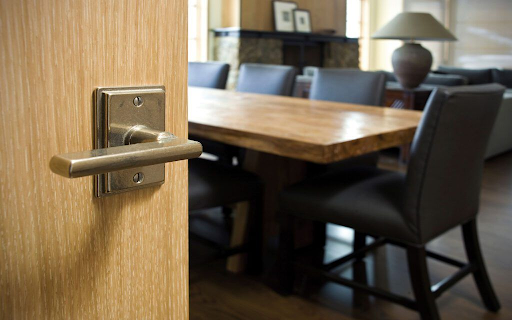
A door set should be judged against the whole door. The handle, its backplate, and the surrounding rails create a set of proportions that a small online image cannot fully show. A broad plate can give plain woodwork a more distinct outline. A smaller rose may leave more of a painted panel in view. Hold a sample where it will sit and view it from the hall. Move closer to test the shape in your hand and the room around the grip. Where two rooms meet, look at the door from both sides. A handle chosen against a dark hall may also be seen against a light bedroom wall. Bring both paint samples to the review so one side of the door does not become an afterthought.
This trial also gives the owner and designer something concrete to discuss. Does the curve feel comfortable? Is the surface smooth or textured? Does the metal sit well against the paint under the home’s evening light? A showroom visit can put several handle shapes in your hands at once. Bring photos of the doors and room finishes, along with measurements the installer has checked. This gives the dealer a project to work with. An upgrade earns its place through these details. Handcrafted bronze has weight and a surface character that should be assessed in person where possible. The best choice will relate to the room and feel natural during the small tasks that bring you through that doorway each day.
Existing Doors Need a Careful Fit Review
Before placing an order, have the installer check how the door has been cut and drilled. The thickness of the door, the latch position, and any cutouts affect which set will fit. Backset describes the distance from the door edge to the center of the handle hub. It needs to match the chosen latch or lock and the holes in the door. A new backplate may cover an old mark, but that does not confirm that the new lock or latch will fit. Compare the product drawings with the door itself.
The same care applies to hinges and stops. The door should move freely and stop before the handle meets a wall or nearby cabinet. A designer may include visible hinges in the finish review, especially where doors open onto one hall. Keep those choices in the order so the installer knows what belongs where. If the work forms part of a larger project, resolve the set before new doors are drilled or painted. That leaves time to resolve the fit before the final coat of paint.
A Lasting Choice Includes Its Finish and Care
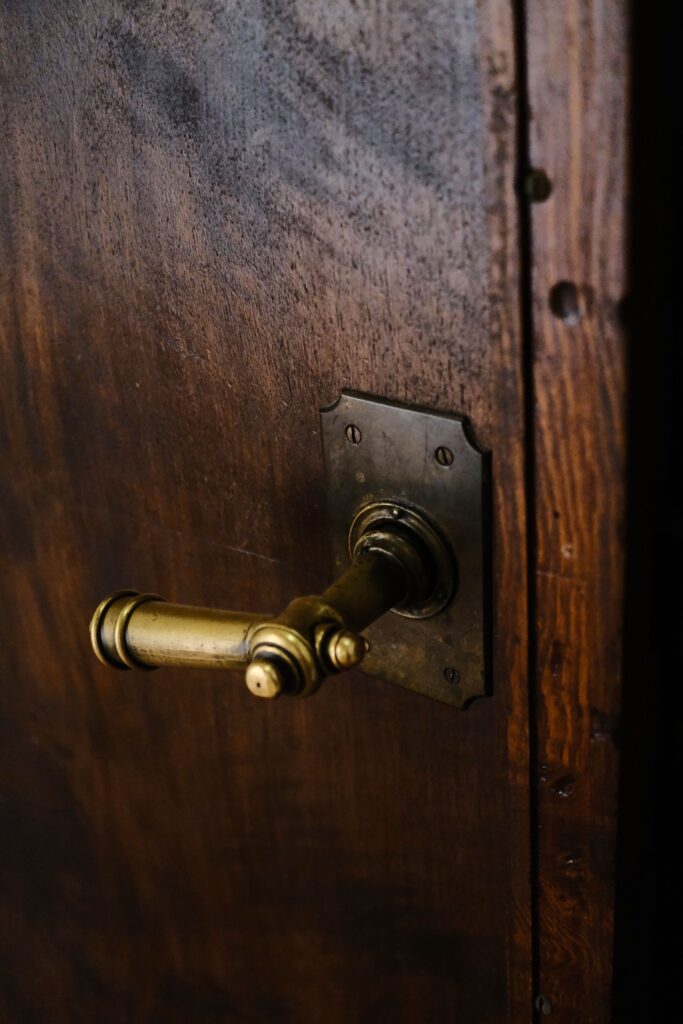
Living bronze finishes change with time and touch, so a sample shows how they look at the start. The most-used doors may change in ways that less-used doors do not. RMH describes this change as part of the patina’s aging. That character can suit a home with wood and stone that also show use. Discuss it from the start if the household expects each handle to keep the same color and sheen.
Ask the dealer about care for the chosen finish and keep that advice with the home records. Confirm the current order details and timing before booking the work. The upgrade should address the need that prompted it: a better grip, the right function, or a shape more at ease with the room. Once fit and finish are resolved, the new set has a clear role in the home. Its value is felt in use, each time the door opens.