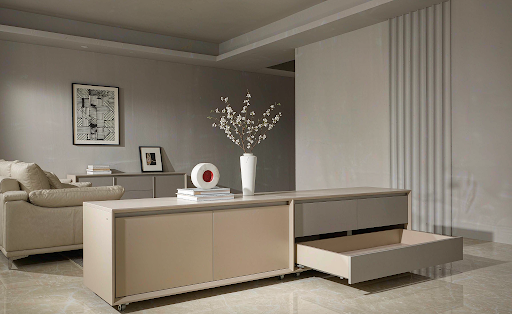
The worst part of any media setup is the cable you cannot reach without moving the whole unit and scraping the floor, yet a deep media console with rolling ability solves that by putting the console on wheels, so you pull it out, reach the back, and push it home without a strain. The depth holds the gear while the casters let you service the mess in seconds rather than in a sweaty struggle by the wall.
I have crawled behind a fixed console more times than I care to count, and the floor always wins the argument with my knees by the end. A rolling unit changes the job from a crawl into a pull, which is the kind of small mercy a busy home needs through the week. This piece gives the depth for the receiver and the casters for the access, so the back of the gear stays reachable long after the install day near the window. That balance is why I point parents toward a rolling console cabinet when the room doubles as a play space and a home theater room.
Roll It Out to Reach the Back
A console on wheels turns the dreaded back-of-unit crawl into a simple pull toward the open room by the door. You grasp the top, ease it out, and the tangle behind the gear sits at eye level instead of against the floor near the wall. I favor rolling for the simple reason that the cables you ignore are the cables that fail first through the year. This piece glides on casters, so a loose HDMI or a stray power lead gets fixed in seconds rather than during a weekend of shoving. That access is what keeps the setup honest long after the install photo fades by the arm. You stop dreading the rewire and start handling it the moment something drops the sound.
Wheels That Protect the Floor
Good casters roll without scoring the wood, and a locking set keeps the unit still once you push it home by the wall. I look for rubber wheels rather than hard plastic, because the soft tread spares the finish you paid to keep through the year near the arm. This piece uses casters that glide on a board, so the weight spreads instead of denting one spot on the floor. That care is what lets you pull the console daily without a mark left behind by the evening. You get the access and the calm in one move, which is the sense a rented or polished home needs near the window. A rolling unit that respects the surface earns its place more than a fixed one that scars the boards after the first hard pull.
Small Room Organization
A rolling deep console fits a tight room because it slides out only when needed and tucks back to save the path by the door. I keep the remotes and the games in a basket below, so the top stays clear for the decor you love near the wall. The depth holds the receiver and the boxes, while the wheels let you swing the unit aside during a floor clean or a play session with the kids. That flexibility is what makes a compact space feel larger than its square metre count through the day. You get the gear and the order without surrendering the floor to a permanent block near the arm. A console that moves with the room adapts to the life you lead instead of fighting it by the window.
Cable Access Made Easy
The back of a media unit is where the problems live, and a rolling console brings that problem to you instead of making you chase it by the wall. I route the cables through a rear channel, then pull the unit out to zip tie the slack where the receiver sits near the arm. A loose lead gets caught before it drags the HDMI from the port, which is the small habit that keeps the sound steady through the year. This piece gives the depth and the glide, so the service happens at counter height rather than on your knees near the floor. That ease is what lets a non expert handle the gear without a call to a mate. You fix the mess in the time it takes to make a cup, and the room stays calm behind the closed door by the window.
Stable When Locked
Wheels only help if the unit stays put once you park it, so a locking caster is not a luxury but the point of the design by the wall. I check that all four lock, because a console that drifts when the dog bumps it will take the screen with it near the arm. This piece holds firm on its brakes, so the TV stays centered and the gear stays still through a film with the family. That stability is what makes rolling safe in a home with animals and small people who bump things by the door. You get the access when you want it and the calm when you do not, which is the balance a busy room needs near the window. A console that locks as well as it rolls earns its corner more than a fixed one that traps you behind the cables for life.
Style for a Tight Space
A rolling console should still read as furniture, not a cart you parked under the screen by the wall. This piece keeps a calm front with a door that swings shut, so the gear vanishes and the room reads as a living space rather than a tech corner near the arm. I choose a tone that sits between oak and white, because it pairs with the rug and the lamp you already own without a fight through the day. The depth hides the bulk of the receiver, so the eye rests on the wood rather than the wheels beneath the glass. That disguise is the point of a good mobile console, where the work happens out of sight and the style stays in view by the window. You get a piece that fits the home you built slowly, not a loud slab that demands a redo around it by spring.
What to Check Before You Roll
Before you hand over the money, confirm the casters lock and the rubber is soft enough for your floor by the wall. Check the depth clears the receiver plus two inches for air and cables, because a short unit will not close and will annoy you near the arm. Spin each wheel in the showroom, because a sticky caster drags the whole unit and scars the boards through the year by the window. Measure the path from the wall to the open room, so the pull clears the sofa and the dog bed without a jam. These checks separate a rolling console built for homes from one that merely photographs well in a staged loft with good light. A confident seller answers fast, and that speed tells you about the product you are about to own for a decade.
Roll the console out, fix the back, and push it home without a crawl on the floor. This unit earns its place by giving the gear depth and giving you access in seconds. That is the right move for a home where the screen matters and the knees are spared near the wall.