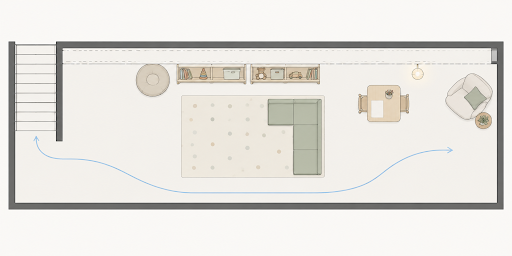
A basement can feel roomy at the bottom of the stairs, then suddenly tight where a duct crosses the ceiling. Before buying furniture or lights, sketch the room and mark the spots where the ceiling drops. Give the tallest open area to games that get kids moving. Use lower areas with comfortable seated clearance for books, blocks, and toy storage. That simple division makes it easier to see what belongs where.
Measure the Lowest Points First
Take a tape measure downstairs and start at the finished floor. Measure to the ceiling at several points, then to the underside of the lowest beam, duct, pipe, or soffit in each part of the room. Mark those heights on your sketch. Take a separate measurement on the route from the stairs, where adults may be carrying laundry or a box of toys.
For an unfinished basement, account for the thickness of any flooring you plan to add and the depth of a future ceiling. In a finished basement, mark existing lights and access panels before you start moving furniture. You may find that the best spot for a game table is only a few feet from where you first pictured it.
Use the Tallest Area for Active Play
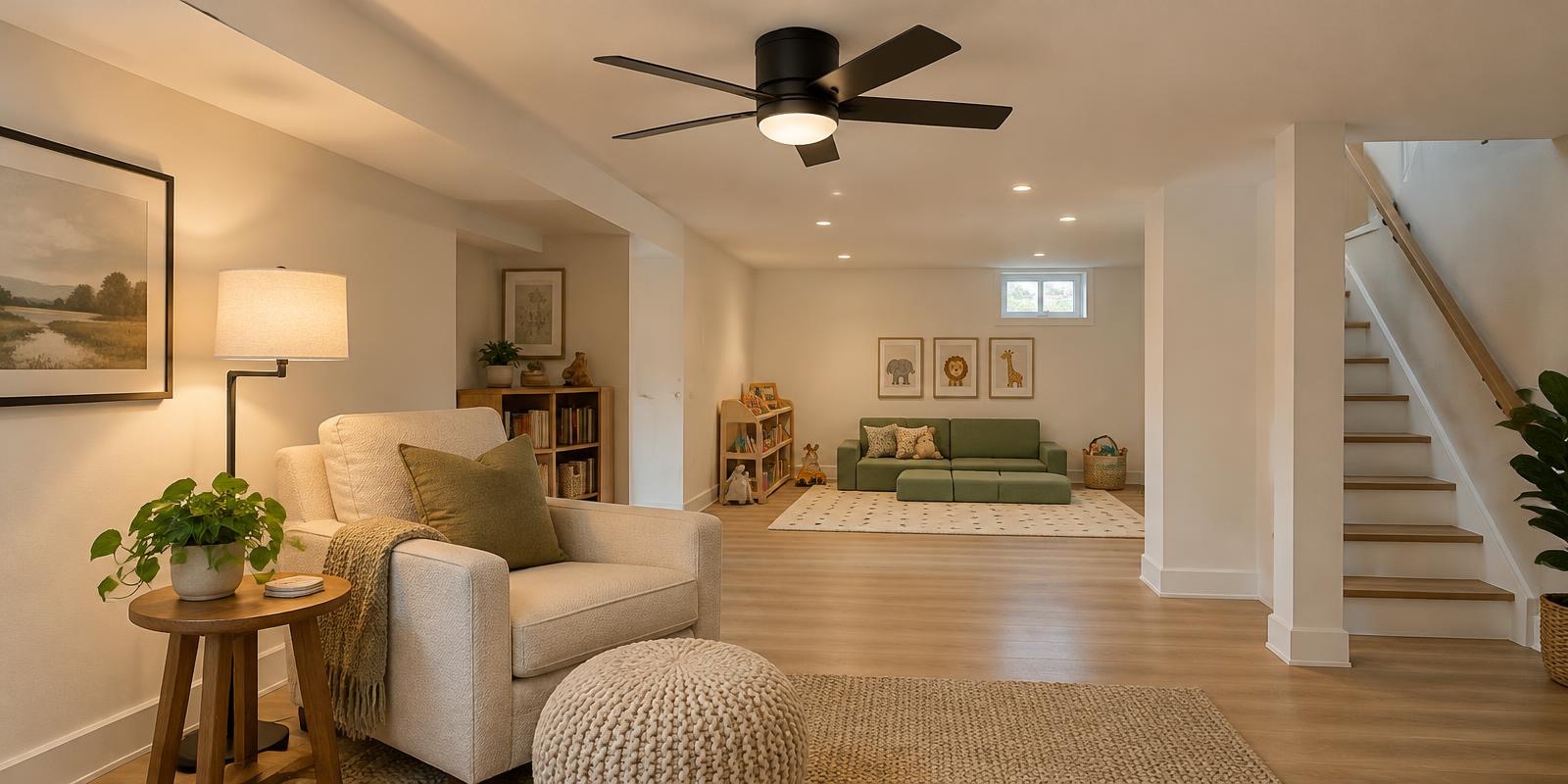
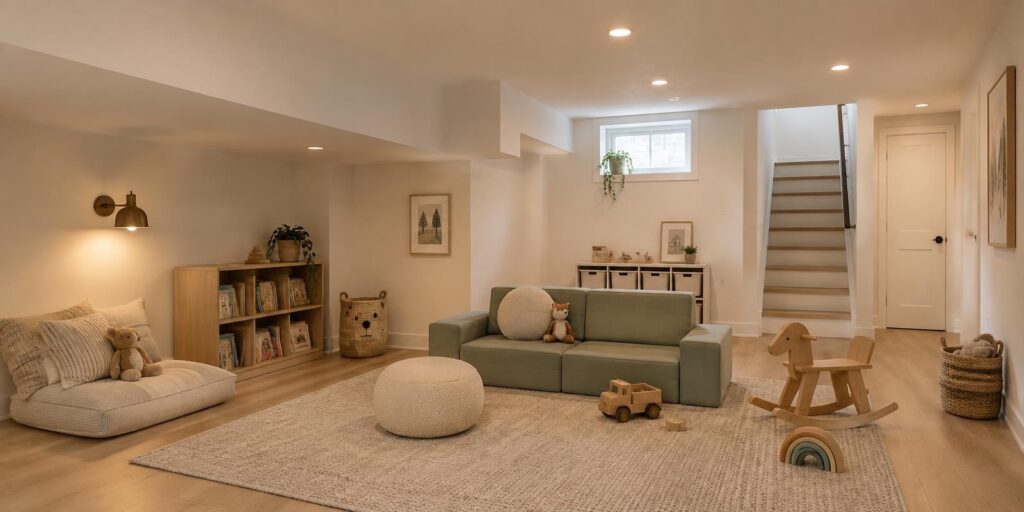
Imagine a rectangular basement with a duct along one side. Use the taller center for a rug, a foam play couch, or games that spread out on the floor. Keep enough open space to walk around the rug when the couch pieces become a fort. On the lower side, a reading cushion and a shallow shelf can make good use of an area that feels cramped with taller furniture.
Give crafts a dedicated spot with enough room to pull out a chair and stand up. A small table near an existing light can be more useful than a larger one pushed into a dark corner. Put toy bins against a wall near the play area. Leave a clear route from the stairs so cleanup and trips back upstairs don’t involve stepping over a half-built train set.
Brighten the Room Without Losing Headroom
Start with even light across the play area. Shallow flush-mount fixtures are an option where the ceiling has little room to spare. Recessed lights can also work where the ceiling construction allows them. If a soffit splits the room, check how much light reaches each side. A single bright fixture on one side can still leave the reading corner in shadow.
Add a separate light at the craft table and check it from a seated position. If your hand casts a shadow across the paper, move the light to the side. A wall-mounted reading light frees up space on a low shelf. A light-colored ceiling or upper wall can help brighten the room, especially where little daylight reaches. Keep the stairs lit separately so the route upstairs stays visible when the playroom lights are off.
Check Moisture Before Adding Rugs
Look for damp spots, condensation, or a persistent musty smell before covering the floor or bringing in upholstered furniture. Check the basement after heavy rain, when water entry can be easier to spot. The EPA’s guide to mold and moisture explains how to find and address common moisture sources.
Once the room stays dry, a washable rug can make floor games more comfortable. Leave a little room to lift an edge for cleaning, and use bins that are easy to move so you can see what’s happening along the base of the wall.
When a Low Profile Ceiling Fan Makes Sense
If air tends to feel still where adults sit, check the ceiling above that seating area. ENERGY STAR’s ceiling fan guide gives seven feet above the floor as a general minimum for the blades. Check the exact model’s instructions and local requirements, including clearance from walls, beams, and other fixtures. On a fan with a light, measure to the bottom of the light as well as to the blades.
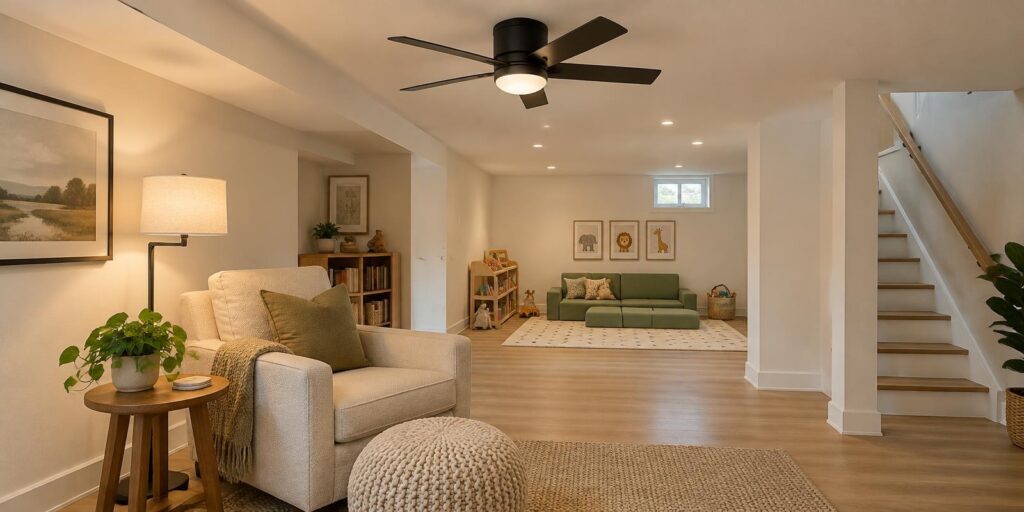
When the seating area has enough clearance, compare low-profile ceiling fans by installed height and blade span. Keep the fan outside the area where kids jump or throw toys. If the ceiling is too low for a fan, use a shallow ceiling light there and assess the room’s air circulation separately.
Try the Layout Before You Buy
Mark the rug, shelves, and seating on the floor with painter’s tape. Walk downstairs carrying a toy bin, then sit where you’d read with a child or watch them play. If you have to step around a shelf or lean toward the light to see the page, move the tape while the layout is still easy to change.