Planning a trip to Morocco with your husband and kids, or maybe just you and your husband for a romantic retreat? Three days is a comfortable amount of time for Fes and Chefchaouen, as long as the trip stays in the north and doesn’t try to become a tour of the whole country. Give Fes two nights, give Chefchaouen the third, treat the drive between them as part of a day, and the whole thing moves at walking pace.
Short trips tend to attract big ambitions, though. Each mistake below can turn a calm northern loop into a rush of transfers and check-ins.
Can the Sahara fit in as well?
It can’t, and trying to squeeze it in is the fastest way to ruin three days. The dunes and the southern kasbahs sit on the far side of the Atlas, a different region with its own logistics.
Look at what the classic southern route involves. From Marrakech, the scenic drive to Ait Benhaddou alone runs 3.5 to 4 hours over the Tizi n’Tichka pass, which tops out near 2,260 m. Beyond Ouarzazate, the long run to Merzouga follows the Road of a Thousand Kasbahs, where guidebooks often recommend two full days at minimum if gorge treks are on your list. That’s a trip in itself.
Save the desert for a separate visit starting in Marrakech, and let this one be about the medinas and the Rif.
Fes deserves two full days
Fes el-Bali is a car-free tangle of lanes and workshops, and the first few hours there are mostly orientation. Arrive at lunchtime and leave the next morning, and you’ll have seen the inside of a maze and little else.
Two nights changes everything. Spend the first morning with a licensed guide who can walk you through the main routes from Bab Boujloud and explain how the craft quarters are laid out, including the Chouara tannery terraces. In the afternoon, go back alone to the places that caught your eye. Day two is for slower things: a long lunch and a hammam, then the Merenid tombs at sunset for the view over the old city.
Morocco tour packages that cover the north tend to build in exactly this rhythm, with two nights in a riad inside the old city and a guide booked for the first morning, so the medina makes sense before you wander it on your own. A rough shape for the three days looks like this:
| Day | Base | Morning | Afternoon and evening |
| Day 1 | Fes | Guided walk through Fes el-Bali | Free wandering, rooftop dinner |
| Day 2 | Fes | Madrasas and craft quarters | Merenid tombs at sunset |
| Day 3 | Chefchaouen | Early start on the drive | Settle in, lanes in late light |
| Following morning | Chefchaouen | Quiet lanes before the crowds | Depart |
Expecting to walk into the big mosques
Non-Muslims generally can’t enter most working mosques in Morocco, and that holds at any time of year. In Fes, that includes the Kairaouine. You can catch a glimpse of its courtyard through an open doorway, which is worth doing, but don’t plan a morning around a visit that won’t happen. The Zawiya of Moulay Idriss II is also off limits.
The good news is that the madrasas are open. Bou Inania and Al-Attarine both have the carved cedar and zellige tilework people imagine when they picture the inside of a mosque, and you can stand in the courtyards and take your time. In Chefchaouen, the Spanish Mosque on the hillside above town is no longer in use and makes a fine walk for the view.
Dress for the lanes
Beachwear feels out of place in both medinas, and it’ll draw more attention than you want. Covering shoulders and knees is the comfortable default, and during Ramadan modest dress that also keeps cleavage covered is recommended for everyone. Loose linen trousers and a light scarf cover most situations.
Shoes matter more than clothes. Fes lanes are uneven and sometimes slick, and Chefchaouen is built on a slope, so you’ll spend a lot of time climbing worn steps. Sandals with no grip are a bad idea. Bring a warmer layer too, since evenings in the Rif can turn cool even when the afternoon was warm.
How long does the drive from Fes to Chefchaouen take?
Longer than the map suggests. The road winds up into the Rif through small towns and farmland, and with a stop for coffee it eats a good part of the day. Plan it as a travel day with a destination at the end, and resist adding a stop that stretches it further.
Your choice of transport shapes the day. The CTM bus is cheap and reliable, though departure times are fixed and may not suit an early start. A private driver costs more but lets you leave right after breakfast and stop when you like, so you arrive with the afternoon ahead of you. Shared grand taxis are possible, but juggling luggage between them is tiring.
One small thing to sort in advance: cars can’t get into Chefchaouen’s medina, so ask your riad whether someone can meet you at the gate to help carry bags up the hill.
Arrive in Chefchaouen early
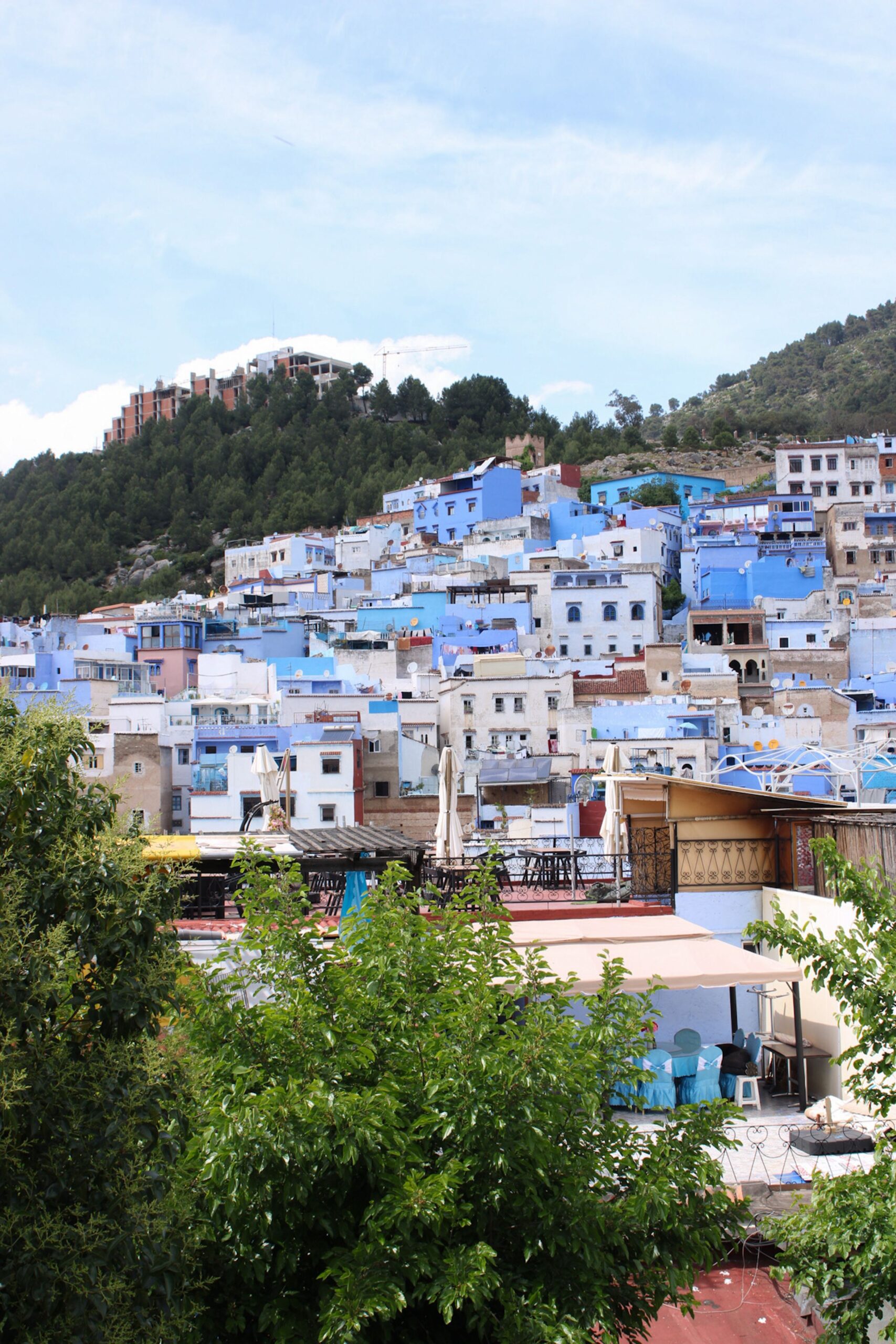
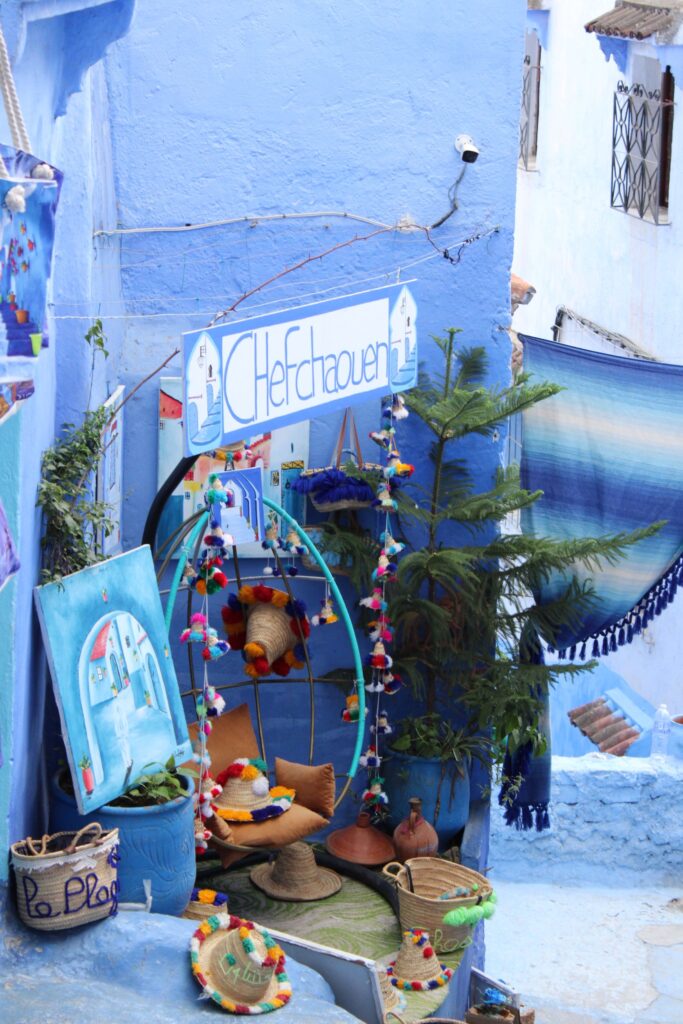
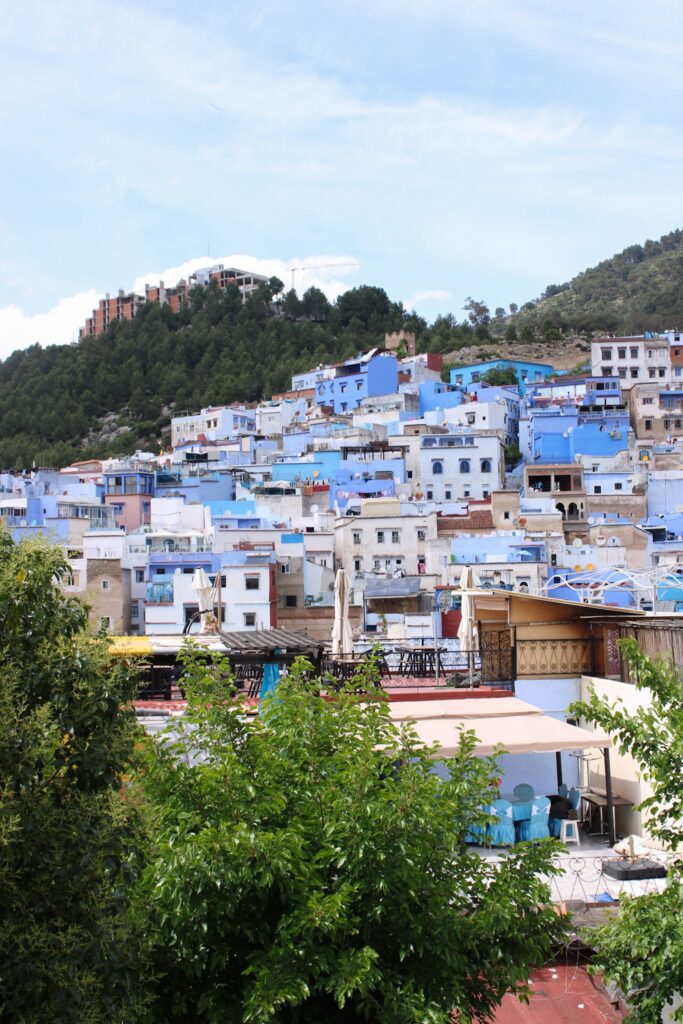
The blue lanes look their best in soft light, which means late afternoon and early morning. By midday, day-trippers crowd the main lanes and Plaza Outa el Hammam, and the flat light drains the colour.
Getting there by early afternoon gives you time to drop your bags and wander down to Ras el-Ma, where women still wash clothes in the spring water, before climbing to the Spanish Mosque for sunset. Then set an alarm. Before breakfast the next morning, the lanes are almost empty and the cats have the steps to themselves, so you can photograph a doorway without waiting for anyone. Staying the night is what makes Chefchaouen worth the drive.
Next steps
- Check your dates against the Islamic calendar so you know whether you’ll be travelling during Ramadan, and pack accordingly.
- Book two nights in a riad inside or close to Fes el-Bali, ideally near Bab Boujloud for easy arrival.
- Arrange the first-morning guide in Fes and decide on your transfer, booking a private driver early if you want a morning departure.
- Reserve one night in Chefchaouen inside the medina and ask the riad about help with luggage from the gate.
Start planning now, and you might just tick off a bucket list wish: Taking your dream trip to Morocco!