
Babies do not need a large wardrobe to stay comfortable and well dressed throughout the week. A smaller collection of carefully chosen baby clothing can make daily routines easier, reduce laundry-related stress, and help parents keep track of what still fits. Instead of buying several outfits for every occasion, families can focus on versatile pieces that work together and suit their baby’s everyday activities PatPat bamboo baby clothes can be considered within a capsule wardrobe when their sizes, fabric details, and care instructions suit the family’s routine..
Building a capsule wardrobe with bamboo baby clothes starts with understanding which garments are used most often, how frequently they need changing, and what makes dressing easier. Soft everyday tops, comfortable bottoms, practical sleepwear, and a few weather-appropriate layers can cover many common needs. The aim is not to own as few clothes as possible, but to create a manageable collection that supports feeding, naps, playtime, outings, and the frequent changes that come with caring for a growing baby.
Begin With the Clothes Your Baby Uses Most
Before buying anything new, observe your existing laundry routine for a week or two. Notice which garments are worn repeatedly, which remain untouched in drawers, and which become inconvenient during everyday tasks. This simple exercise helps identify genuine wardrobe gaps instead of adding more items that serve the same purpose.
For many families, bodysuits, soft tops, comfortable bottoms, and sleepwear form the foundation of a baby’s wardrobe. The exact balance depends on the child’s age, the local climate, and how often laundry can be done. A family that washes clothes daily may need fewer spare outfits than one that does laundry every three or four days.
Build Around Everyday Activities
Different parts of the day place different demands on baby clothing. Feeding can lead to spills, outdoor time may require an extra layer, and naps call for garments that are comfortable and suitable for sleep. Thinking about these situations makes it easier to choose pieces that serve a clear purpose.
Rather than purchasing a separate outfit for every activity, look for clothing that can be used in several ordinary settings. A simple top might work for time at home and a family visit, while comfortable bottoms can be paired with different tops. Sleepwear should remain appropriate for sleeping rather than being selected only because it looks similar to daytime clothing.
Choose a Practical Color Palette
A coordinated color palette makes a small wardrobe more useful. Neutral shades such as cream, gray, beige, and soft brown can be combined with a few brighter colors or playful prints. This approach gives parents more outfit combinations without requiring a large number of garments.
There is no need to make every item match perfectly. Instead, choose colors that work together often enough to make getting dressed straightforward. If your baby already has several patterned tops, plain bottoms may create more useful combinations than adding more printed pieces.
Balance Plain Basics With Playful Designs
Printed clothing can make a baby’s wardrobe cheerful and personal, but everyday basics are often easier to combine. A useful collection includes enough simple garments for regular rotation alongside a few designs that add variety. This balance also helps parents dress a baby quickly when time is limited.
Consider the clothing already available before choosing new patterns. If most garments feature bright colors, a few understated pieces can expand the number of possible outfits. If the wardrobe is mainly neutral, selected animal prints, seasonal designs, or colorful tops can provide variety without making the collection difficult to coordinate.
Select Fabrics for Everyday Comfort
Fabric choice matters because baby clothing is worn close to the skin and often needs frequent washing. Parents may compare softness, stretch, breathability, thickness, and care requirements when deciding which materials suit their household. No single fabric is ideal for every situation, so the intended use of each garment should guide the decision.
Bamboo-derived viscose is one option found in baby clothing. Its feel and performance depend on the fabric construction, blend, and garment design. Cotton, cotton blends, and other textiles can also be useful choices. Rather than assuming that a particular material is automatically best for every baby, consider how the finished garment feels, how it fits, and how it performs after repeated laundering.
Check the Fit as Your Baby Grows
Babies can outgrow clothing before it shows much wear, making fit an important part of capsule wardrobe planning. Check the length of sleeves and legs, the room around the torso, and whether closures still fasten comfortably. Clothing should allow normal movement without pulling tightly or leaving excessive fabric that interferes with its intended use.
Buying a large quantity in one size can lead to unused garments if a growth spurt arrives sooner than expected. A more flexible approach is to keep a practical selection in the current size and add the next size as needed. Use the manufacturer’s sizing guidance, since age labels alone cannot guarantee a suitable fit.
Make Sleepwear a Separate Wardrobe Category
Sleepwear deserves its own place in a capsule wardrobe because it has a different purpose from daytime clothing. The number of sets a family needs depends on how often the baby changes during the night, the laundry schedule, and the weather. Keeping sleepwear together also makes it easier to notice when a set becomes too small or needs replacing.
A two-piece pajama set can be a useful option for toddlers who are ready for that style, while younger babies may use other sleepwear designs suited to their age and needs. Whatever the style, fit and sleep safety should come before appearance. Follow the manufacturer’s instructions and applicable safe-sleep guidance when selecting garments for babies.
Consider a Coordinated Two-Piece Pajama Set
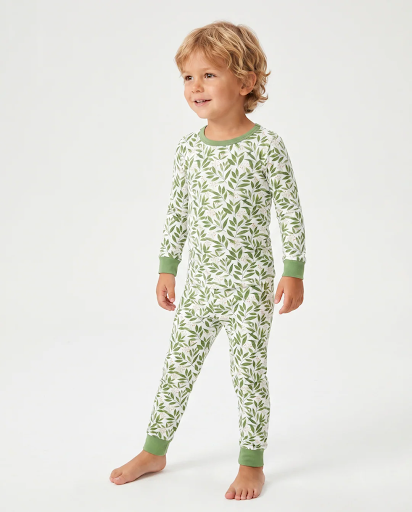
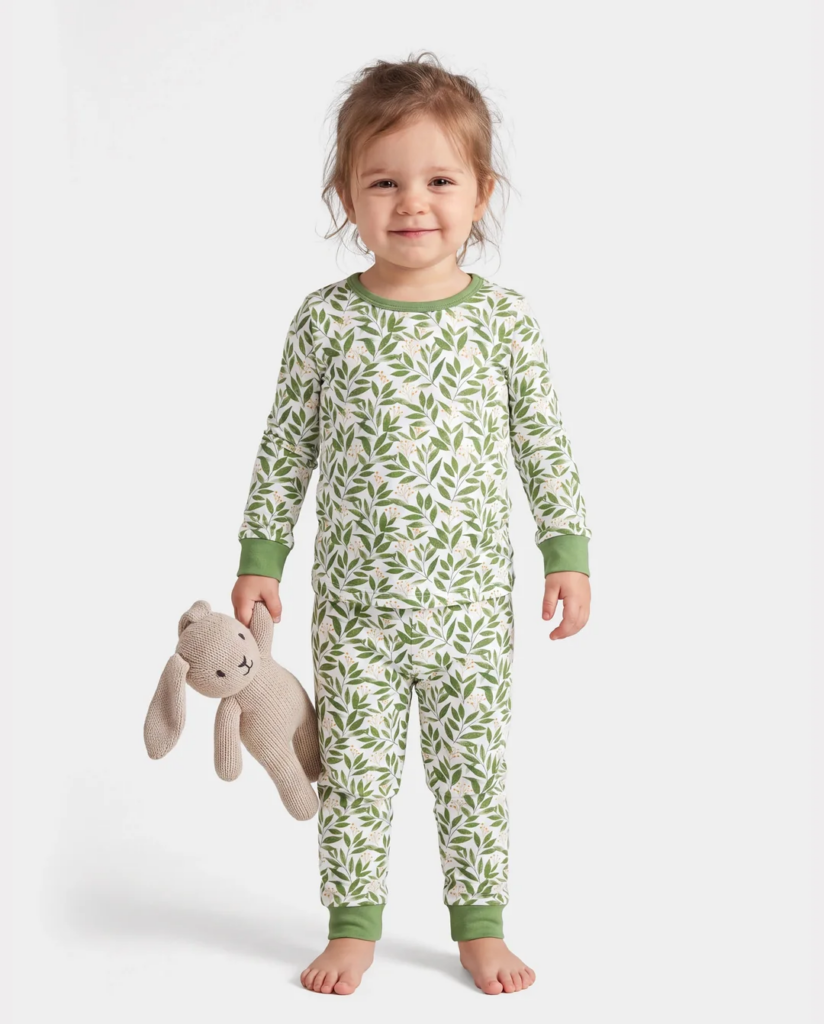
The Green Christmas and Halloween 2-Piece Bamboo Pajama Set for Babies and Toddlers is an example of a coordinated sleepwear option that can fit into a child’s clothing rotation. The set features a green color, a playful print, a long-sleeved top, and matching bottoms. Its bamboo-fiber blend includes stretch, while the snug-fitting design is intended to sit close to the body. These details make fit, fabric care, and the child’s stage of growth important considerations when deciding whether it suits the family’s needs. The garment is described as not flame-resistant, so parents should follow its snug-fit instructions and keep it away from open flames and other heat sources.
Plan the Number of Pieces Around Laundry
A capsule wardrobe should reflect how clothing is actually used, not an arbitrary number of items. Families who wash clothes frequently may manage with a smaller rotation, while those who do laundry less often may need additional changes. Spit-up, food spills, diaper leaks, and outdoor messes can also affect how many outfits are needed in a day.
Start with the essentials and add pieces when a genuine shortage becomes clear. For example, if clean tops regularly run out before laundry day, a few extra tops may be more useful than another special-occasion outfit. This approach spreads spending across practical needs and helps prevent drawers from filling with clothes that rarely get worn.
Keep Seasonal Layers Easy to Reach
The weather determines which extra pieces deserve space in the wardrobe. In cooler conditions, parents may need suitable outer layers, while warmer weather may call for lighter clothing. A small selection of layers that can be added or removed as conditions change is often more useful than keeping many outfits designed for one narrow temperature range.
Store clothing that is currently out of season separately, provided it is clean and in good condition. When bringing it back into rotation, check the size before relying on it. Babies can grow considerably while seasonal garments are stored, and an item that fitted several months earlier may no longer be appropriate.
Maintain the Wardrobe Without Overbuying
A simple wardrobe still needs regular attention. Every few weeks, review the garments in use and separate items that no longer fit, have become uncomfortable, or need repair. This creates space for clothing that meets the baby’s current needs and reduces the chance of buying duplicates.
Care instructions also influence how long garments remain useful. Sort laundry according to the labels, use suitable washing settings, and avoid care methods that could damage elastic, seams, or fabric. Keeping similar items together makes it easier to see what is available before shopping for replacements.
For parents exploring bamboo baby pajamas, the same practical approach applies: consider the child’s current size, the number of sets needed between washes, and the garment’s care requirements. Choosing sleepwear according to real household routines is more useful than buying multiple similar designs simply because they are available.
Frequently Asked Questions
How many clothes does a baby need in a capsule wardrobe?
There is no universal number. The amount depends on the baby’s age, how often clothes need changing, local weather, and laundry frequency. Begin with enough everyday outfits, sleepwear, and suitable layers to cover your normal routine, then add pieces where shortages occur.
Is bamboo fabric suitable for everyday baby clothing?
Bamboo-derived viscose is used in many types of baby clothing and may appeal to parents who prefer a soft fabric feel. Suitability depends on the garment’s construction, fit, care instructions, and the individual child’s needs. Check the fabric composition and observe how the clothing feels against your baby’s skin rather than relying on the material name alone.
How often should I update my baby’s capsule wardrobe?
Review the wardrobe regularly, especially after noticeable growth spurts or changes in the weather. Check sleeve and leg length, waistbands, closures, and overall comfort. Replace items that no longer fit as intended and add new pieces based on practical needs instead of rebuilding the entire wardrobe each season.
Keep the Wardrobe Simple and Flexible
A useful baby capsule wardrobe grows with the child and the family’s routine. A coordinated color palette, practical everyday basics, suitable sleepwear, and a manageable laundry rotation can make dressing less complicated without sacrificing variety. Regularly checking fit and condition also helps parents avoid keeping garments that are no longer useful.
The best capsule wardrobe is not the smallest possible collection or the one with the most matching outfits. It is the collection that works reliably in everyday life, makes essential items easy to find, and leaves room for changing needs as the baby grows.