Neutral living rooms have an obvious appeal. Cream, beige, soft gray, and warm white are easy to live with, work across changing tastes, and give a busy family home a sense of visual calm.
But there is a point where restrained can start to feel anonymous. If every surface sits within the same narrow palette, a room may look finished without feeling particularly connected to the people who live there.
The answer isn’t necessarily more furniture or a dramatic color overhaul. Often, warmth comes from a few carefully chosen elements that introduce contrast, texture, history, and signs of everyday life.
Introduce One Color With Some Visual Weight
Rather than scattering several small colorful accessories around the room, consider giving one shade a more substantial role. This creates a clearer focal point and makes the color feel intentional.
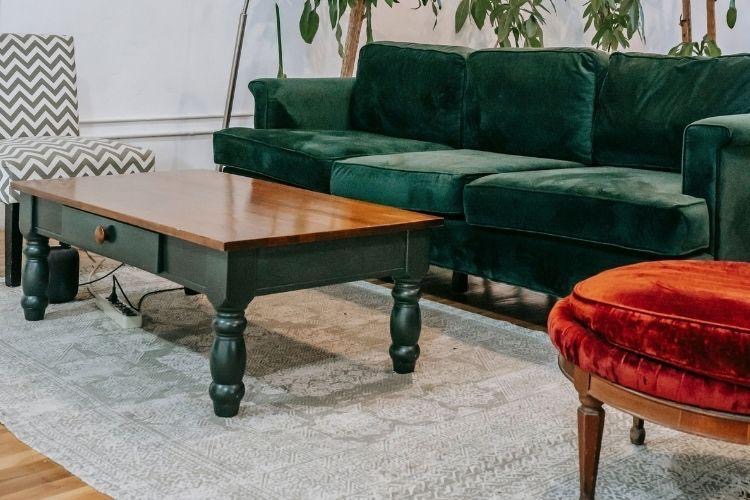
Green works particularly well with many neutral palettes because it sits comfortably alongside timber, stone, cream, tan, and other nature-derived tones. A muted olive can warm up beige upholstery, while a deeper forest green creates useful contrast against pale walls.
If painting feels like too much commitment, start lower down in the room. A rug can bring color into a large area without changing the architecture or your main furniture. Collections such as the green rugs from Double Studio show how the same color family can move from subtle, earthy shades to stronger patterns, giving you room to choose how prominent you want the green to be.
There is also some research behind our preference for natural references indoors. In a 2025 study of 331 adults, Bellini et al. found that living rooms and bedrooms featuring greenery were perceived as more restorative and associated with more positive qualities than rooms without it (Bellini et al., 2025). That doesn’t mean a green rug has the same effect as a living plant, but it does help explain the broader appeal of interiors that borrow their palette and materials from nature.
Layer Materials, Not Just Colors
A room can stay almost entirely neutral and still feel warm if its surfaces are varied.
Think about the difference between a smooth white wall, a slubby linen curtain, wool underfoot, a timber side table, and a woven basket. Their colors may be similar, but they respond differently to light and touch.
This is why texture matters so much in pared-back rooms. Instead of adding another beige cushion because the sofa looks bare, look for contrast in the material itself. Bouclé beside linen, timber against painted cabinetry, or a deeper-pile rug on a smooth floor creates interest without making the room busier.
Natural materials are particularly useful here because slight variations in grain, weave, and tone prevent the space from feeling overly uniform.
Bring In Objects That Have a Story
A personal room should reveal something about its occupants.
That could mean framed children’s drawings beside more formal artwork, a ceramic piece brought home from a vacation, books that are actually read, or photographs in frames collected over time. These elements do more than fill empty shelves.
Research into home environments has found that personal possessions can contribute to people’s sense of psychological home and identity. At the same time, too many possessions can have the opposite effect when they begin to create disorder (Roster et al., 2016).
The useful distinction is between display and accumulation. Choose objects because they mean something, not because every surface needs decorating.
Let the Room Show How Your Family Lives

A family living room naturally gathers evidence of use: a blanket folded over the sofa, books beside a reading chair, a basket for toys, or a coffee table sturdy enough for board games as well as magazines.
Rather than fighting those realities, design around them. A side table beside the chair someone always uses is more meaningful than one placed there simply for symmetry. Attractive baskets can keep toys close to where children actually play. A large rug can define the main seating area in an open-plan room and make furniture feel more connected.
Recent research into home attachment found that restorative experiences, positive social interactions, and having enough usable space were all associated with stronger attachment to home (Meagher et al., 2024). A living room, in other words, isn’t made personal through decoration alone. It also needs to support the way people spend time together.
Pay Attention to Lighting After Dark
Instead of relying on one ceiling fixture, introduce light at several heights. A floor lamp beside the sofa, a table lamp on a console, or a small lamp tucked onto a bookshelf creates softer pools of light around the room.
Lamps also reveal texture. Wool, linen, timber, and handmade ceramics become more noticeable under lower, directional light than beneath a single bright overhead source.
Before replacing furniture because a room feels cold, try changing the lighting first. It is one of the simplest ways to alter its atmosphere.
Avoid Matching Everything Too Closely
Warmth often comes from small imperfections.
The timber on your coffee table doesn’t need to match the legs of every chair. Cushions can share a color without being identical. Picture frames can vary while still having something in common.
Rooms collected gradually tend to have these subtle differences naturally. Allowing some variation gives the eye more to explore and keeps a neutral interior from looking like a showroom set.
Conclusion
Start with the elements that have the biggest effect: one confident accent color, materials with visible texture, useful lighting, meaningful objects, and a layout that reflects how your household actually uses the room.
The goal isn’t to eliminate the calm that made a neutral palette appealing in the first place. It is to give that calm some character. When a room contains evidence of the people, habits, and objects that belong there, it begins to feel less decorated and more like home.
References
Bellini, S., Miola, L., Sperduti, A., Caccaro, A., Pinton, E., Graffeo, M., & Pazzaglia, F. (2025). Green design in living and bedroom spaces: Exploring environmental restorativeness and affective qualities of spaces. Frontiers in Psychology, 16, 1631417. https://doi.org/10.3389/fpsyg.2025.1631417
Meagher, B. R., Kraus, S., Alvarez-Gomez, A., Donahue, K., Kennedy, T. M., Kline, C., Miller, K. L., et al. (2024). Predicting home attachment through its psychological costs and benefits: Restoration, space, and social relationships. Journal of Environmental Psychology, 98, 102404. https://doi.org/10.1016/j.jenvp.2024.102404
Roster, C. A., Ferrari, J. R., & Jurkat, M. P. (2016). The dark side of home: Assessing possession “clutter” on subjective well-being. Journal of Environmental Psychology, 46, 32–41. https://doi.org/10.1016/j.jenvp.2016.03.003