
Creating a home gym can make regular exercise more convenient, but it can also introduce a new problem: too much equipment taking up valuable living space. A spare room can quickly fill with machines, weights, benches, and accessories that are difficult to organize. In smaller homes, even a few poorly placed items can make a room feel crowded and less comfortable to use.
A minimalist home gym takes a different approach. Instead of collecting equipment for every possible exercise, it focuses on a few useful items that support a consistent routine. Choosing the right home gym equipment starts with understanding your training goals, available floor space, storage options, and budget. With a little planning, you can create a practical workout area that serves your fitness needs without making your home feel like a commercial gym.
Start With Your Actual Fitness Goals
Before buying anything, decide what you want your home gym to help you achieve. Someone who wants to improve general fitness may need a different setup from someone focused on building strength or preparing for a specific sport. Shopping before identifying these needs often leads to unnecessary purchases.
Decide Which Exercises You Will Do Most Often
Write down the exercises you enjoy and the activities you can realistically fit into your weekly schedule. Your list might include squats, push-ups, rows, shoulder presses, stretching, or basic cardiovascular exercise. You do not need equipment for every movement because many exercises use body weight alone.
Think about how often you will train, how much experience you have, and whether your routine is likely to change. Beginners may benefit from a simple arrangement that allows them to learn correct movement patterns before adding more challenging exercises. More experienced lifters may prioritize adjustable resistance and a stable surface for pressing movements.
Your equipment choices should follow your routine rather than the other way around. Buying a large machine because it looks impressive does not guarantee that you will use it regularly.
Set a Clear Limit on Space and Spending
Measure the area you can realistically dedicate to exercise. Include the room needed to move your arms and legs, position equipment, and safely lift or lower weights. A piece of equipment may fit against a wall but still be unsuitable if there is not enough clearance to use it.
Set a budget before browsing products. Include any accessories, floor protection, and storage solutions you may need. It is usually better to build a small setup gradually than to spend the entire budget on several items before understanding which ones are most useful.
Choose Versatile Equipment Instead of Filling Every Corner
A minimalist gym depends on equipment that serves a clear purpose. The aim is not to own the fewest possible items at any cost, but to avoid buying several products that perform nearly identical functions.
Look for Equipment That Supports Different Exercises
Free weights can support a wide range of strength exercises, while resistance bands are useful for lighter resistance work and certain mobility routines. A workout bench can provide a stable position for seated exercises, supported rows, and several pressing movements. The best combination depends on the space available and the movements you want to perform.
Versatility should not come at the expense of safety or ease of use. Before choosing adjustable equipment, learn how its settings work and check that every moving part locks securely. If an item is difficult to adjust or takes too long to prepare, you may be less likely to use it consistently.
It is also worth considering whether a piece of equipment adds something new to your routine. If two products serve nearly the same purpose, choose the one that better matches your training needs rather than keeping both simply because they are available.
Avoid Buying Equipment for Imaginary Future Workouts
It is easy to purchase equipment for exercises you might try someday. However, items that remain unused still require floor space, cleaning, and maintenance. Start with the movements you already perform or are ready to learn, then review your needs after several weeks of consistent training.
This approach gives you a clearer idea of what is missing. You may discover that a small addition would make your workouts more effective, or you may find that your original setup already supports everything you need.
Make the Workout Bench Earn Its Place
A bench can be a useful part of a compact gym, but its size, adjustment options, stability, and storage requirements should all influence your decision. It is important to consider the actual design rather than assuming that every adjustable bench folds away or occupies the same amount of room.
A Closer Look at an Adjustable Utility Bench
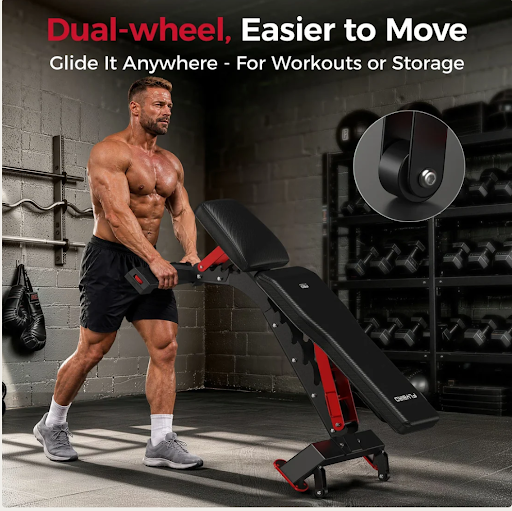
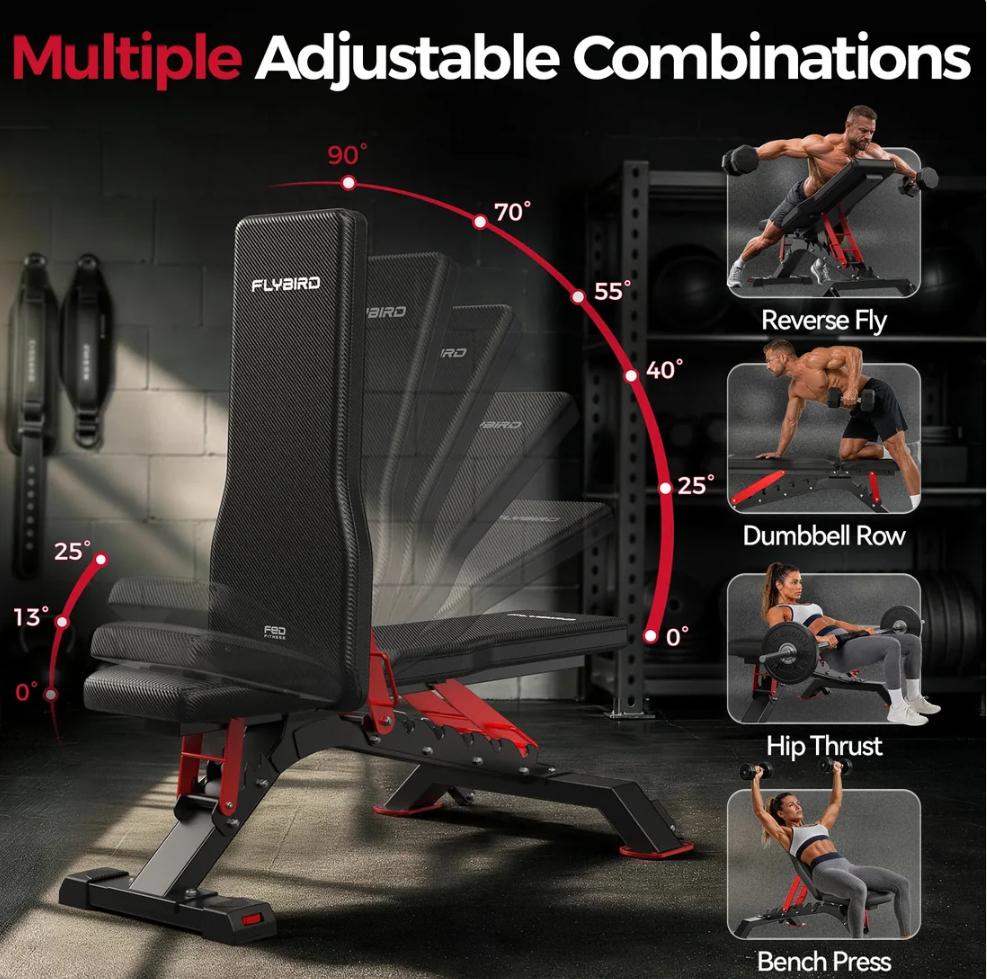
The FED Fitness Flybird Series WB7 Adjustable Utility Weight Bench is designed for several strength-training positions, including flat and inclined exercises. Its product listing describes multiple seat and backrest settings, a steel support frame, padded surfaces, and built-in transport wheels. These features can be useful for people who want to perform different dumbbell exercises without buying a separate bench for each position. However, the WB7 has a non-foldable, one-piece frame, so it needs a suitable storage location even when it is not in use. Check its dimensions and current availability before deciding whether it fits your home.
A bench is most useful when it supports exercises that already belong in your plan. It should also sit on a stable surface with enough room around it for controlled movement. Before each session, check the adjustment mechanism and make sure the bench is positioned securely.
If your home has very limited floor space, compare the footprint of a full-size bench with smaller alternatives. A compact or foldable design may suit your room better, depending on the exercises you intend to perform. The right choice is the one that balances function, stability, and practical storage.
Plan Storage Before Bringing Equipment Home
One of the simplest ways to prevent clutter is to decide where each item will go before purchasing it. Equipment that has no designated place often ends up beside the sofa, under a desk, or in a walkway. Over time, these temporary arrangements can become permanent obstacles.
Give Every Item a Home
Choose one storage area for weights, bands, mats, and smaller accessories. Depending on the room, this could be a sturdy shelf, a storage rack, or a clearly defined corner. Keep heavier equipment low and secure, and avoid placing items where they could fall or create a tripping hazard.
Small accessories are particularly easy to misplace. A basket or container can keep resistance bands, handles, and other lightweight items together without requiring a large storage system. Store equipment according to its size and weight, and follow the manufacturer’s guidance for safe handling.
The goal is to make putting equipment away almost as easy as taking it out. When everything has a predictable place, tidying the gym becomes part of the workout routine rather than a separate chore.
Leave Enough Room to Move Safely
Home gym equipment storage should not take priority over the space needed to exercise. Keep walkways clear and avoid placing equipment close to doors, glass furniture, or other objects that could interfere with movement. If you train in a shared room, leave enough space for other household activities to continue when the gym is not in use.
A rubber mat may help define the exercise area and protect some types of flooring, but it should lie flat and remain suitable for the surface underneath. It does not replace the need for stable equipment, proper technique, or adequate clearance.
Use a Simple Layout That Fits Your Home
A minimalist gym does not need to occupy an entire room. It can be arranged in a bedroom corner, a section of a spare room, or another area where exercise can be performed safely. The important thing is to design the layout around how the space will be used.
Keep Frequently Used Items Accessible
Place your most frequently used equipment where it is easy to reach without moving several other objects. Items used less often can be stored farther away, provided they remain secure and accessible when needed.
Try to keep the layout visually simple. Too many racks, containers, and accessories can make even a small collection of equipment feel crowded. A limited number of storage solutions is often enough to maintain order.
If your workout area must serve another purpose, such as a home office, create a clear transition between activities. You might move a bench to a designated wall after training or store small accessories in a cupboard. The aim is to return the room to its normal use without a lengthy cleanup.
Choose Your Equipment With Long-Term Use in Mind
Minimalism does not mean buying the cheapest option available. Equipment should suit your current ability, fit your space, and remain useful as your routine develops. A low-cost product that does not meet your needs can become an expensive mistake if it is quickly replaced.
When comparing options from FED Fitness, consider more than the product’s appearance or maximum capacity. Review its dimensions, adjustment features, weight limits, materials, storage requirements, and care instructions. Think about whether the item supports the exercises you perform most often and whether you can use it comfortably within your available space.
Avoid assuming that every feature will be useful to you. A complex machine may offer many exercise options but still be a poor choice for a person who mainly wants to train with free weights. On the other hand, someone with specific training goals may reasonably need a larger or more specialized piece of equipment.
It is also sensible to check product availability, delivery details, and warranty terms before ordering. These practical considerations help you make a decision based on how the equipment will fit into your home and routine, rather than on appearance alone.
Maintain the Space With a Five-Minute Reset
Even a carefully planned gym can become cluttered if equipment is left out after every workout. A short reset at the end of each session can prevent small messes from becoming a larger organizational problem.
Return weights to their designated storage area, place accessories in their containers, and remove anything that does not belong in the exercise space. Wipe down equipment according to its care instructions and check for visible damage or loose parts. Keep the floor clear before leaving the area.
Every few weeks, review what you actually use. If an item consistently sits untouched, consider whether it deserves its current storage space. You may need to adjust the layout, change your training plan, or remove equipment that no longer serves a purpose.
This review also helps prevent unnecessary purchases. Rather than adding another product whenever a workout feels repetitive, look for ways to vary your exercises with the equipment you already own.
Build a Gym That Makes Exercise Easier
The purpose of a minimalist home gym is to remove obstacles to regular exercise, not to create a perfect-looking room. A practical setup should make it easy to begin a workout, move safely, and return the space to everyday use afterward.
Start with clear goals, select equipment that serves more than one useful purpose, and plan storage before making purchases. Keep the layout flexible enough to accommodate your household, and add new items only when your routine gives you a genuine reason to do so.
A smaller gym can still support a varied and consistent training plan. With careful choices and a simple organization system, you can enjoy the convenience of exercising at home without sacrificing the comfort or function of the rest of your living space.