
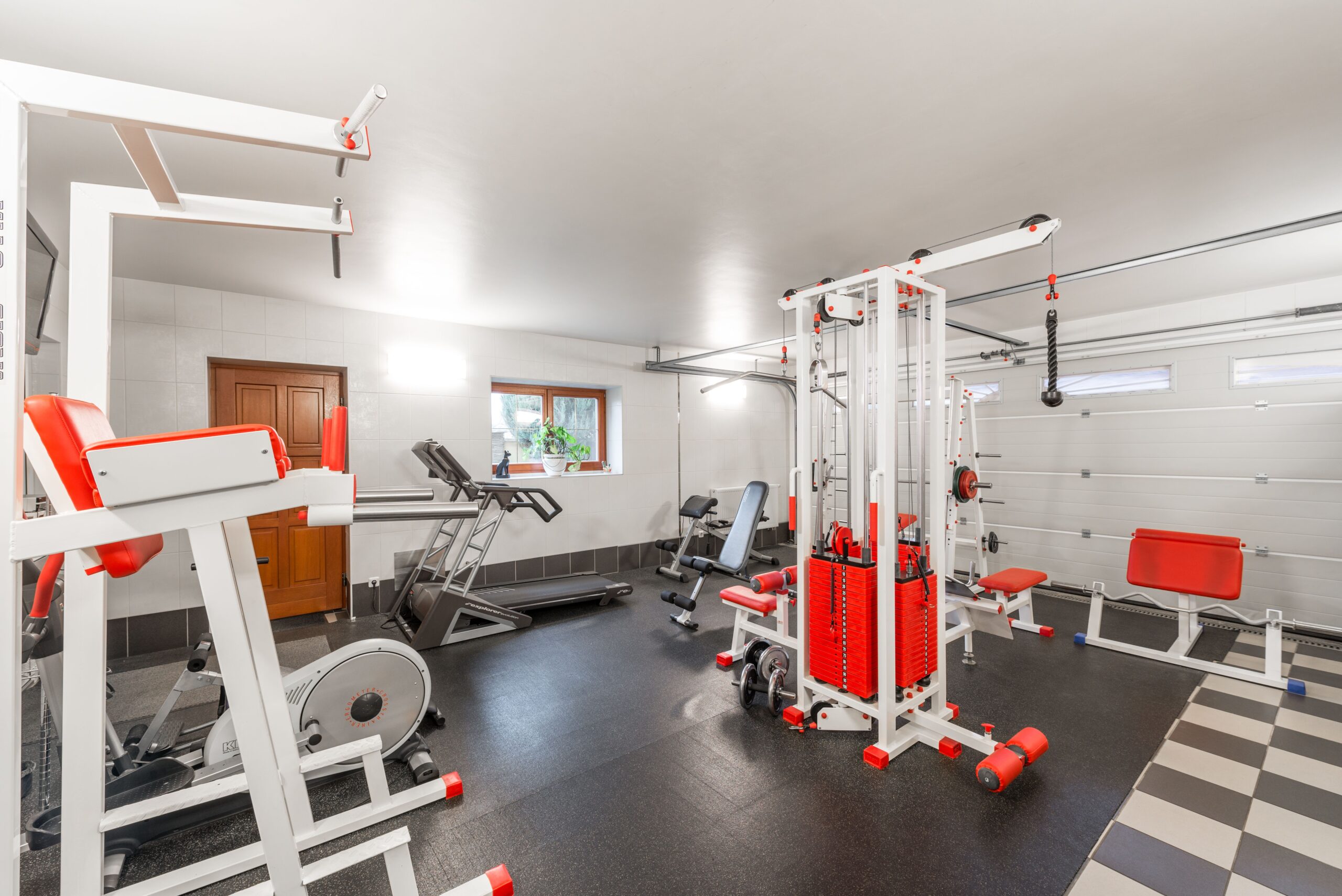
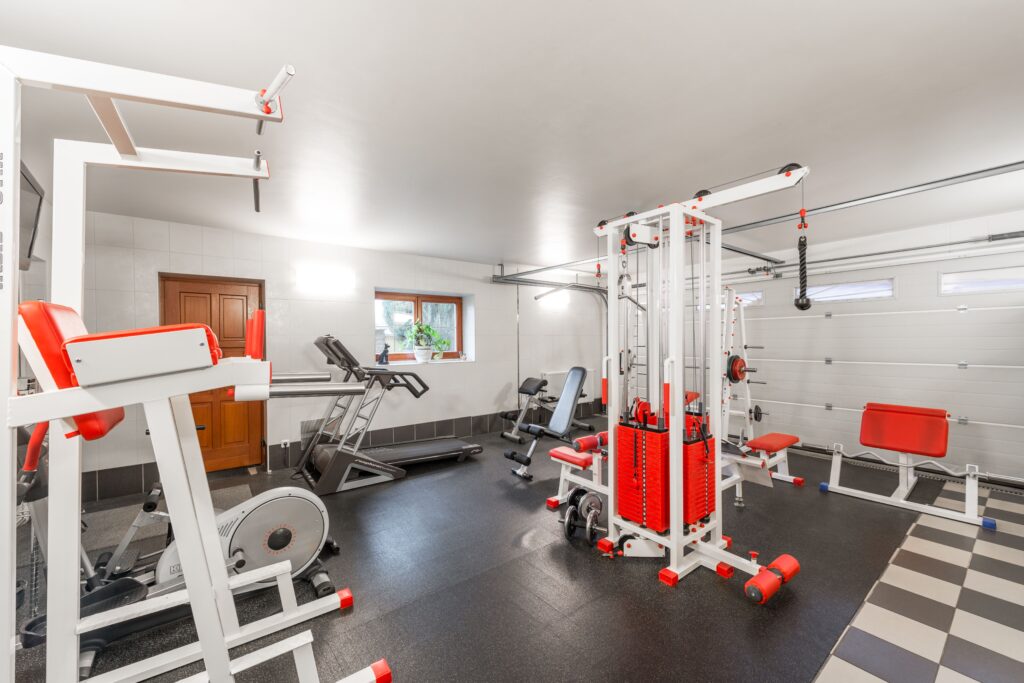
Why Does a Garage Gym Make More Sense Than a Spare Room?
A garage handles what a spare bedroom never will. Concrete floors take dropped weights without denting, unlike carpet or hardwood upstairs. Garage doors let in fresh air during a workout, something no upstairs room offers. Equipment noise stays contained instead of shaking the floor above a kid’s bedroom or a home office below.
A spare room gym also competes with other uses. It might double as a guest room, an office, or storage the moment life gets busy. A garage gym doesn’t have to share its purpose with anything else once it’s set up properly. That single-purpose design is a big part of why the setup tends to stick around longer than a spare room version ever does.
How Do You Free Up Space in the Garage First?
Most garages aren’t actually full of trash. They’re full of things stacked on the floor that belong on a wall instead. Budget-friendly ways to add extra space without moving start with exactly this shift. Pegboards, wall-mounted hooks, and overhead racks can clear a garage floor without a single dollar spent on an addition.
A shed or an outdoor storage bin can absorb seasonal items that don’t need to live in the garage year-round. Old paint cans, broken tools, and outgrown sports gear are usually the easiest first cuts. Holiday decorations and camping gear that only come out once or twice a year are good candidates for a higher shelf as well. Once the floor is clear, the actual square footage available for a gym often surprises people.
How Do You Safely Move Equipment Into the Garage?
Relocating a treadmill or a loaded squat rack from inside the house into the garage isn’t as simple as rolling it across a doorway. Weights need to travel in small, manageable loads. Machines with moving parts often need partial disassembly before they’ll fit through a hallway or a door frame.
The same home gym packing tips used for a full move apply just as well to a short trip across the house. The equipment doesn’t care how far it’s traveling. Wrapping padded surfaces, using a dolly for anything heavy, and keeping hardware bagged and labeled prevents scratched floors and missing bolts.
What Storage System Keeps a Garage Gym From Turning Into Clutter Again?

A garage gym without storage eventually turns back into a garage. A few systems consistently work:
- Wall-mounted pegboards for resistance bands, jump ropes, and small accessories
- Vertical weight racks that keep plates off the floor
- Rolling storage bins for items used less often, like yoga mats or foam rollers
- A dedicated shelf for cleaning supplies and towels near the workout area
Getting a garage organized before equipment arrives makes a real difference. Assigning a home to every item, before the first workout happens, keeps clutter from creeping back in over the following months. A quick label on each bin or shelf makes it easy for the whole family to put things back where they belong.
What Else Does a Garage Gym Space Need to Feel Usable?
Storage solves clutter, but comfort keeps people coming back. Temperature control matters more in a garage than almost anywhere else in the house. Garages run hotter in summer and colder in winter than the rest of a home.
Flooring matters too. Interlocking rubber tiles or a basic gym mat protect both the concrete and anyone using it. Getting an unloved garage fit for purpose turns a purely functional space into somewhere people actually want to spend time. A mirror and a speaker go a long way toward making the space feel like a real room instead of a leftover one.
What Safety Precautions Matter Most in a Garage Gym?
Home gym equipment causes real injuries every year, and a garage setup needs the same precautions as any other room. The Consumer Product Safety Commission tracks thousands of exercise equipment injuries annually, many involving children who gain unsupervised access to weights or machines.
A garage gym should include a way to keep kids out when equipment isn’t in use. That might mean a closed door, a gate, or simply storing weights out of reach. Loose plates and resistance bands are easy for a curious toddler to get into, so keeping them latched away matters as much as any other childproofing in the house. Electrical safety matters too. A GFCI, short for ground-fault circuit interrupter, cuts power instantly if it senses a risk of shock. Most garages require this protection on every outlet.
How to Turn the Garage Into a Home Gym You’ll Actually Use
Deciding to turn the garage into a home gym pays off well beyond the workout itself. The spare room goes back to being a spare room. The living room stops doubling as a weight rack. What was dead storage space becomes the one room in the house with a single, clear job. Start with one weekend: clear the floor and move the equipment in carefully. Add just enough storage and comfort to make the space worth returning to. The rest of the house will thank you for it.