
Garden tools, outdoor toys, sports gear, patio cushions, and seasonal bins can spread through the garage fast. One weekend project turns into a stack of half-used supplies. A few sunny afternoons leave bikes, balls, and garden gloves scattered everywhere. Before long, the garage becomes the place where every outdoor item lands, even when most of it would be easier to use closer to the yard.
A storage shed can take some pressure off the garage, but it works best when it’s planned around real family habits. When the layout makes sense, a shed becomes a useful home for outdoor gear instead of another place where things get shoved and forgotten until next season.
Use the Shed to Solve the Right Clutter Problem
Before deciding how to use the shed, take a good look at what’s already crowding the garage. In many homes, the problem isn’t one big item. It’s the mix of bikes, scooters, garden tools, sports gear, pet supplies, folding chairs, coolers, beach bags, and half-filled bins that never quite make it back where they belong.
The garage is much easier to manage when each category has a clear home. Wall hooks work well for shovels, rakes, and hoses. Sturdy shelves can keep bins off the floor. Balls, helmets, and outdoor toys are usually easier to manage in open containers that kids can reach on their own. A little planning can also help families make their outdoor spaces work better without letting every toy, tool, and seasonal item drift back into the garage.
Once you can see what truly belongs in the garage and what would be better stored near the yard, planning the shed becomes much easier. You’re no longer guessing. You’re solving the clutter problem your family actually has.
Group Yard and Garden Items by How Often You Use Them
After you know what needs a home, sort everything by how often your family uses it. Everyday items should be easy to grab. Garden gloves, hand tools, watering cans, soccer balls, bike helmets, bubbles, sidewalk chalk, and pet supplies should stay near the shed door, on low shelves, or in open bins where they won’t get buried.
Seasonal items can go farther back or higher up. Patio cushions, holiday decorations, seed-starting trays, pool toys, camping gear, and winter tools don’t need the easiest-to-reach spots all year. Clear bins and simple labels can make those seasonal swaps much smoother, especially when the weather changes and everyone suddenly needs something different.
This kind of sorting helps keep the shed from becoming another clutter zone. Instead of tossing everything inside and hoping it works, you’re setting up a space that follows your family’s routines. The easier it is to put things away, the more likely the shed will stay useful.
Plan the Shed Around What You Store Most
A storage shed works best when it’s planned around the items your family already owns, not a perfect version of what you wish the garage looked like. A family storing bikes, scooters, patio cushions, garden tools, sports gear, and seasonal bins will need a different setup than someone who mainly needs space for a mower and a few hand tools.
Think through the size, door width, wall space, and floor space before deciding where everything should go. Bikes and larger equipment need open areas. Rakes, shovels, hoses, and smaller garden tools can often hang on the walls. Shelving is helpful for bins, seed trays, outdoor toys, and supplies that need to stay dry.
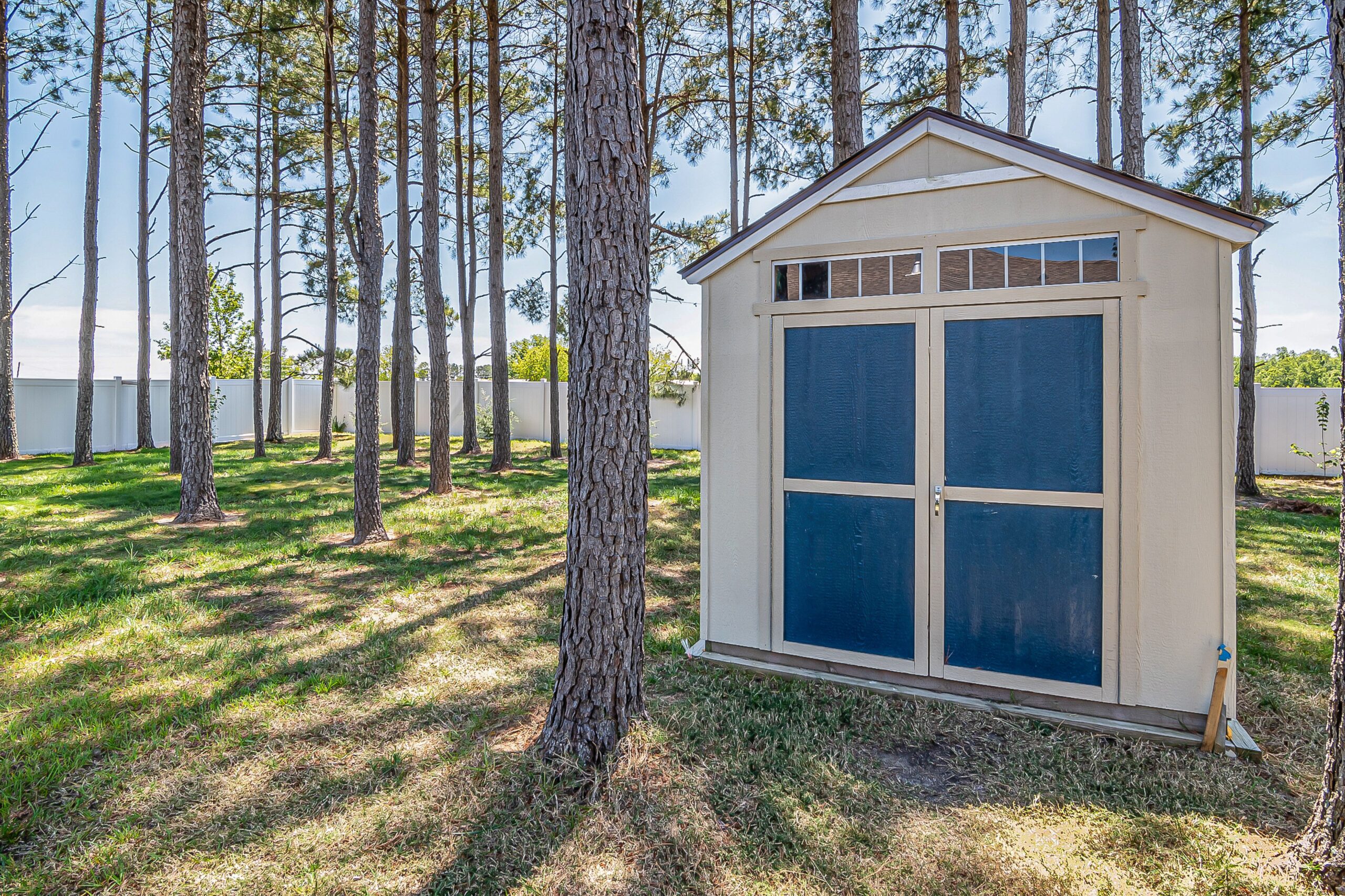
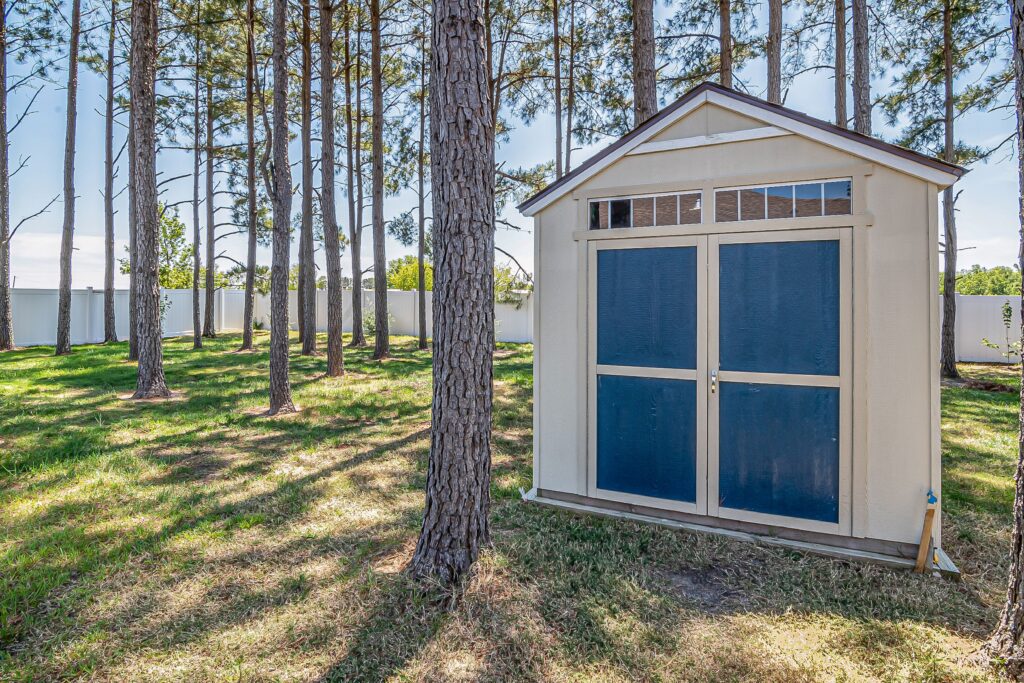
Families comparing shed sizes and garage-style storage options from Glick WoodWorks can think through how a structure might fit everyday items like lawn equipment, bikes, patio cushions, and seasonal bins. The right setup should make outdoor gear easier to reach, not give the family one more place to pile things without a plan.
Make Garden Tools Easy to Grab and Put Away
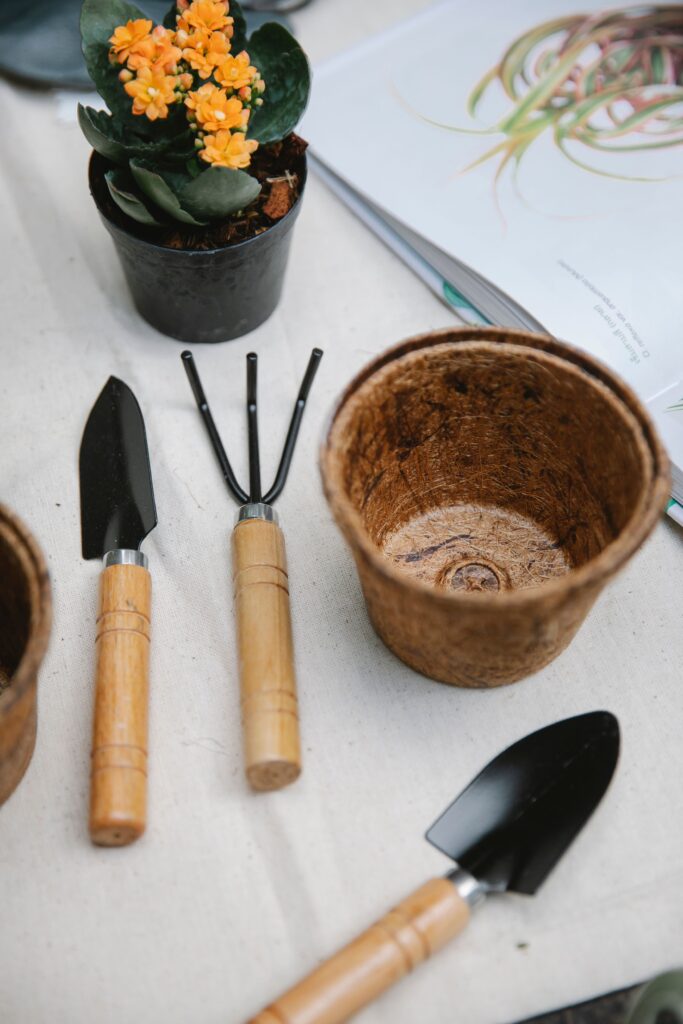
Garden tools are easier to use when they’re stored close to where you need them. Keep gloves, pruners, trowels, plant ties, and seed packets together in a small bin or on a shelf near the shed door. Larger tools like rakes, shovels, hoes, and brooms can hang on wall hooks so they stay visible without taking up floor space.
A few small habits can keep the shed cleaner through the growing season. Knock soil off tools before putting them away, let damp gloves dry before closing them in a container, and keep bags of potting mix or fertilizer on a shelf or in a lidded bin. Taking time to clean garden tools before storing them can help reduce the spread of plant diseases and keep the next gardening day from starting with a mess.
Small supplies are usually the first things to disappear. Give them one clear home, whether that’s a handled caddy, a wall basket, or a labeled container. When the basics are easy to find, quick garden jobs feel less scattered.
Create a Kid-Friendly Spot for Outdoor Toys
Outdoor toys are much easier to manage when kids can put them away without an adult rearranging the whole shed. Keep balls, sidewalk chalk, bubbles, jump ropes, gardening gloves, and sand toys in open bins or baskets near the front. When kids can see where things go, cleanup feels less like a chore.
Low hooks are helpful for helmets, small backpacks, and lightweight gear. Higher shelves can hold items that need adult supervision, such as garden supplies, sharp tools, bug spray, or anything breakable. The shed will stay safer and neater when kid-friendly items are easy to reach, and grown-up items are clearly out of the way.
Simple categories make the system easier for everyone. One bin for balls, one shelf for outdoor craft supplies, and one hook area for helmets can be enough. A setup that works for kids is much more likely to survive a busy weekend outside.
Keep Seasonal Gear From Spreading Everywhere
Seasonal items can take over a garage because they’re only used part of the year but still need somewhere to go. Patio cushions, holiday decorations, seed-starting trays, pool toys, camping supplies, snow shovels, and outdoor furniture covers can quickly fill shelves, corners, and spare floor space.
A storage shed works better when seasonal gear is grouped by time of year. Keep spring garden supplies together, summer toys and pool items in one area, fall cleanup tools in another, and winter gear in labeled bins. Clear containers are helpful for smaller items, while larger totes can protect cushions and decorations from dust and pests.
The goal is to make seasonal changes feel simple. When the weather shifts, your family should be able to pull one category forward and tuck another away without digging through unrelated boxes. That keeps both the shed and garage easier to use throughout the year.
Make the Shed Work With the Yard
A storage shed should be easy to reach without getting in the way of how your family uses the yard. Place it where the doors can open fully, larger items can roll in and out, and the path stays clear after rain. If you’ll be storing bikes, a mower, or heavy bins, even a simple walkway can make the shed much easier to use.
Think about what happens around the shed as well. Garden tools are more convenient near planting beds. Outdoor toys may work better closer to the play area. Patio cushions and grilling supplies should be stored where they’re easy to grab before guests arrive.
Small details can help the shed feel like it belongs in the yard without turning it into a big project. Keep weeds trimmed around the base, add a clear path, and avoid stacking loose items against the outside walls. When the shed is easy to access and simple to maintain, it becomes a useful part of the home instead of another cluttered corner.
A Yard and Garage That Feel Easier to Use
A storage shed doesn’t have to fix every organization problem at once. It just needs to give the right outdoor items a practical place to live so the garage, porch, patio, and yard can work better for everyday family life.
Start with the gear that causes the most frustration, then build from there. Open bins for toys, wall hooks for tools, shelves for seasonal totes, and clear floor space for larger equipment can make the whole setup easier to maintain.
When everything has a place that makes sense, outdoor projects feel less scattered, cleanup takes less effort, and the garage becomes easier to use again. That kind of organization is simple, but it can make your home feel calmer every time your family heads outside.