Exterior cladding can completely change how a home looks, but choosing it by appearance alone is an easy way to make an expensive decision backwards.
Unlike an indoor feature wall, an exterior surface has to deal with rain, temperature changes, direct sun, moisture, and the movement of the building itself. It also has to work around windows, doors, rooflines, gutters, landscaping, and whatever wall construction already sits beneath it.
So before falling in love with a particular color or texture, it helps to answer a few practical questions first.
- How exposed is the wall?
- What condition is the existing surface in?
- How much maintenance are you comfortable with?
- And, most importantly, is the material actually appropriate for that particular exterior application?
Here is what homeowners should consider before making the final choice.
Start with the Wall You Already Have
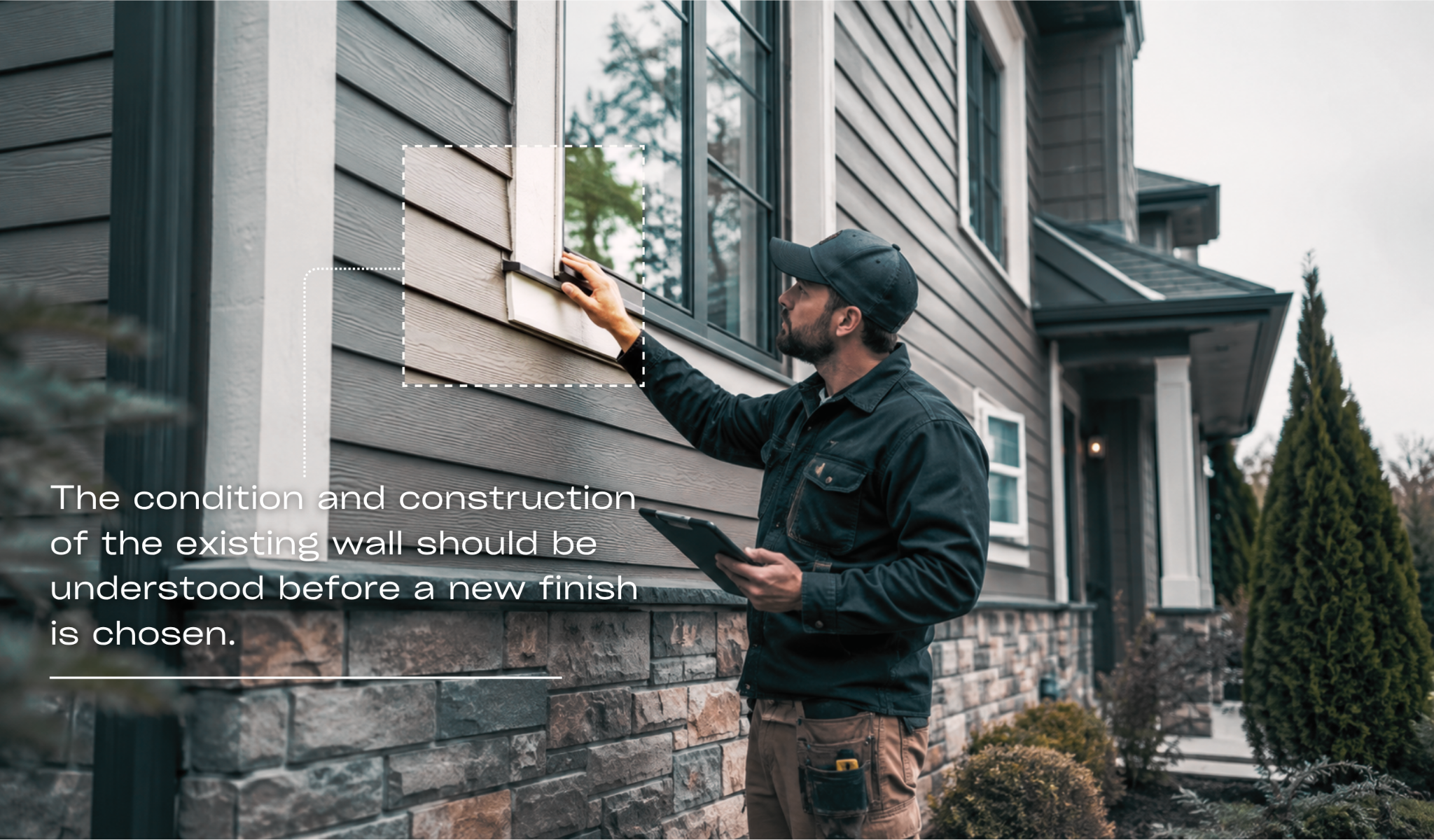
It is tempting to begin with samples, but the existing wall should come first.
Cracked render, loose material, moisture problems, deteriorated masonry, or movement in the substrate should be investigated before covering the surface. New cladding should not simply hide an unresolved problem underneath it.
This is especially important because a thoughtful home exterior works as a complete system. Siding or cladding has to work alongside windows, roofing, doors, trim, flashing, and drainage rather than being treated as an isolated decorative layer.
For more extensive changes, a contractor, architect, or other qualified professional can help identify the existing wall construction and determine what preparation or cladding system is appropriate.
Decide Whether You Want the Wall to Blend in or Stand Out
Not every exterior wall needs to become a focal point.
Sometimes the best choice is a quiet surface that connects the home to its surroundings. On another property, an entrance, courtyard, garden-facing wall, or rear extension may benefit from stronger texture or color.
Exterior tile involves more than taking an indoor material and moving it outside. Weather exposure, installation method and the intended application all matter. The technical distinction is central to OUTERclé, a brand focused specifically on exterior tile and architectural surfaces.
OUTERclé’s exterior wall tile cladding spans terracotta, cement, brick and sculptural formats suited to more expressive vertical applications. Its current Facade collection is designed around applications including facades, garden walls, patios, and vertical accents.
The idea is not necessarily to tile an entire house. A more focused application around an entrance, outdoor living area, garden wall, or section of a rear elevation can be enough to change how the architecture feels.
Think of it the same way you would approach an interior material: decide what role you want it to play before deciding how much of it to use.
Think about Weather Exposure, not Just Your Climate
Saying that a material is “outdoor suitable” is only the beginning.
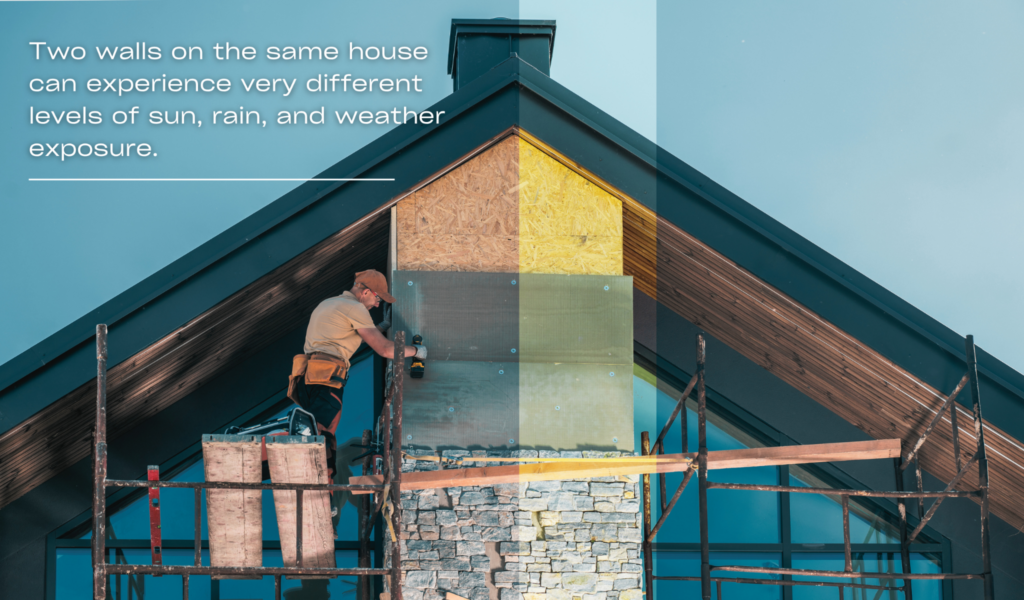
A sheltered courtyard wall experiences different conditions from a west-facing facade exposed to intense afternoon sun. A wall under a deep roof overhang may receive less direct rain than one beside an open patio. Cold climates add freeze-thaw considerations, while hot sunny exposures can create greater temperature changes across the surface.
For tile specifically, the manufacturer should confirm suitability for the proposed exterior application. TCNA notes that exterior suitability can depend on factors including freeze-thaw performance, water absorption, manufacturing characteristics, and product-specific testing.
Do not assume that a tile used successfully indoors, or even in one exterior location, will automatically be right for every outside wall.
Understand what Is Happening Behind the Finish
The finished cladding is the part everyone sees. The layers behind it often determine whether it performs properly.
Exterior walls need to manage water so moisture does not become trapped within the assembly. Depending on the construction, that can involve water-resistive barriers, flashing, drainage paths, membranes, cavities, or other details behind the visible finish.
The International Residential Code addresses exterior wall coverings as part of a wider weather-resistant wall envelope rather than as an isolated surface.
With tile, substrate preparation matters too. The wall needs to be suitable for the proposed system, and setting materials should be selected for exterior use and the particular tile.
Pay close attention to vulnerable junctions such as window sills, doors, parapets, roof edges, copings, and the bottom of the wall. These are places where water-management details need to work with the cladding rather than against it.
This is installation work that should be planned with the appropriate building or tile professional, not improvised once the finish material arrives.
Allow Exterior Materials to Move
Exterior walls do not remain perfectly static.
Heat, cold, moisture, sunlight, and movement within the building can all place stress on a tiled surface. That is why movement joints are part of a properly planned tile installation.
TCNA specifically notes that movement joints help accommodate differences in expansion and contraction between tile and its substrate, with exterior installations requiring consideration of seasonal temperature changes.
For a homeowner, the practical takeaway is simple: if an exterior tile installation is being discussed without any consideration of movement, changes of plane, existing joints, or the surrounding construction, ask more questions.
Look at Several Pieces, Not One Perfect Sample
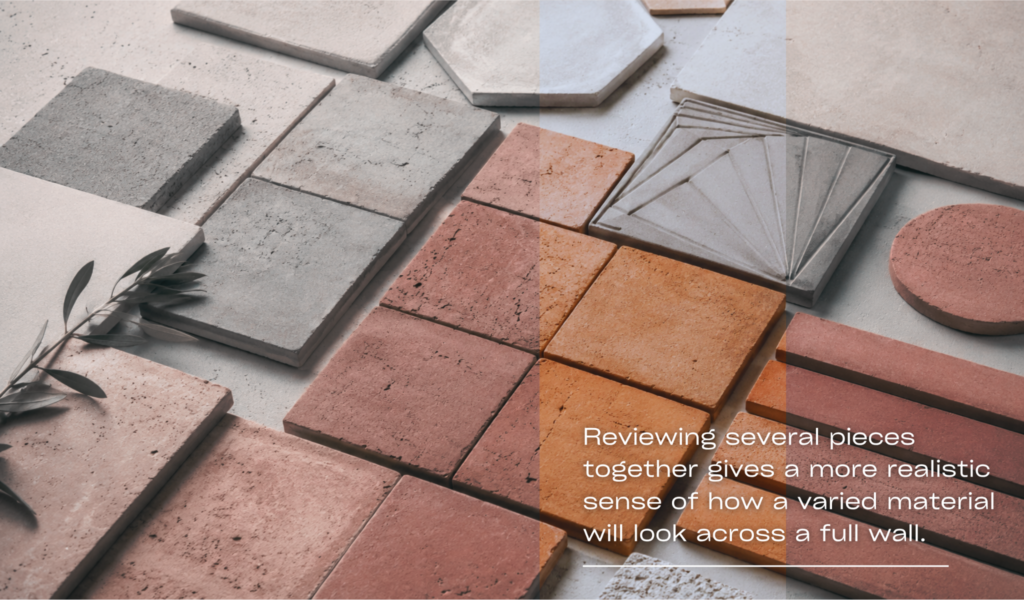
A single sample can be misleading, particularly with handcrafted or naturally varied materials.
Terracotta, brick, cement, and other characterful surfaces may shift in tone, texture, edge profile, or finish. Those differences are often exactly what makes them appealing, but you need to know how much variation you are comfortable seeing.
Ask to view several pieces together. If possible, see a larger installed example rather than relying entirely on a close-up product image.
Scale matters too. A strongly textured tile that looks subtle in your hand can have much more visual impact when repeated across an entire wall.
The same principle applies when working on your home’s curb appeal: individual choices need to make sense as part of the full exterior rather than competing for attention.
Plan the Layout Before Installation Begins
Even a beautiful tile can look awkward if the layout has not been considered.
Before installation, establish how the pattern will meet windows, doors, corners, rooflines, and the bottom and top of the tiled area. This is especially important with thicker handmade pieces, geometric formats, or strongly patterned tile.
Small changes to the starting point can sometimes avoid obvious slivers at a window reveal or an uneven-looking termination at a corner.
Grout or joint color matters as well. A close tonal match can make the wall read as a more continuous surface, while greater contrast emphasizes every individual unit.
These are decisions worth making before the installer starts setting material rather than halfway across the elevation.
Be Realistic about Maintenance and Aging
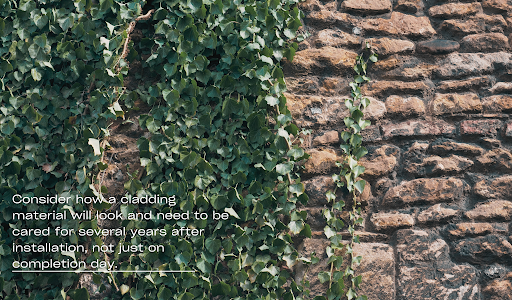
Every exterior material changes to some degree.
Some homeowners like materials that develop more character over time. Others want a surface to remain visually consistent for as long as possible.
Ask about cleaning, sealing if relevant, staining, efflorescence, weathering, repairs, and what happens if an individual piece needs replacing later.
Keep extra material after installation when practical, particularly if the product has significant variation or may be difficult to match years later.
Cohesion matters beyond the main house too. A garden structure can feel far more intentional when its materials and details connect it visually to the rest of the home. The same thinking can help when choosing cladding for garden walls, outdoor kitchens, or other secondary structures.
Choose the System, Not Just the Surface
The most useful question before choosing exterior wall cladding is not simply, “Do I like this material?”
Ask whether it works for the wall, the exposure, the architecture, the climate, and the level of maintenance you want to take on.
Then look beyond the sample. Ask how the corners will finish. Ask what happens around windows. Ask how water is managed. Ask whether movement has been allowed for. Ask whether the specific product is approved for your intended application.
A good exterior wall should still feel considered years after the installation photographs are taken. Choosing the surface is important, but understanding what it needs in order to perform is what turns a beautiful finish into a well-planned home improvement.