


Maine homeowners searching for why their garage door has suddenly become difficult to open, or why it’s making new sounds every winter, are usually dealing with one of a handful of predictable, cold-driven problems.
Understanding what genuine Maine winter conditions do to a garage door helps you catch these issues early, before a minor seasonal annoyance turns into an emergency repair.
Why Metal Contracts, and Why That Matters for Every Moving Part
Garage door tracks, rollers, springs, and hardware are almost entirely metal, and metal contracts as temperatures drop.
In a genuine Maine winter, where sustained sub-zero stretches are a real, recurring feature rather than a rare event, this contraction can affect how smoothly tracks and rollers interact, sometimes creating a noticeably tighter, stiffer operation than the same door exhibits in summer.
Why Lubricant Thickens in the Cold
Standard lubricant thickens as temperatures drop, which means hardware that moved smoothly on a fall day can feel noticeably sluggish once genuine winter cold sets in.
This is one of the most common, and most fixable, causes of a door that seems to struggle in winter specifically.
Switching to a lubricant genuinely rated for cold-weather performance, rather than a standard all-purpose product, addresses this directly rather than requiring more frequent reapplication of something not suited to the temperature range.
Why Weatherstripping Becomes More Important, and More Vulnerable, Here
Rubber weatherstripping along a garage door’s bottom and sides can become more brittle in sustained extreme cold, and once it’s compromised, it lets cold air, moisture, and snow directly into the garage, which then affects everything else, humidity levels, potential freezing of anything stored inside, and the general temperature swing the garage’s contents experience.
Checking weatherstripping condition specifically before winter, rather than after noticing a draft, catches this while it’s still a simple, inexpensive fix.
Why Snow and Ice Buildup at the Bottom Track Is a Genuine Recurring Issue
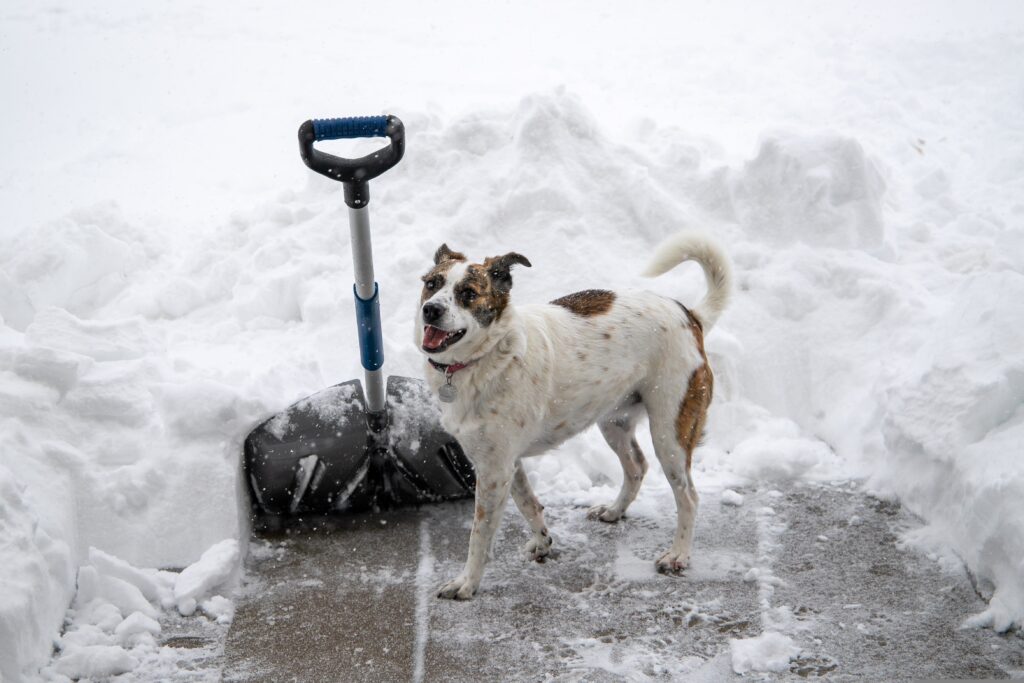
Snow that accumulates and then refreezes at a garage door’s bottom track can prevent the door from sealing properly, or in more severe cases, can actually prevent the door from closing fully.
This isn’t a rare edge case in Maine, it’s a predictable seasonal pattern worth planning around, including clearing snow and ice from the track area regularly rather than letting it accumulate through multiple storms.
Why Springs Face Real, Cumulative Stress From Repeated Freeze-Thaw Cycling
Beyond simple cold, Maine’s winters bring genuine freeze-thaw cycling as temperatures swing through shoulder-season stretches, and that repeated cycling puts cumulative fatigue stress on garage door springs over the years.
A spring that’s already showing signs of wear, a door that feels heavier than usual when lifted manually, visible gaps between coils, is more likely to fail during exactly this kind of seasonal stress than during a stable, moderate season.
Why Insulation Matters More Here Than in Most of the Country
Given how genuinely severe Maine winters run, an insulated garage door isn’t a luxury upgrade the way it might be treated in a milder climate.
For an attached garage, insulation directly affects the temperature of the wall it shares with the living space, and an uninsulated door in this climate is a real, ongoing source of heat loss that a homeowner feels directly in adjacent rooms.
What a Reasonable Pre-Winter Checklist Looks Like
A few home-maintenance checks are worth doing every fall before Maine’s real cold sets in: confirming weatherstripping is intact and not yet brittle, switching to cold-weather-rated lubricant if you haven’t already, checking spring condition and door balance, and clearing any debris from the bottom track that could interfere with sealing once snow arrives.
Getting a Door Genuinely Prepared for This Climate
Because Maine’s winter conditions create specific, predictable stress on garage door hardware, working with a garage door company that understands these seasonal patterns and can recommend cold-weather-appropriate lubricants, weatherstripping, and insulation levels gives you a door that’s actually prepared for what a real Maine winter delivers, rather than one that’s simply hoping to get through it.