Most landscape plans show where people will sit, walk, cook, garden, and relax.
They rarely show someone dragging a garbage bin to the street.
They do not usually show a wheelbarrow full of soil, a garden hose crossing the patio, bicycles being pushed through a side gate, or outdoor furniture being moved into storage before a storm.
Yet those ordinary trips happen again and again.
A yard can look polished and still be frustrating if its everyday working routes are too narrow, too steep, blocked by planting, or forced through the middle of a seating area.
Before finalizing a landscape plan, it helps to map the trips nobody usually draws.
Start With the Garbage-Bin Route
Garbage and recycling bins may make the same journey every week for years.
Trace the route from storage to pickup.
Does the bin have to squeeze past an air-conditioning unit? Cross loose gravel? Drop down a step? Pass through a gate barely wider than the container itself?
A route that feels manageable once can become annoying when repeated every week in rain, darkness, or winter conditions.
The best solution is not always a wide concrete path. Sometimes a smoother surface, slightly wider gate, or more direct connection is enough.
The point is to recognize the trip before permanent features make it harder.
Think About the Largest Thing That Uses Each Gate
A garden gate should not be sized only for a person.
Ask what else may eventually need to pass through it.
That could include:
- A lawn mower
- Wheelbarrow
- Bicycle
- Large planter
- Barbecue
- Outdoor furniture
- Yard-waste container
- Landscaping equipment
A narrow gate may look tidy until the first large object has to be tilted, lifted, or partially disassembled to get through it.
If a side yard is the only practical route to the backyard, its gate becomes more than an entrance. It becomes part of the property’s working infrastructure.
Map the Mower Route Before Planting the Beds
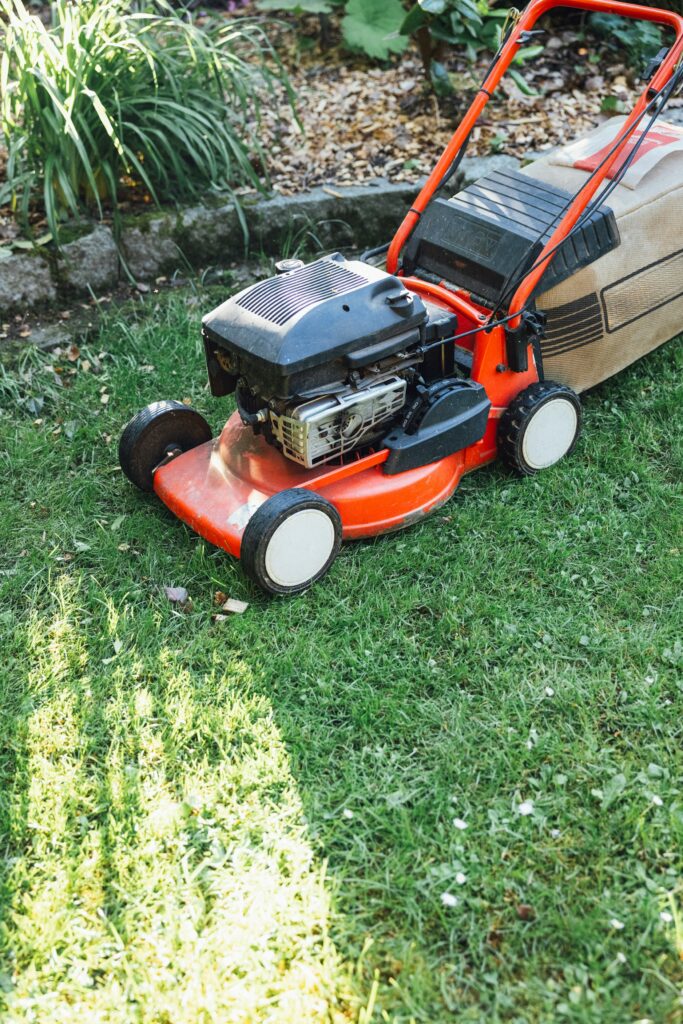
Lawn areas require access.
If mowing equipment has to cross stepping stones, navigate tight corners, or squeeze between delicate planting beds, routine maintenance becomes more awkward than it needs to be.
Follow the route from storage to every lawn section.
Look for pinch points.
An island bed that seems attractive on plan may divide the lawn in a way that creates extra maneuvering. A narrow strip of grass behind a planting area may become difficult to reach with the equipment normally used on the property.
Landscape design should consider maintenance movement at the same time as planting composition.
Hoses Create Invisible Circulation Paths
A hose does not appear on most site plans, but its route matters.
If the outdoor tap is on the opposite side of a patio from the garden, the hose may repeatedly cross a doorway or seating area.
It can catch around furniture legs, damage plants at bed corners, and become a tripping obstacle.
Before establishing permanent beds, think about where water will come from and which areas will need regular watering.
Strategic hose access or irrigation planning can reduce the amount of equipment dragged through finished spaces.
A path that works for people may not work equally well for a long hose being pulled around corners.
Firewood and Gardening Supplies Need Practical Routes
Materials are often stored where they fit, then carried repeatedly to where they are used.
Firewood may travel from a side-yard stack to a rear patio. Soil, compost, mulch, tools, and pots may move between a shed and garden beds.
These are working trips.
Distance is only one factor. Surface and elevation matter too.
A short route involving several steps may be harder than a slightly longer level path. Loose stone can be uncomfortable when carrying heavy containers, while very tight turns make a loaded wheelbarrow difficult to maneuver.
Think about the weight being carried, not just the person walking.
Design Paths Around Real Movement
Once these routes are mapped, landscaping services can be planned around how paths, gates, patios, planting beds, steps, storage areas, and activity zones need to connect during everyday use.
This does not mean turning the yard into a network of oversized service paths.
It means making the important routes deliberate.
A path used mainly for morning coffee can be narrow and informal. A route that regularly carries bins, equipment, or furniture may need more width, firmer footing, and fewer awkward turns.
Different trips can justify different path designs.
Avoid Pinch Points Beside Equipment
Side yards often become crowded because several functions compete for the same narrow strip.
Mechanical equipment, utility meters, downspouts, gates, storage boxes, and planting may all occupy the space.
Then someone tries to push a mower through it.
Measure the clear route, not just the distance between property lines.
Equipment may need service access, and some features cannot simply be shifted when the path feels tight.
A landscape plan should preserve enough usable space for both movement and maintenance.
Decorative Paths and Working Paths Can Behave Differently
Not every path needs to be straight, wide, or highly practical.
A garden path meant for slow walking can curve around planting and invite people to explore.
A working route has another job.
It may need to accommodate wheels, heavy loads, frequent use, or quick movement between two points.
Problems arise when one path is expected to do both jobs without being designed for either.
A narrow decorative route can become frustrating if it is also the only way to move bins or equipment.
Where space permits, the main working route can be direct while secondary garden paths remain more relaxed.
Plan for the Occasional Large Trip
Some movements happen only once every few years, but they can create major problems if access is ignored.
Imagine bringing in a new barbecue, large planter, hot tub component, play structure, or replacement outdoor furniture.
Could it reach the destination without removing part of a fence?
What if a contractor needs to bring material into the backyard?
A permanent raised bed, narrow arbor, or fixed structure may unintentionally close off the only useful access route.
Not every yard needs construction-sized access forever, but preserving one reasonably open path can make future projects much easier.
Outdoor Furniture Has a Seasonal Route Too
Chairs, cushions, umbrellas, and tables may move between patios, sheds, garages, or covered storage.
That movement deserves the same attention as daily circulation.
A storage area located only a few metres away may still be inconvenient if the route includes stairs, narrow gates, or planting that catches bulky furniture.
Before locating a shed or storage area, think about what will actually be carried there.
A shed that is easy to reach on foot can still be awkward when someone is carrying a wide chair with both hands.
Steps Change the Difficulty of Every Carrying Trip
Steps can solve elevation changes elegantly, but they also affect anything transported by wheels.
A wheelbarrow, mower, bin, or cart cannot use a staircase as easily as a person can.
Where elevation permits, a sloped route elsewhere in the yard may provide a useful alternative.
This does not mean every set of steps needs a ramp beside it.
It means the design should consider whether the property still has a practical way to move equipment between levels.
A yard that works beautifully for walking may become surprisingly difficult during maintenance.
Keep Important Routes Clear as Plants Mature
A newly installed garden can leave plenty of room beside a path.
Several years later, shrubs may spread into it.
This is especially important along side yards, gates, and maintenance routes.
Plant according to mature size rather than installation size.
Repeated pruning can keep plants within bounds, but a shrub naturally too large for the location may become a permanent conflict with circulation.
The path should still function after the landscape fills in.
Test the Yard With Objects, Not Just Footsteps
Before finalizing major changes, carry something through the proposed route.
Push the mower.
Roll the bin.
Walk with a large box held in front of you.
Move a wheelbarrow through the side yard.
These simple tests reveal issues that are easy to miss when walking empty-handed.
A turn that feels generous may become tight when pushing equipment. A gate may open in the wrong direction. A step may interrupt an otherwise convenient route.
The yard should be tested according to how it will actually be used.
Daily Function Does Not Have to Look Utilitarian
Planning working routes does not mean the landscape has to resemble a service yard.
Practical circulation can be integrated quietly.
A well-positioned path can disappear into the overall design. Storage can be screened without becoming inaccessible. Gates can align with planting and fencing while remaining wide enough to use comfortably.
Good function is often least noticeable when it has been considered early.
The homeowner simply moves through the property without having to think about why the route works.
Draw the Boring Trips First
Outdoor design naturally focuses on the enjoyable parts of the yard.
Patios, gardens, outdoor kitchens, and seating deserve that attention.
But routine tasks continue after the project is finished.
Bins still move. Lawns still need maintenance. Plants need watering. Furniture gets carried. Tools, soil, firewood, and equipment still travel between storage and use.
Mapping those trips before construction can prevent years of small frustrations.
Draw the routes nobody photographs.
They may turn out to be some of the most important lines in the entire landscape plan.