


Power outages rarely come at a convenient time. A summer storm, an ice storm or a heat wave can knock out electricity for hours—sometimes days—and with kids at home, even a short outage can turn into a scramble for flashlights, snacks and phone chargers. The good news is that a little planning makes a big difference. Here’s a practical, family-friendly checklist to help you stay safe, fed and comfortable until the lights come back on.
1. Build a simple outage kit before you need it
Keep everything in one bin or closet shelf that every family member knows about:
- Flashlights or LED lanterns for each room (skip candles if you have little ones or pets)
- Spare batteries and a few charged power banks for phones
- Bottled water—about one gallon per person per day for three days
- Easy no-cook food: granola bars, peanut butter, crackers, fruit cups
- A first-aid kit and a week’s supply of any medications
- A battery or hand-crank radio for local updates
- Card games, coloring books and a favorite stuffed animal for the kids
The Ready.gov power outage guide has a good printable checklist you can keep on the fridge.
2. Protect your food
The biggest money-saver during an outage is simple: keep the refrigerator and freezer doors closed. Every time you open them, cold air escapes.
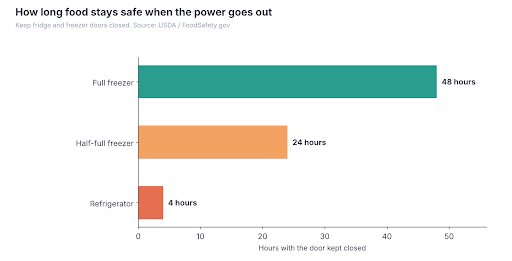
According to FoodSafety.gov, a closed refrigerator keeps food safe for about 4 hours, a full freezer for about 48 hours and a half-full freezer for about 24 hours. A few tips:
- Keep a few frozen water bottles in the freezer—they fill empty space and keep things colder longer.
- Use an appliance thermometer. Food in the fridge should stay at 40°F or below.
- When in doubt, throw it out—especially milk, meat, leftovers and baby formula that has been sitting warm.
3. Stay warm (or cool) safely
In winter: gather everyone in one room, close doors to unused rooms, and layer up with blankets, hats and warm socks. Hang blankets over windows at night.
In summer: close blinds on sunny windows, move to the lowest floor of the house, and keep everyone drinking water. Damp washcloths and a battery-powered fan help a lot with little ones.
Never use a gas stove, oven or outdoor grill to heat your home, and never run a gas generator indoors, in a garage or near an open window. Carbon monoxide is invisible and odorless—the CDC recommends battery-operated CO detectors on every level of the home.
4. Plan for medical devices and special needs
If anyone in your family relies on a CPAP machine, nebulizer, breast pump or medication that needs refrigeration, an outage is more than an inconvenience. Talk to your doctor about a backup plan, and let your utility know—many keep a priority list for medical needs. Keep insulin and other cold medications in a small cooler with ice packs if the power is out for more than a few hours.
5. Consider quiet backup power
For many families, the simplest upgrade is a portable power station: a large rechargeable battery with regular outlets. Unlike a gas generator, it’s silent, produces no fumes and can sit safely inside the house. Paired with folding solar panels, it can recharge during the day for longer outages.
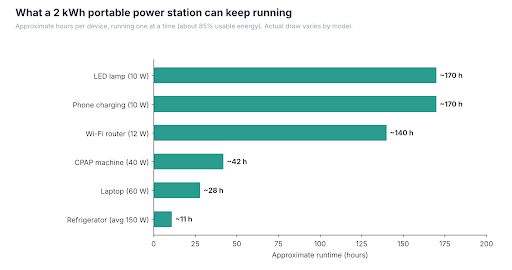
A mid-size 2 kWh unit can keep a refrigerator running for roughly half a day, a CPAP machine for several nights, or the Wi-Fi router and phones going for days. If you’re comparing options, look at battery capacity (kWh), the maximum output (watts) and whether it can be recharged by solar. Shops that specialize in a solar generator for home backup list these specs side by side, which makes it easier to match a unit to what your family actually needs to run.
6. Keep kids calm and busy
Children take their cues from you. Turn the outage into an adventure: Build a blanket fort, have a flashlight story night, play board games or do a “camping in the living room” dinner. Pre-download a few movies or audiobooks on a tablet, and keep a power bank charged just for the kids’ devices.
7. After the power comes back
- Check fridge and freezer temperatures before eating anything.
- Turn electronics back on one at a time to avoid a power surge.
- Restock your outage kit and recharge flashlights, power banks and your power station.
- Write down what you wished you had – and add it to the kit for next time.
The bottom line
A power outage doesn’t have to be stressful. With a stocked kit, a plan for food and medicine, safe heating and cooling, and a quiet backup power source, your family can ride out the next storm safely and comfortably – maybe even with a few fun memories along the way.