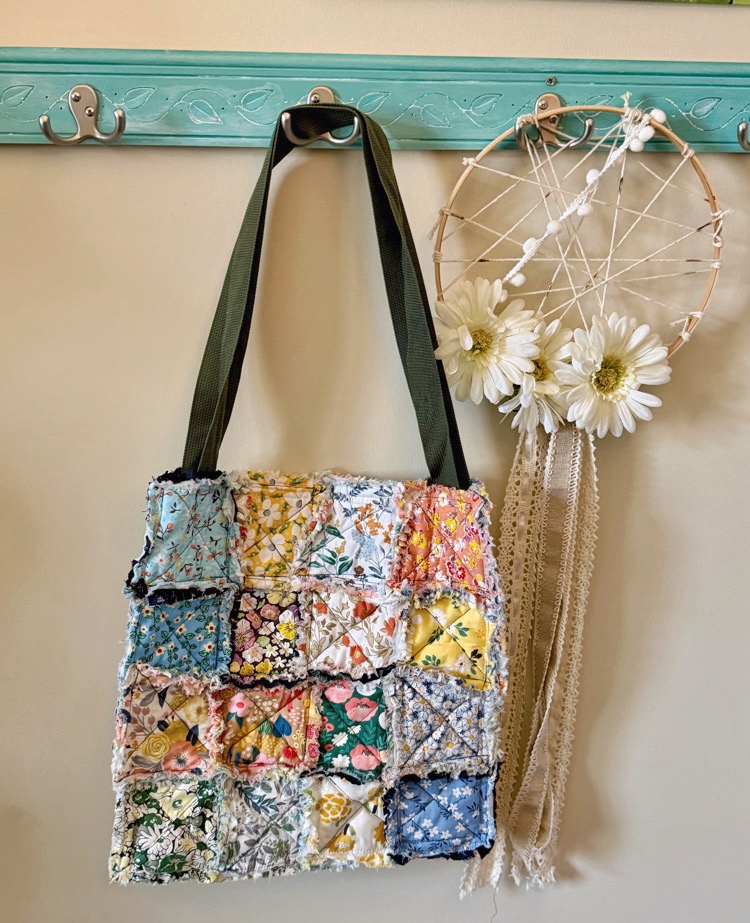
Have you been seeing all the cute rag quilt tote bags on TikTok, Instagram and Facebook lately? I have, so I decided to make one! My daughter said she would like one, so I made my very first rag quilt tote bag for her! I am only like an advanced beginner when it comes to sewing, so it took me about a month to complete—but I only spent like an hour here or there on it whenever I had spare time. I might make another one for myself, and I think I will complete it much more quickly this time!
The beauty of a rag quilt bag is that it’s easy to put together. With a rag quilt, seams are sewn on the outside and are allowed to fray. This quilting technique is very forgiving—even if you make small mistakes and your squares don’t line up exactly, these errors will likely be hidden in the frayed edges of each square. You don’t have to stress about making perfectly matching corners.
You don’t have to be a quilting expert to create a rag-quilt bag. I simply sewed a big X in the center of each square; it’s actually quite simple!
And unlike traditional quilting, you don’t have to carefully press all your seams with an iron. I used an iron here and there—mostly when I was sewing my rows of quilt squares together. But you could get away with no ironing.
Each side of my tote bag has a unique pattern, so it’s like two bags in one!
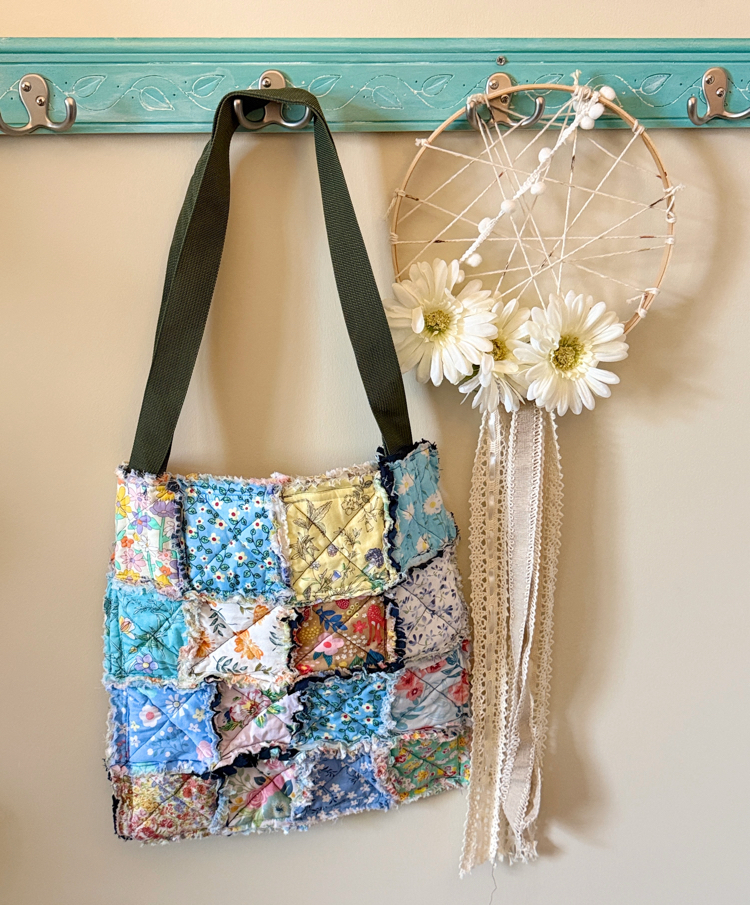
How to Make a Rag Quilt
If you already have a sewing machine and sharp fabric scissors, you don’t need many additional supplies for this tote—all that’s required is 64 5×5-inch fabric squares, thread and something for your straps. For fabric, I purchased two packs of Fat Quarters—I didn’t want to cut my own squares for this project, as that would take longer. For the straps, I used a roll of canvas belting webbing. You’ll also need quilt batting for the interior of the squares.
Supplies
5″ fabric squares; you’ll need 64 of them. I used this floral pack of Fat Quarters (approximately $9) and this blue Floral Fat Quarters pack (approximately $9).
Just over 7 square feet of quilt batting—I used this polyester quilt batting (for about $16).
All-purpose thread (approximately $6)—I used a durable navy blue polyester thread that I already had on hand from a previous project. However, a neutral thread like white (or cream) might be more forgiving, especially for new sewers. Lighter thread tends to blend in better and won’t stand out as much if your stitching isn’t perfectly straight or your seam allowance varies slightly.
Roll of canvas belting (approximately $10)
Sewing clips (I have these sewing clips) or sewing pins
Optional: Sew-On Velcro
Optional: Iron (which I already had)—but you can get a good iron for about $21.
In all, this project cost me about $50 in materials, but I have plenty of fabric leftover!
If you wanted to save some money and make your rag quilt bag from old sheets or scrap fabrics, you could cut your squares yourself. In that case, it would be helpful to also have a rotary cutter, cutting mat, and square quilting rulers. I bought a pack of quilting rulers for my next project; the pack includes several square quilting rulers from a small 3.5×3.5 inch square ruler to a 10.5″ square one.
Instructions
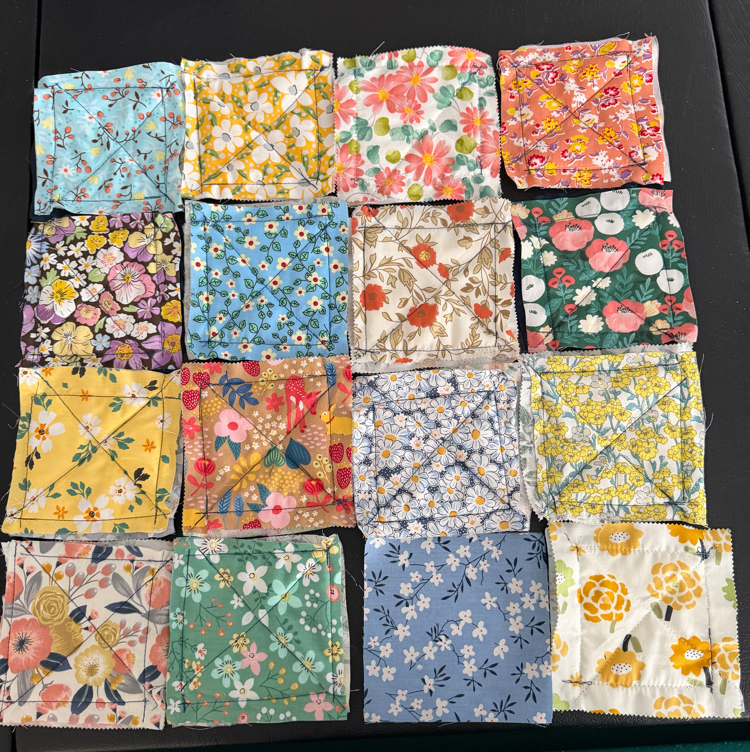
I sewed 32 quilt blocks in total—16 for one side of the bag and 16 for the other. I laid my bag out in four rows of four for both sides of my bag. To organize your bag, you’ll need a large surface to lay them out on—I used my home’s pool table and played with the squares until I liked the layouts for both sides of the bag.
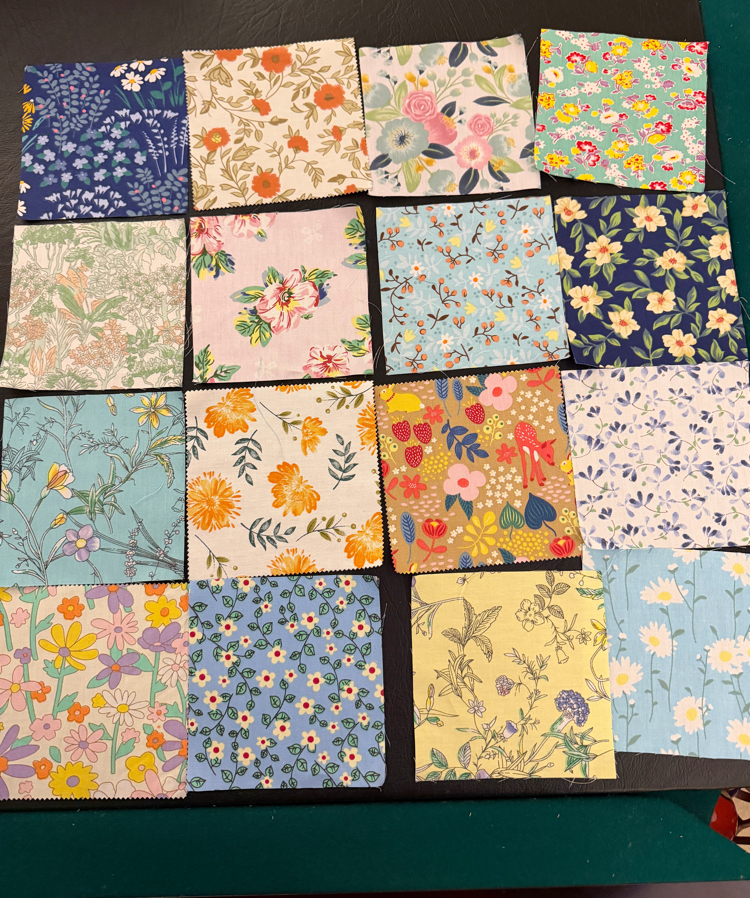
You will need two fabric squares for each quilt block, for the front and back. I used mostly floral squares for the inside of my tote bag, but if you like, you can choose a solid color or just one pattern for the squares that will form the inside lining of the bag.
Determine Your Design
For each block of your bag, choose two coordinating squares—one for the exterior and one for the lining (interior). Lay your squares on a flat surface. As you pair them together, take a moment to make sure you’re happy with your layout. If you’re working with a patterned squares, check that you’re placing them so that they face the correct direction. (For example, I placed my floral squares so that the stems of the flowers pointed downward.)
Even though the lining won’t always be visible, a thoughtfully arranged interior will give the finished bag a more polished look.
Once you have determined your layouts for both sides of your bag, snap photos of them so you’ll know what order to stitch your blocks in!
Build Your Quit Blocks
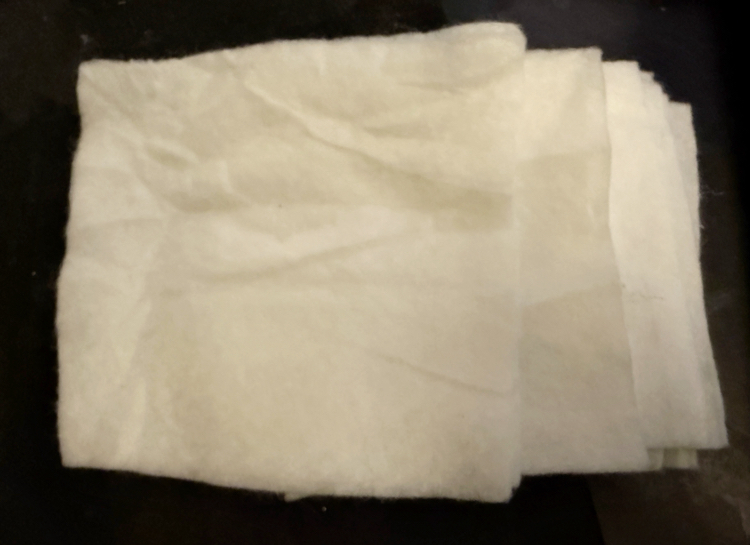
You’ll want the batting, which will be sandwiches between your two fabric squares, to be smaller than your fabric squares so the batting won’t show when you stitch your squares together—I made my batting squares 4 squares inches. You’ll need two squares per quilt block, or 64 in all. Clip your quilt blocks together, placing your exterior squares on top, two batting squares in between and the interior squares on the bottom.
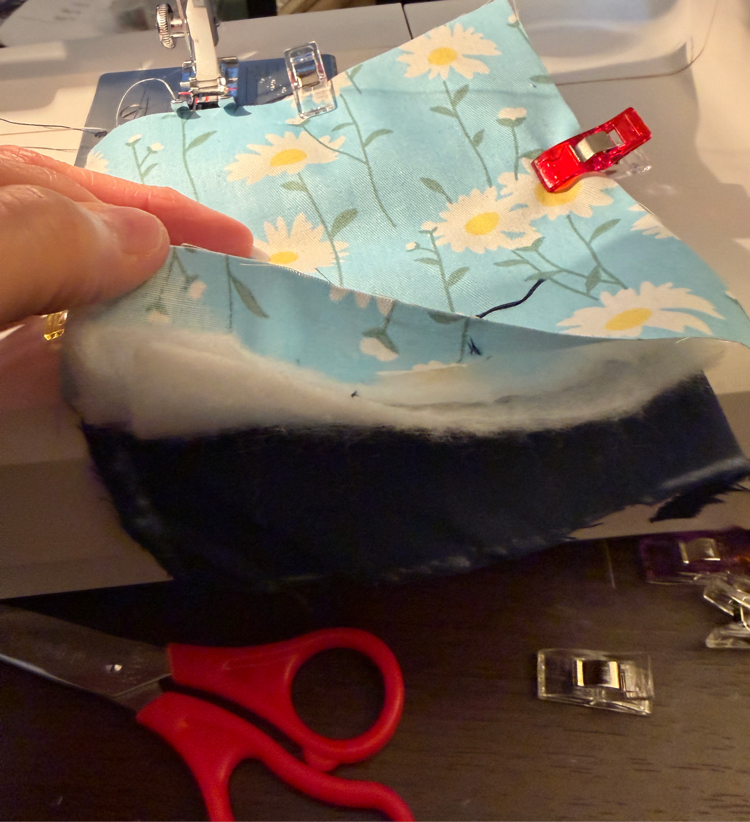
To complete a block, place its stacked pieces on your sewing machine and top stitch a large “X” from corner to corner to create a simple quilted look and secure the block’s layers together. Backstitch a little at each corner.
I found it helpful to first lightly fold each block in half one way, then the other way, to create visible diagonal creases. These creases served as guides so I could neatly stitch from corner to corner of my blocks to form their X’s.
After sewing an “X” on each block, top-stitch around their perimeters; a 1/2-inch seam allowance is a good choice—be sure to backstitch a little when you start and stop sewing to make it extra secure. Use a basic straight stitch (the standard stitch on most sewing machines) for both the diagonal lines and the perimeter.
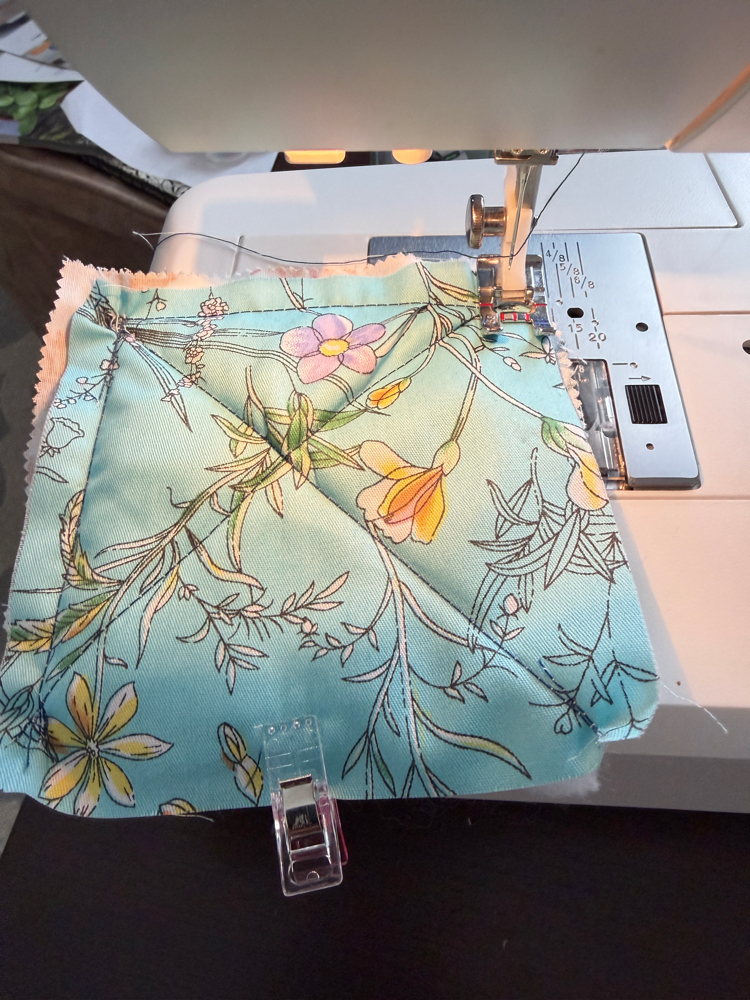
You can see some of my stitched squares in the below photo.
Sew the Blocks Together
Once all your blocks are completed, it’s time to join them into rows!
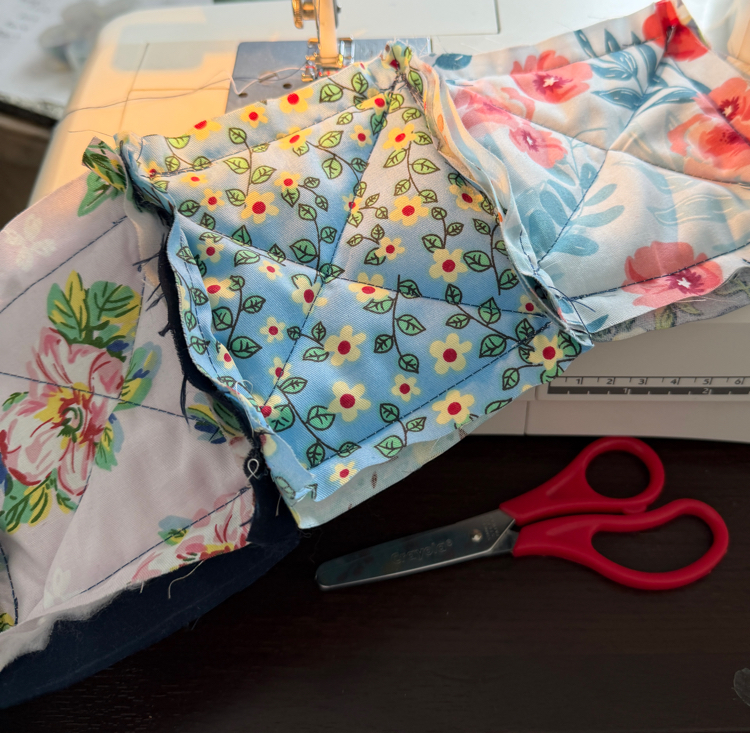
Lay out four blocks in a row in the order you want them to appear. For a rag quilt, the seams are top-stitched so they show on the outside of the bag (this is what creates the frayed look later). To do this, place two blocks wrong sides together (so the good/right sides are facing outward). Double check that the patterns of your squares are facing the correct direction.
Align the edges of your squares carefully and clip or pin them in place. Sew the blocks together on the side where they should meet using a ½-inch seam allowance; I just followed the seams on my squares. Continue adding the remaining blocks until you complete a row of four.
After finishing a row, gently open the seams and finger-press them flat. (Or use an iron if your prefer.) Repeat this process to create your remaining rows.
To start joining your rows together, work with your first and second rows first. Place them wrong sides together, matching the bottom seam of the top row with the top seam of the second row. Clip or pin along the seams to help keep everything aligned. Sew across the two rows, using a ½-inch seam allowance. (Follow the seams on your squares.)
Once those two rows are attached, sew the third row to the second one—again placing them wrong sides together and sewing with a ½-inch seam allowance. Once the third row is attached, you can then stitch the third and fourth rows together.
Once one side of the bag is completed, repeat the steps above for the other side. If you like, sew on a strip of Velcro at the top of the inside of each quilted panel so your bag can be securely closed.
Assembling the Tote Bag
After completing two quilted panels, it’s time to assemble the bag.
Make and Attach the Straps
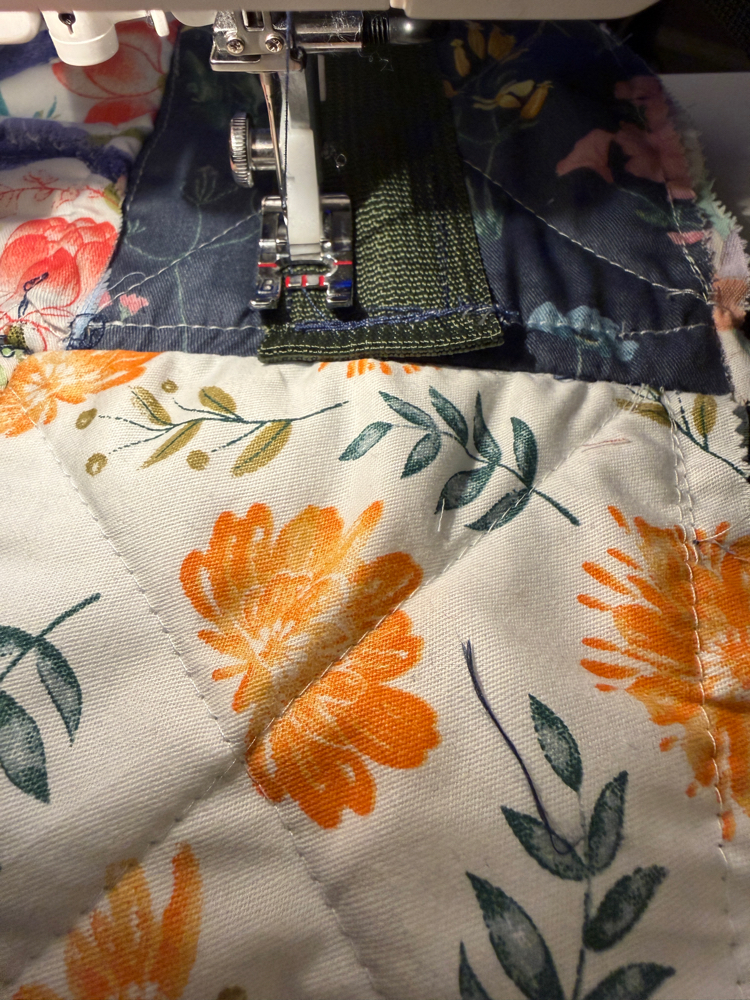
First, measure and cut two straps to your desired length so the bag will hang comfortably on your body. Fold over the ends of each strap a little and stitch them to form a clean end.
Place the straps inside each panel at the top edge of each panel and secure them with a top stitch. I positioned my straps so they fell about three inches from the top of the bag. I top-stitched the perimeter of each strap and also sewed an X across the top of each to make the connection extra secure. Make sure the ends are evenly spaced and positioned so the straps will sit comfortably when the bag is worn.
Sew the Panels Together
With the right sides facing outward, align the two panels. Top-stitch down each side seam and across the bottom, leaving the top open. Use a ½-inch seam allowance and backstitch at the corners for extra strength.
Clip and Fray the Edges
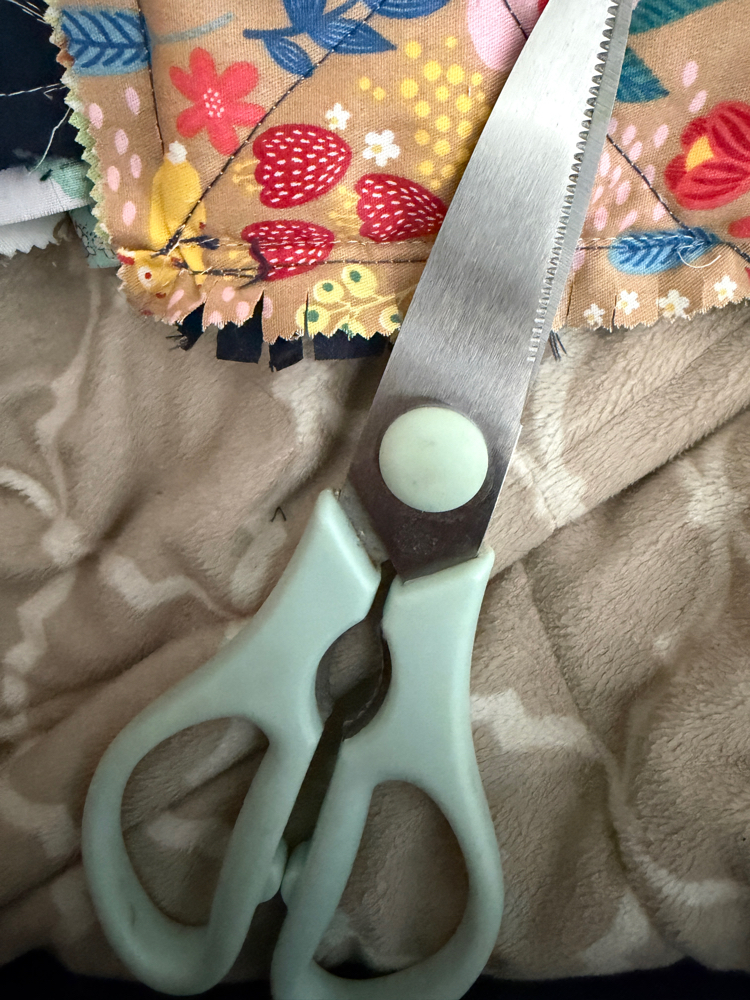
Once the two bag panels are sewn together, use sharp fabric scissors to clip into all exposed seam allowances about every ¼ to ½ inch, being careful not to cut through the stitching. Clip along all vertical, horizontal and side seams.
Wash the Bag and Remove Lint
Place the bag in the washing machine on a gentle cycle, then put it in the dryer on another gentle cycle. This will encourage the clipped edges to fray, giving your bag its signature rag-quilt texture. After drying, use a lint roller to remove any loose threads. Over time, additional washing will make the fraying fuller and softer!
You rag-quilt bag is now complete!
This post contains Amazon affiliate links.